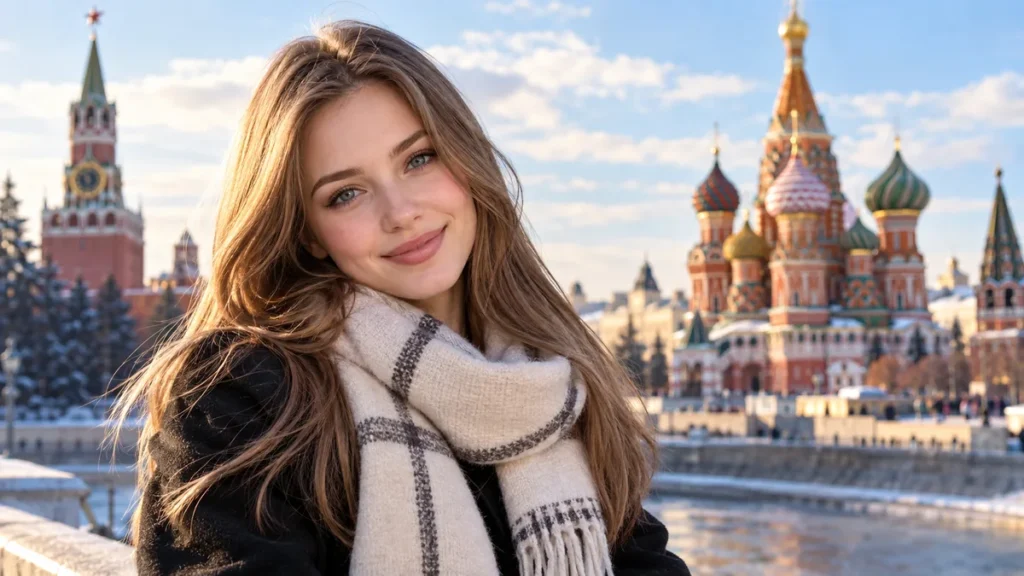
Search for russian girl online and you can quickly encounter a strange mixture of cultural information, glamorous photographs, dating stereotypes, memes, social-media videos, and fictional portrayals. The problem is that these images often reduce a huge and diverse population to a single “type.”
A russian girl simply means a girl or, informally, a young woman from Russia or with Russian cultural heritage. It does not describe a particular appearance, personality, lifestyle, or set of values. Regional background, ethnicity, language, family, education, generation, religion, and individual experience all shape identity.
Quick answer: A russian girl is a female person from Russia or someone associated with Russian heritage. Russian girls and women do not share one appearance or personality. Their lives vary widely across regions, generations, ethnic communities, cities, and rural areas, making stereotypes a poor guide to understanding individuals.
What Does russian girl Mean?
At its most basic level, russian girl is an English-language description of a girl from Russia.
There is a small linguistic distinction worth making. In casual English, “girl” is sometimes used for a young adult woman. In formal writing or when discussing an adult, however, “Russian woman” is generally more precise and respectful.
Nationality and ethnicity should not automatically be treated as the same thing either. Someone may be a citizen of Russia without being ethnically Russian, while someone with Russian ancestry or cultural heritage may live outside the Russian Federation.
This matters because Russia contains numerous ethnic, linguistic, religious, and regional communities. A young woman growing up in Moscow can have a very different background from someone raised in Siberia, the Russian Far East, the North Caucasus, or a small rural settlement.
So there is no single template for what a russian girl looks like, believes, enjoys, or wants from life.
Russian Nationality and Russian Heritage
People sometimes use “Russian” in several overlapping ways.
It can describe:
| Term | What It May Refer To |
|---|---|
| Russian nationality | Connection with the Russian Federation through citizenship or national identity |
| Ethnic Russian | Membership or ancestry connected with the ethnic Russian population |
| Russian-speaking | Someone who speaks Russian, regardless of nationality |
| Russian heritage | Family, ancestry, language, traditions, or cultural connections to Russia |
| Russian diaspora | People of Russian origin or heritage living outside Russia |
These categories can overlap, but they are not interchangeable.
A Russian-speaking woman in another former Soviet republic, for example, should not automatically be assumed to be a Russian citizen. Likewise, Russian citizens may belong to many different ethnic groups.
Why There Is No Single “Typical” russian girl
Russia’s enormous geography is one of the easiest reasons to understand why generalizations fail.
The country extends across Eastern Europe and northern Asia. Within that territory are major global cities, smaller industrial centers, agricultural communities, remote settlements, Arctic regions, and culturally distinct republics.
Moscow and Saint Petersburg are internationally connected metropolitan areas, but they represent only part of Russian life.
Geography can affect climate, education, employment, fashion, entertainment, local traditions, food, and even how families organize everyday routines.
Age matters just as much.
Someone who grew up during the Soviet period experienced a dramatically different social environment from a young woman whose childhood took place after the spread of smartphones and social media. Research into Russian women’s lives has likewise shown that women’s identities and relationships with traditions have changed across generations rather than remaining fixed.
City Life and Rural Life Can Be Very Different
A student living in central Moscow may use public transportation daily, attend university, follow international fashion, communicate online, and spend weekends in cafés or entertainment venues.
A person in a small town or village may experience different employment opportunities, transportation systems, family networks, housing arrangements, and community expectations.
Neither experience is more authentically “Russian.”
Academic research on Russian village women is especially useful here because it demonstrates how traditions can be preserved, modified, or abandoned as social conditions change.
That complexity disappears when internet content tries to describe millions of people through a few personality traits.
Language, Names, and Communication
Russian is the country’s dominant language and one of the strongest cultural connections among many people across its regions.
However, Russia is multilingual.
Different communities maintain their own languages alongside Russian, and individual language ability varies according to region, family background, education, and personal circumstances.
How Russian Names Work
Russian naming conventions can initially seem unfamiliar to English speakers.
A traditional full Russian name commonly contains three elements:
- Given name — the person’s individual name.
- Patronymic — derived from the father’s given name.
- Family name — the surname.
For example, a person might have a given name such as Anna, a patronymic, and a family surname.
Patronymics are particularly relevant in formal or respectful forms of address. Among friends and younger people, first names and familiar forms are much more common.
Russian also has numerous diminutive or affectionate versions of names.
For example, a formal name can have shorter versions used among friends and family. Which form is appropriate depends heavily on familiarity and social context.
Are Russian People Really Unfriendly Because They Smile Less?
This is one of the most persistent cultural misunderstandings.
Facial expression is interpreted differently across societies. A neutral expression from a stranger should not automatically be read as hostility, sadness, or anger.
Communication also changes depending on the situation. Behavior with strangers, colleagues, relatives, and close friends may be very different.
The practical lesson is simple: do not judge someone’s personality from a brief public interaction.
Family, Education, and Everyday Life
Family remains an important social institution for many Russians, but the idea that every russian girl grows up with identical “traditional family values” is misleading.
Families differ enormously.
Some households are conservative. Others are relatively liberal. Some maintain strong religious practices, while others are secular. Some households include several generations living close together, while others resemble independent urban households found elsewhere.
Historical circumstances have also shaped women’s family and working lives.
Studies of Russian women show a complicated relationship among employment, family responsibilities, traditional expectations, Soviet history, and post-Soviet social change rather than a simple transition from “traditional” to “modern.”
Education and Career
Another outdated stereotype portrays Russian women mainly through marriage or domestic roles.
In reality, education and professional life form important parts of many women’s identities.
Young women may pursue careers in technology, medicine, education, science, finance, design, business, arts, media, public service, and numerous other fields.
Career ambitions vary from person to person, just as they do elsewhere.
It is therefore inaccurate to assume that nationality determines whether someone prioritizes marriage, education, career advancement, travel, independence, or family.
Generational Differences Matter
Generational change is particularly significant when discussing modern Russia.
Older generations may remember Soviet institutions and social expectations directly. Millennials experienced much of their youth during the post-Soviet transformation and rapid adoption of digital technology.
Younger generations have grown up in an environment where smartphones, online communities, global entertainment, and digital communication are normal parts of everyday life.
Those experiences can produce substantial differences in attitudes toward fashion, work, relationships, family, privacy, and personal identity.
russian girl Fashion and Beauty Stereotypes
One of the most visible internet stereotypes concerns appearance.
Search results and entertainment media frequently present Russian women as exceptionally glamorous, highly fashionable, heavily made-up, or constantly dressed in formal clothing.
Reality is far more ordinary.
Some women enjoy elaborate fashion and beauty routines. Others prefer casual clothing, sportswear, minimalist fashion, alternative styles, or little interest in beauty trends at all.
Academic commentary has specifically examined how media portrayals can reinforce an image of Russian women characterized by conspicuous clothing, makeup, and glamorous femininity.
That makes fashion an interesting cultural subject, but it does not make one style universal.
Why the Glamorous Image Became So Visible
Several forces reinforce the stereotype.
Fashion photography naturally emphasizes visually distinctive people. Social-media algorithms reward polished or unusual images. Entertainment industries frequently rely on recognizable character types, while dating-related advertising has historically promoted highly selective images of Eastern European women.
The result is selection bias.
The women most visible internationally are not necessarily representative of the broader population.
A university student wearing jeans and sneakers on public transport is less likely to become an internationally circulated image than a carefully styled model photographed in Moscow.
Do All Russian Girls Have the Same Physical Features?
No.
Claims about a universal Russian appearance ignore population diversity.
Russia contains people from numerous ethnic and regional backgrounds. Hair color, eye color, skin tone, height, facial characteristics, body type, and personal style naturally vary.
Descriptions such as “all Russian girls are blonde” are stereotypes rather than reliable demographic descriptions.
Appearance cannot tell you everything about someone’s citizenship, ethnicity, language, or cultural identity.
Common russian girl Stereotypes and Why They Fail
Stereotypes become appealing because they turn complicated societies into simple stories.
They become misleading when those stories are treated as rules.
Research involving Russian women who immigrated to the United States found that participants encountered recurring stereotypes, including exoticized portrayals and the assumption that Russian women were “mail-order brides.” The women described these labels as affecting how other people perceived and interacted with them.
Here are several common assumptions worth examining.
Myth: Russian Girls All Look Like Models
Russia has models, fashion influencers, and beauty industries, just like many countries.
That does not mean the average person looks like a professionally photographed model.
Online media create a distorted sample because attractive or highly styled photographs receive disproportionate attention.
Real populations contain normal human variation.
Myth: Russian Women Are Naturally Cold
Reserved behavior is not necessarily coldness.
Communication norms differ across cultures and social settings. A person who appears serious around strangers may be warm and expressive among family and friends.
Personality differences between individuals are ultimately more useful than nationality-based assumptions.
Myth: Every Russian Woman Is Extremely Traditional
Some women value traditional gender roles.
Others reject them.
Many combine elements that outsiders might label both traditional and modern: pursuing a demanding career while valuing certain family customs, for instance.
Ethnographic research has documented precisely this type of negotiation, showing women preserving, changing, or rejecting traditions according to circumstances rather than simply following a fixed cultural script.
Myth: Russian Women Mainly Want Foreign Husbands
This stereotype has been heavily amplified by international dating marketing.
It is not a reasonable assumption about Russian women as a population.
People form relationships for countless reasons, and preferences concerning marriage, nationality, migration, family, and partners differ individually.
Treating an entire nationality as potential romantic partners also prevents genuine cultural understanding.
Myth: Russian Women Are Submissive
This is another contradiction found in stereotypes.
Popular culture sometimes depicts Russian women as submissive and dependent, while other portrayals show them as intimidating, dominant, manipulative, or hyper-independent.
The fact that opposing stereotypes can coexist is a useful warning: these are cultural narratives, not personality profiles.
Historical and ethnographic scholarship presents a substantially more complicated picture of women’s roles, agency, family relationships, and identity.
Russian Women in Movies, Television, and Popular Culture
Popular entertainment has played an enormous role in shaping international perceptions.
Russian female characters have frequently appeared as spies, assassins, femme fatales, glamorous socialites, athletes, mysterious strangers, or impoverished women hoping to escape their circumstances.
These characters can be entertaining without being representative.
Commentary from Russian diaspora perspectives has highlighted recurring portrayals that place Russian women into narrow roles such as dangerous villains or vulnerable victims.
Such images have historical roots.
Soviet-Era Images
Soviet visual culture produced its own idealized female characters.
Women could be portrayed as workers, farmers, mothers, athletes, students, engineers, or dedicated participants in socialist society.
These representations were influenced by the political and social ideals of their period.
Scholarly discussion of Russian female representation has traced changing images from Soviet worker ideals to later consumer-oriented and highly styled portrayals.
Post-Soviet Images
After the Soviet Union dissolved in 1991, international media encountered a rapidly changing Russia.
Economic transformation, new consumer culture, migration, fashion, advertising, and expanding international contact produced different images of Russian femininity.
Some international portrayals increasingly emphasized beauty, luxury, nightlife, marriage, or migration.
Again, visibility should not be confused with typicality.
Social Media Adds Another Layer
Social media has made Russian creators more visible internationally while creating a new problem: algorithms favor particular kinds of content.
Beauty, fashion, humor, luxury, travel, fitness, and relationship content tend to perform well visually.
Someone repeatedly seeing those posts may begin to assume they represent ordinary Russian life.
They represent creators and audiences, not an entire population.
Culture, Traditions, and Celebrations
Understanding Russian culture becomes more useful when attention shifts away from supposed personality traits and toward actual cultural practices.
Food, holidays, literature, music, family gatherings, seasonal traditions, language, and regional customs provide much richer context.
New Year
New Year is a major winter celebration for many Russian families.
Celebrations commonly involve family gatherings, festive meals, decorations, gifts, and television entertainment.
Ded Moroz—often translated as Grandfather Frost—is a well-known figure associated with New Year traditions, commonly accompanied by Snegurochka, the Snow Maiden.
Individual families naturally celebrate differently.
International Women’s Day
March 8, International Women’s Day, has a particularly visible cultural presence across Russia and many other countries influenced by Soviet history.
The day can include flowers, greetings, gifts, and recognition of women among families, workplaces, and social groups.
Its contemporary celebration combines historical, social, and personal meanings.
Russian Orthodox Traditions
The Russian Orthodox Church has influenced Russian history, art, architecture, holidays, and family traditions.
However, it would be inaccurate to describe every Russian as Orthodox or religious.
Russia includes Muslims, Buddhists, Jews, followers of other faiths, and people with no religious affiliation.
Religious identity therefore cannot be inferred simply from nationality.
Food and Home Culture
Food provides another window into Russian culture without relying on personality stereotypes.
Foods commonly associated with Russian cuisine include soups, dumplings, breads, pancakes, preserved vegetables, salads, porridges, fish, meat dishes, and numerous regional specialties.
Examples frequently associated with Russian cooking include:
- blini, thin pancakes served with sweet or savory accompaniments;
- pelmeni, filled dumplings;
- syrniki, cottage-cheese pancakes;
- Olivier salad, especially associated with celebrations;
- buckwheat dishes;
- pirozhki, small filled pastries;
- soups such as shchi and various regional versions of borscht.
Even here, regional and family differences matter.
Cuisine changes across Russia’s enormous territory, and foods associated internationally with “Russian cuisine” can have complicated histories shared with neighboring Eastern European, Caucasian, Central Asian, and former Soviet cultures.
What Is Everyday Life Like for a russian girl Today?
There is no universal daily routine.
A school-age girl might spend her day attending classes, studying, using social media, participating in sports or extracurricular activities, meeting friends, gaming, watching videos, or spending time with family.
A university student may balance lectures, assignments, part-time work, transportation, friendships, and personal interests.
A young professional might spend most of her week working in an office, hospital, school, laboratory, store, studio, technology company, or remotely from home.
These examples sound ordinary because everyday life usually is.
The exotic image of a russian girl found online often says more about international media than about daily routines inside Russia.
Technology and Digital Culture
Young Russians participate in a highly digital environment.
Messaging, video content, online communities, gaming, music streaming, e-commerce, and social networking form part of everyday communication for many people.
Internet culture also crosses borders rapidly.
A fashion trend, meme, game, song, or video format can move between countries in hours, meaning younger people’s identities increasingly combine local culture with international digital culture.
That does not erase national traditions. It simply makes modern identity more layered.
Russian Girls Abroad and the Russian Diaspora
Russian identity does not stop at Russia’s borders.
Russian-speaking and Russian-heritage communities exist across Europe, North America, Central Asia, Israel, and many other parts of the world.
A girl raised in a Russian-speaking family abroad may maintain connections through language, food, literature, holidays, family relationships, or travel while simultaneously identifying strongly with the country where she lives.
That can create layered identities.
Someone might describe herself as Russian-American, Russian-German, Russian-Australian, or simply Russian, depending on personal history and context.
Research on Russian immigrant women illustrates that migration involves not only adapting to a new society but also negotiating stereotypes imposed by outsiders.
This is another reason not to assume someone’s experiences from a label alone.
Dating a russian girl: Culture Is Context, Not a Rulebook
Dating-related searches account for a substantial amount of online discussion surrounding Russian women, which is one reason stereotypes spread so easily.
A more useful starting point is remarkably simple: learn about the individual rather than trying to learn a formula for “Russian girls.”
Cross-cultural relationships can involve differences in language, family expectations, communication habits, ideas about politeness, celebrations, finances, and romantic gestures.
But none of those differences can safely be assumed.
What Should You Know Before Dating a Russian Woman?
Start with the same principles that apply to any healthy cross-cultural relationship:
- Ask rather than assume. Let the individual explain what matters to her.
- Respect cultural differences. Something unfamiliar is not automatically strange or wrong.
- Avoid nationality-based compliments. “Russian women are all beautiful” may sound positive but still reduces someone to a stereotype.
- Discuss expectations directly. Do not assume views on marriage, finances, gender roles, children, or family.
- Learn basic cultural context. Understanding language, holidays, food, and history can make communication easier.
- Treat online dating carefully. Verify identities and be cautious with requests involving money or sensitive personal information.
Nationality can provide context. It cannot predict compatibility.
Traditional Etiquette Is Not Universal
Online guides sometimes present Russian dating culture as a strict set of rules: men must always pay, women expect flowers, certain numbers of flowers carry meanings, or relationships must follow specific gender roles.
Some customs have genuine cultural roots, but people interpret them differently.
Age, location, upbringing, personality, and personal beliefs all matter.
A better approach is to understand a custom without assuming every person follows it.
How to Talk About Russian Girls Respectfully
Language influences how people are perceived.
If you are talking about a child or teenager, “Russian girl” is straightforward. When discussing an adult, “Russian woman” is usually more appropriate in formal contexts.
More importantly, avoid turning nationality into a personality description.
Instead of saying:
“Russian girls are…”
Use language such as:
“Some people in Russia…”
“Historically, this tradition has been associated with…”
“This practice can be common in certain families…”
“Individual experiences vary by region and generation…”
That small change produces more accurate writing.
Avoid Exoticizing People
Exoticization happens when someone is treated primarily as fascinating, mysterious, attractive, dangerous, or desirable because of nationality.
Even apparently positive stereotypes can become uncomfortable.
Statements such as “Russian women are naturally beautiful,” “Russian women make better wives,” or “Russian girls are more feminine” assign characteristics to millions of individuals without knowing them.
The better compliment is personal rather than national.
How to Separate Cultural Facts From Internet Myths
When researching the phrase russian girl, pay attention to where information comes from.
A useful evaluation process is:
- Identify whether the source discusses culture or is trying to sell something.
- Check whether claims describe evidence or simply repeat stereotypes.
- Look for perspectives from Russian women themselves.
- Compare personal anecdotes with academic or institutional research.
- Check when historical information was published.
- Distinguish Soviet history from contemporary Russian life.
- Avoid treating Moscow or Saint Petersburg as representative of the entire country.
- Be skeptical of claims beginning with “Russian women always” or “Russian girls never.”
Dating websites, influencer videos, entertainment media, academic research, travel writing, and demographic studies serve different purposes.
They should not be treated as equally representative evidence.
Why Stereotypes About the russian girl Remain Popular
Stereotypes survive because they are easy to communicate.
“Millions of individuals with different backgrounds” is accurate but difficult to package into a viral video.
A glamorous, mysterious, traditional, or intimidating character is much easier.
Entertainment reinforces familiar images because audiences immediately recognize them. Advertising amplifies desirable characteristics. Social media rewards attention-grabbing content. Dating industries may emphasize cultural differences because those differences attract clicks.
Over time, repetition can make a stereotype feel like a fact.
Research and first-person accounts show why that is dangerous: women can encounter those stereotypes in actual social interactions, including assumptions about marriage, sexuality, migration, and personality.
Positive Stereotypes Can Still Be Misleading
Not every stereotype sounds negative.
Russian women are sometimes described as universally beautiful, strong, educated, elegant, loyal, family-oriented, or resilient.
Those qualities may sound complimentary.
They are still generalizations.
Calling every person from a country attractive or strong creates expectations that individuals never agreed to meet.
Respect begins with allowing people to define themselves.
Understanding russian girl Identity Beyond the Stereotype
The most useful way to understand a russian girl is not through a checklist of supposedly Russian characteristics.
Think in layers.
Nationality is one layer. Ethnicity can be another. Language, family background, hometown, education, religion, generation, profession, personal interests, and individual values add others.
Two women from the same apartment building in Moscow can have completely different personalities and ambitions. Someone from Saint Petersburg may have little in common with someone from a distant rural community beyond certain national institutions and cultural references.
That diversity is normal.
The same principle applies to nearly every nationality.
Cultural knowledge is valuable when it provides context. It becomes unreliable when it tries to predict an individual’s personality.
Final Thoughts on russian girl Culture and Identity
The phrase russian girl has accumulated far more meaning online than its literal definition requires.
At its core, it simply describes a girl or young woman associated with Russia. It does not automatically mean blonde, glamorous, traditional, reserved, submissive, fashionable, family-oriented, or interested in foreign relationships.
Russian women’s experiences have been shaped by geography, family, ethnicity, language, historical change, Soviet and post-Soviet life, migration, education, popular culture, and individual choices. Scholarship examining women’s lives likewise shows adaptation, disagreement, continuity, and change rather than one fixed model of Russian femininity.
If you want to understand a russian girl—or Russian women more broadly—the best next step is to learn about Russian culture while keeping one principle in mind: culture can explain context, but it cannot define an individual.