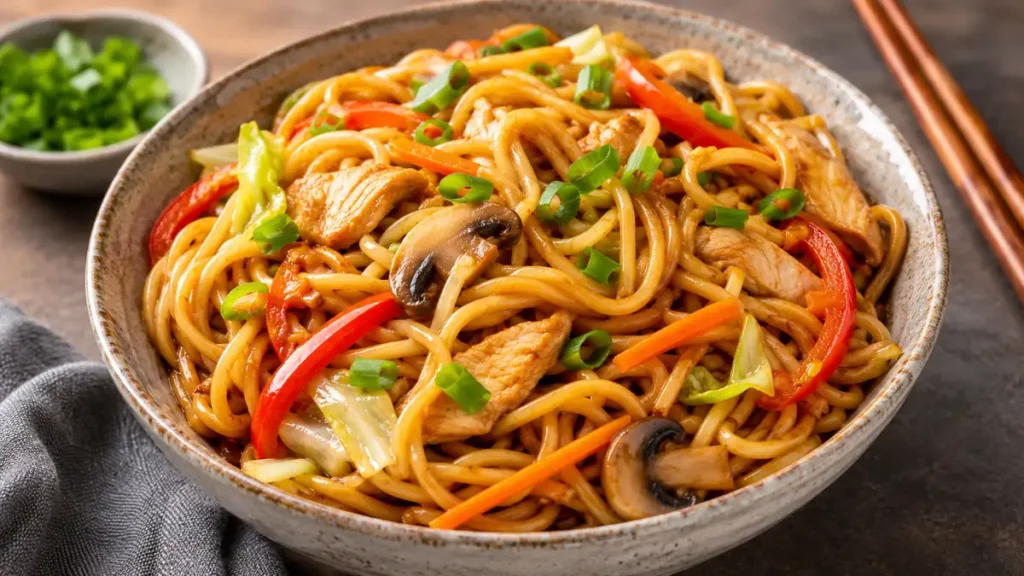
A good bowl of lo mein has everything you want from a comforting noodle dish: tender, springy noodles, crisp vegetables, and a savory sauce that coats every strand without making it soggy.
The best part is that you don’t need restaurant equipment or complicated ingredients to make a satisfying version at home.
Lo mein is a Chinese noodle dish made by combining cooked wheat-and-egg noodles with a savory sauce, vegetables, and optional proteins such as chicken, beef, shrimp, or tofu. Unlike crispy noodle dishes, lo mein emphasizes a soft, chewy texture. A typical homemade version takes approximately 25–30 minutes to prepare.
What Is lo mein?
Lo mein (撈麵 or 捞面) is a Chinese noodle dish associated with Cantonese cuisine. Its name means “stirred” or “tossed noodles,” referring to how the noodles are combined with sauce and other ingredients.
Traditional Cantonese preparations can feature cooked noodles tossed with seasonings and served alongside toppings such as roasted pork, beef brisket, wontons, or vegetables.
Chinese-American lo mein commonly uses a slightly different approach. Cooked noodles are briefly tossed in a hot wok or skillet with vegetables, protein, and a soy-based sauce.
The result is a glossy, flavorful dish with a tender but pleasantly chewy texture.
According to The Woks of Life’s noodle guide, proper noodle preparation is especially important for avoiding sticky, soggy, or dry results.
What Does lo mein Taste Like?
The flavor depends on the sauce and ingredients, but most versions have a combination of:
- Savory umami: From soy sauce, mushrooms, and sometimes oyster sauce.
- Mild sweetness: Often provided by a small amount of sugar.
- Toasted aroma: From sesame oil and ingredients cooked over high heat.
- Fresh vegetable flavors: From cabbage, carrots, scallions, and other vegetables.
- Chewy texture: From wheat-based noodles that retain a little firmness.
The dish is usually mildly seasoned rather than intensely spicy, although chili oil or chili flakes can add heat.
lo mein vs. Chow Mein: What’s the Difference?
Lo mein and chow mein are frequently confused because both dishes use Chinese wheat noodles and similar vegetables, sauces, and proteins.
The main difference is how the noodles are cooked and finished.
| Feature | Lo Mein | Chow Mein |
|---|---|---|
| Meaning | Tossed or stirred noodles | Stir-fried noodles |
| Cooking method | Cooked, then tossed with sauce | Stir-fried, sometimes browned |
| Texture | Soft and chewy | Firm, seared, or crispy |
| Sauce | Usually evenly coats noodles | Often lighter or served separately |
| Noodle type | Typically wheat-and-egg noodles | Often thinner wheat noodles |
| Final appearance | Glossy and tender | Varies from soft to crunchy |
Chow mein isn’t always crispy. Some regional and Chinese-American versions are soft stir-fried noodles, while others feature crunchy noodle cakes topped with vegetables and sauce.
As Food Network’s comparison explains, cooking technique is central to distinguishing the two dishes.
If you prefer soft noodles that absorb a flavorful sauce, lo mein is generally the better match.
Ingredients You Need for Homemade lo mein
The essential components are noodles, vegetables, aromatics, sauce, and an optional protein.
You can adjust the recipe according to what’s available in your kitchen.
Choosing the Best Noodles
Fresh Chinese egg noodles are an excellent choice because their springy texture holds up well when tossed with sauce.
Other suitable options include:
- Fresh lo mein noodles
- Dried Chinese egg noodles
- Wheat-based stir-fry noodles
- Plain ramen noodles without the seasoning packet
- Spaghetti or linguine when Chinese noodles aren’t available
Fresh noodles may need only a short cooking time, while dried varieties generally require longer boiling.
Always follow the package instructions and avoid overcooking.
Best Vegetables for lo mein
Vegetables provide color, texture, and freshness.
Common choices include shredded cabbage, julienned carrots, bell peppers, bok choy, snow peas, mushrooms, broccoli, bean sprouts, and green onions.
For the best texture, combine vegetables that cook quickly with one or two firmer varieties.
Cut them into thin, relatively uniform pieces so they cook evenly.
Protein Options
Lo mein works with several different proteins.
| Protein | Preparation tip |
|---|---|
| Chicken | Slice thinly across the grain |
| Beef | Use thin strips of tender beef |
| Shrimp | Cook just until opaque and firm |
| Tofu | Use firm tofu and brown it first |
| Pork | Thinly slice and cook thoroughly |
| Eggs | Scramble separately before combining |
Vegetarian versions can rely on tofu, mushrooms, and additional vegetables.
For vegan lo mein, choose egg-free noodles and replace oyster sauce with a suitable mushroom-based vegetarian sauce.
Easy lo mein Recipe
30 minutes
4 servings
Easy
Bok Choy & Mushroom Lo Mein Recipe | HelloFresh
This flexible recipe uses readily available ingredients and a simple savory sauce.
Ingredients
For the noodles and vegetables:
- 12 oz (340 g) fresh lo mein noodles, or approximately 8 oz (225 g) dried noodles
- 2 tablespoons neutral cooking oil
- 3 garlic cloves, minced
- 1 teaspoon freshly grated ginger
- 1 medium carrot, julienned
- 1 bell pepper, thinly sliced
- 2 cups shredded cabbage
- 1 cup sliced mushrooms
- 3 green onions, sliced
- 8 oz (225 g) firm tofu, optional
For the sauce:
- 3 tablespoons light or regular soy sauce
- 1 tablespoon oyster sauce or vegetarian mushroom sauce
- 1 teaspoon dark soy sauce, optional
- 1 teaspoon toasted sesame oil
- 1 teaspoon sugar
- 2 tablespoons water
- ¼ teaspoon white pepper, optional
If using regular soy sauce, taste before adding more salt because the sauce already contains substantial sodium.
Step 1: Prepare the Sauce
Combine the soy sauce, oyster sauce or vegetarian alternative, sesame oil, sugar, water, and white pepper in a small bowl.
Stir until the sugar dissolves.
Mixing the sauce before cooking prevents delays when the pan is hot.
Step 2: Cook the Noodles
Bring a large pot of water to a boil.
Add the noodles and cook according to the package directions until just tender.
Drain thoroughly.
If the noodles are especially starchy, rinse briefly when appropriate for the noodle variety, then drain again.
Avoid leaving them sitting in water because they can become soft and sticky.
Step 3: Cook the Protein
If using tofu, pat it dry and cut it into bite-sized cubes.
Heat a tablespoon of oil in a large skillet or wok over medium-high heat.
Add the tofu and cook until lightly golden on several sides. Remove it from the pan.
For chicken, beef, or shrimp variations, cook the protein separately until safely done before combining it with the noodles.
Step 4: Stir-Fry the Vegetables
Add the remaining oil to the pan.
Cook the garlic and ginger for approximately 20–30 seconds, stirring constantly to prevent burning.
Add the carrots, bell peppers, cabbage, and mushrooms.
Stir-fry for approximately 3–5 minutes, depending on the size of the vegetables and the heat of the pan.
They should become tender while retaining a little crunch.
Step 5: Add the Noodles and Sauce
Return the cooked tofu to the skillet.
Add the drained noodles and pour the prepared sauce over them.
Use tongs or two spatulas to lift and gently toss everything together.
Cook for approximately 1–2 minutes, just long enough to distribute the sauce and heat the ingredients thoroughly.
If the noodles appear dry, add a tablespoon of water and toss again.
Step 6: Finish and Serve
Add the sliced green onions and toss briefly.
Serve immediately while the noodles are hot and glossy.
For extra flavor, add a small amount of chili oil, toasted sesame seeds, or additional scallions.
How to Make lo mein Sauce
The sauce is responsible for much of the dish’s distinctive flavor.
A well-balanced lo mein sauce should season the noodles without leaving a large pool of liquid at the bottom of the pan.
Essential Sauce Ingredients
Light soy sauce provides saltiness and umami. In Chinese cooking, light soy sauce refers to a seasoning soy sauce, not necessarily a reduced-sodium product.
Dark soy sauce adds deeper color and a subtle sweetness. It is generally used in smaller quantities.
Oyster sauce contributes savory depth and a slightly thick consistency. Vegetarian mushroom sauce can provide a similar role.
Toasted sesame oil adds aroma and is best used sparingly because its flavor can dominate.
Sugar balances salty and savory ingredients without making the noodles noticeably sweet.
How to Adjust the Sauce
For a lighter flavor, use slightly less soy sauce and add a little water.
For a richer taste, add a small amount of extra mushroom sauce or oyster sauce.
For spicy noodles, include chili oil or crushed red pepper.
If the finished dish tastes too salty, adding more unsalted noodles or vegetables is more effective than simply adding extra sugar.
Popular Types of lo mein
Lo mein is adaptable, which explains why many Chinese-American restaurant menus offer several variations.
Chicken lo mein
Chicken lo mein combines tender chicken strips with noodles, vegetables, and a savory sauce.
Boneless chicken thighs work well because they stay juicy during high-heat cooking. Chicken breast is also suitable when sliced thinly and cooked carefully.
For safety, chicken should reach an internal temperature of 165°F (74°C).
Beef lo mein
Beef lo mein commonly features thin slices of beef cooked with onions, mushrooms, cabbage, or peppers.
Flank steak, sirloin, and other tender cuts can work.
Slicing against the grain helps keep the meat tender.
A brief marinade with soy sauce and a little cornstarch can improve the texture.
Shrimp lo mein
Shrimp provides a slightly sweet seafood flavor that pairs well with ginger, garlic, and green onions.
Cook shrimp separately until the flesh becomes opaque and reaches a safe internal temperature of 145°F (63°C).
Avoid prolonged cooking because shrimp can become rubbery.
Vegetable lo mein
Vegetable lo mein can include cabbage, broccoli, carrots, snow peas, mushrooms, bean sprouts, and bok choy.
Using several vegetables creates contrasting textures and makes the dish more substantial.
For a fully vegan version, check both the noodle ingredients and the sauce.
Pork lo mein
Pork lo mein can be made with fresh pork strips or Chinese barbecued pork, commonly called char siu.
Char siu contributes a sweet-savory flavor and is often added near the end of cooking because it is already cooked.
Common Mistakes When Cooking lo mein
Even a simple noodle dish can turn disappointing when a few cooking details are overlooked.
Overcooking the Noodles
Overcooked noodles become soft and can break apart during tossing.
Cook them only until tender, especially if they will spend additional time in the skillet.
Adding Too Much Sauce
A large amount of sauce can leave the dish watery and overly salty.
Start with a moderate amount and add more only after tasting.
The goal is a light, even coating.
Overcrowding the Pan
When too many ingredients are added at once, the pan temperature drops.
Vegetables release moisture and steam rather than developing the flavor associated with stir-frying.
Cook in batches when using a small skillet.
Using Excessive Oil
Too much oil can make noodles greasy and prevent the sauce from coating them evenly.
Use just enough oil to cook the aromatics, vegetables, and protein.
Burning Garlic and Ginger
Garlic burns quickly in a hot wok.
Add it shortly before the vegetables and keep it moving.
Burned garlic introduces bitterness that is difficult to remove.
How to Keep lo mein Noodles From Sticking
Sticky noodles are one of the most common problems in homemade preparations.
The issue usually comes from excess surface starch, overcooking, poor draining, or leaving cooked noodles sitting together for too long.
For better results:
- Use enough boiling water to let the noodles move freely.
- Stir during the early stages of cooking.
- Follow the cooking instructions for the specific noodle variety.
- Drain thoroughly before adding noodles to the skillet.
- Toss the noodles with sauce promptly.
- Add a small splash of water if they become dry while reheating.
Fresh and dried noodles behave differently. Some fresh Chinese noodles are already partially cooked, so they may require only a brief blanching or direct addition to the wok.
Checking the packaging prevents unnecessary boiling.
Is lo mein Healthy?
Lo mein can be part of a balanced diet, but its nutritional profile varies considerably depending on the ingredients, portion size, and cooking method.
The noodles primarily provide carbohydrates, while meat, seafood, eggs, and tofu can contribute protein.
Vegetables add fiber, vitamins, minerals, and volume.
The main nutritional considerations are usually sodium, added oil, and portion size.
Calories and Nutrition
There is no single accurate calorie count for all lo mein dishes.
A homemade vegetable version with modest amounts of oil may contain considerably fewer calories than a large restaurant serving with extra sauce and meat.
The exact amount depends on the weight of noodles, cooking oil, sauces, and additional ingredients.
| Component | Main nutritional contribution |
|---|---|
| Wheat noodles | Carbohydrates and some protein |
| Vegetables | Fiber, vitamins, and minerals |
| Chicken or shrimp | Protein |
| Tofu | Plant protein and minerals |
| Soy sauce | Flavor and sodium |
| Cooking oil | Fat and additional calories |
For a more balanced homemade meal, use a generous quantity of vegetables, include a protein source, and measure the oil and sauce rather than pouring them directly from the bottle.
Is lo mein Gluten-Free?
Traditional lo mein is generally not gluten-free because the noodles contain wheat.
Regular soy sauce also commonly contains wheat.
A gluten-free adaptation requires suitable gluten-free noodles and certified gluten-free sauces.
Rice noodles can work as a substitute, although their texture and flavor will differ from traditional wheat-and-egg noodles.
Is lo mein Vegan?
Not always.
Traditional egg noodles contain eggs, while some sauces contain oyster extract or other animal-derived ingredients.
To prepare vegan lo mein, use egg-free noodles, vegetables, tofu, and a plant-based sauce.
Can You Make lo mein Without a Wok?
Yes. A large skillet can produce excellent results.
A wok is useful because its shape makes tossing ingredients easier, but it is not essential.
A wide skillet with enough cooking surface allows vegetables to cook quickly and gives noodles room to move.
For the best results, preheat the skillet, prepare ingredients before cooking, and avoid overcrowding.
A nonstick skillet is convenient for beginners, while a well-maintained carbon-steel or stainless-steel pan can also work effectively.
The most important factor is controlling moisture and cooking the ingredients in the correct order.
How to Store and Reheat lo mein
Leftover lo mein can be refrigerated and reheated, provided it has been handled safely.
Refrigerating Leftovers
Transfer leftovers into shallow, airtight containers.
Refrigerate within two hours of cooking, or within one hour when the surrounding temperature is above 90°F (32°C).
Keep the refrigerator at 40°F (4°C) or below.
Properly refrigerated leftovers should generally be eaten within 3–4 days.
Freezing lo mein
Lo mein can be frozen, although the texture may change after thawing.
The noodles may become softer, and vegetables can lose some crispness.
For better quality, cool the dish promptly, divide it into portions, and store it in freezer-safe containers.
For best texture, use frozen portions within approximately 2–3 months.
Reheating Without Drying Out the Noodles
Place the noodles in a skillet over medium heat.
Add one or two tablespoons of water and toss gently until heated throughout.
Alternatively, microwave them in a covered, microwave-safe container, stirring partway through.
Reheat leftovers to 165°F (74°C).
Avoid repeatedly reheating the same batch because the noodles may become mushy.
What to Serve With lo mein
Lo mein is filling enough to serve as a complete meal, particularly when it contains protein and vegetables.
However, it also pairs well with lighter side dishes.
Good accompaniments include steamed bok choy, cucumber salad, sautéed green beans, vegetable soup, and lightly seasoned tofu.
Spring rolls or dumplings can also complement the meal, although they make it more substantial.
If the noodles already contain a rich sauce, choose sides with fresh or mild flavors rather than adding several heavily seasoned dishes.
The Origins of lo mein in Chinese Cuisine
Lo mein has roots in Cantonese cooking, particularly the culinary traditions of southern China.
The Chinese characters 撈麵 refer to noodles that are stirred or mixed.
Traditional Cantonese versions may feature noodles tossed with sauce and served with separate toppings, rather than the fully combined stir-fried dishes familiar to many American diners.
As Chinese cooking traditions developed outside China, lo mein became especially prominent in Chinese-American restaurants.
Restaurants adapted recipes to available ingredients and local preferences, often combining noodles, vegetables, meat, and sauce into a single dish.
This helps explain why the same name can describe somewhat different preparations.
The distinction between traditional Cantonese lo mein and Chinese-American lo mein is not a question of one version being authentic and the other incorrect. They represent related cooking traditions with different histories and serving styles.
Tips for Restaurant-Style lo mein at Home
A few practical adjustments can noticeably improve homemade noodles.
Prepare everything before heating the pan. Stir-frying moves quickly, and stopping to chop vegetables can lead to uneven cooking.
Use fresh noodles when available. Their elastic texture is especially suitable for a soft, chewy dish.
Keep vegetables slightly crisp. They will continue cooking briefly when combined with the noodles.
Toss instead of aggressively stirring. Lifting and turning the noodles helps distribute sauce without breaking the strands.
Taste before adding salt. Soy sauce and oyster sauce may provide all the seasoning required.
Serve immediately. Freshly cooked lo mein generally has the best combination of tender noodles, aromatic sauce, and crisp vegetables.
Final Thoughts on lo mein
Lo mein is a versatile Chinese noodle dish built around a straightforward idea: cooked noodles tossed with flavorful seasonings and complementary ingredients.
Its appeal comes from the contrast between soft, springy noodles, fresh vegetables, and a balanced savory sauce.
Understanding the difference between lo mein and chow mein, selecting the right noodles, and controlling moisture during cooking can help you achieve better results at home.
Start with a simple vegetable lo mein, then experiment with chicken, beef, shrimp, tofu, or your favorite seasonal vegetables. The basic method stays largely the same, making it an adaptable dish for everyday cooking.