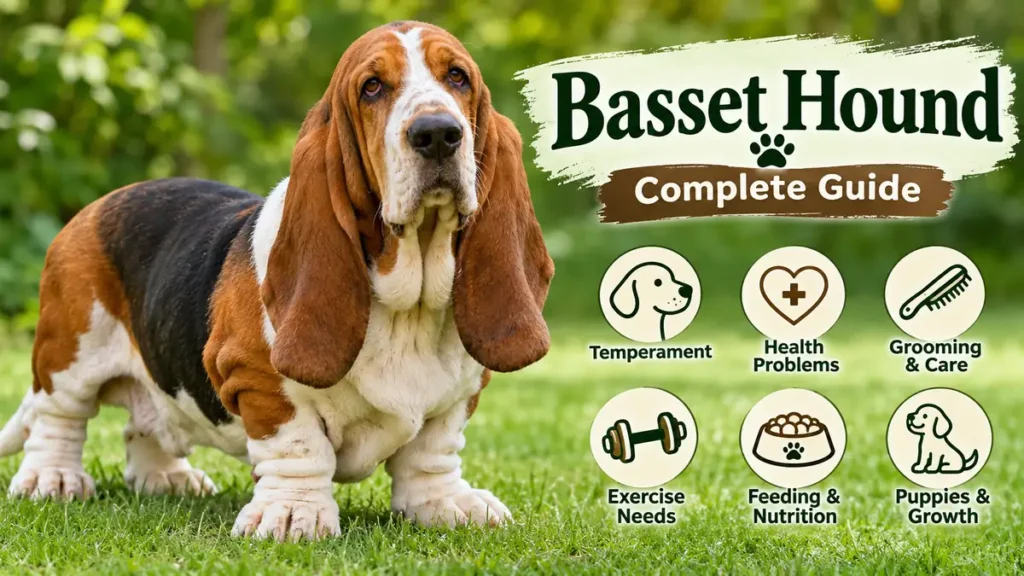
With their long, velvety ears, droopy eyes, short legs, and remarkable sense of smell, Basset Hounds are among the most recognizable dog breeds. Their relaxed appearance can be misleading, though. Behind that gentle expression is a determined scent hound with a surprisingly independent personality.
The basset hound is a medium-sized, short-legged scent hound originally developed in France for tracking small game. Known for its affectionate temperament, powerful nose, and distinctive deep bark, this breed typically weighs 40–65 pounds and lives approximately 12–13 years. It requires moderate exercise, consistent training, and attentive ear and weight management.
Understanding the breed’s history, physical characteristics, behavior, and health requirements helps explain why these dogs can be wonderful companions while presenting challenges that first-time owners may not anticipate.
What Is a basset hound?
バセットハウンド|犬種の特徴と性格、飼い方や子犬の値段・迎え方まで解説 | わんちゃんホンポ
Royalty-Free photo: Closeup photo of adult tricolor basset hound | PickPik
All Dog Breeds | Breed Finder, Traits & Expert Advice – Ask Woodgreen
11
The Basset Hound is a scent-hunting dog belonging to the hound group. Its name comes from the French word bas, meaning low, referring to the breed’s distinctive short stature.
Unlike many small dogs, Bassets have substantial bodies, heavy bones, and considerable strength. Their low height allows them to move through dense vegetation while following scent trails close to the ground.
The breed is recognized by major canine organizations, including the American Kennel Club (AKC), the The Kennel Club in the United Kingdom, and the Fédération Cynologique Internationale (FCI).
Key breed characteristics
| Characteristic | Typical description |
|---|---|
| Breed group | Hound |
| Origin | France; further development in Britain |
| Height | Up to approximately 15 inches at the shoulder |
| Weight | 40–65 pounds (18–29 kg) |
| Lifespan | Approximately 12–13 years |
| Coat | Short, smooth, dense |
| Common colors | Tricolor, lemon and white, red and white |
| Temperament | Affectionate, sociable, independent |
| Exercise | Moderate daily activity |
| Shedding | Moderate, year-round |
| Trainability | Intelligent but sometimes stubborn |
| Barking | Deep, loud, and sometimes frequent |
Individual dogs vary considerably, particularly in energy levels, body condition, and behavior.
History and Origin of the Basset Hound
French hunting roots
The breed’s ancestry is closely connected to French scent hounds developed for tracking rabbits, hares, and other small game.
Short-legged hunting dogs were especially valuable to hunters traveling on foot. Their slower movement made it easier for people to follow them without horses.
French hunting traditions contributed to several low-set scent-hound varieties, including the Basset Artésien Normand, which played an important role in the development of the modern breed.
The Basset’s exceptional nose allowed it to track animals through woodland, undergrowth, and difficult terrain.
Development in Britain
During the nineteenth century, French Bassets were introduced into Britain, where breeders refined their appearance and established recognizable breed characteristics.
The Earl of Onslow was among the figures associated with early British Basset Hound breeding. British breeding programs helped shape the heavier-bodied dog familiar today.
The breed later became established in the United States, where the American Kennel Club recognized it in 1885.
From hunting companion to family dog
Although the Basset Hound retains its hunting instincts, its role has expanded considerably.
Today, these dogs are primarily family companions, though some continue participating in scent work, tracking activities, and field events.
Their hunting ancestry remains evident in their behavior: a fascinating scent can instantly become more interesting than an owner’s instructions.
Basset Hound Appearance, Size, and Physical Features
Basset Hound | B | Lexikon | Tackenberg
The breed’s appearance is not simply decorative. Many of its distinctive characteristics developed in connection with scent tracking and hunting.
Height and weight
An adult Basset Hound generally stands no more than 15 inches tall at the shoulder.
Despite this relatively low height, adults commonly weigh between 40 and 65 pounds.
Males are often somewhat heavier than females, although individual body structure and conditioning matter more than sex alone.
Their substantial weight means they should not be treated like lightweight lapdogs, particularly when lifting them or managing stairs.
Long ears and loose skin
The Basset Hound’s long, pendulous ears are one of its defining features.
The ears, along with loose facial skin, may help retain scent particles near the dog’s nose during tracking. However, the precise contribution of these features to scent detection is difficult to quantify.
The ears also require attention because their shape limits ventilation and can contribute to moisture accumulation.
Loose skin around the face creates the familiar droopy expression, while the lower eyelids may expose some conjunctival tissue.
Excessive eye exposure, irritation, or discharge should not be dismissed as normal breed characteristics.
Short legs and long body
Basset Hounds have a form of disproportionate dwarfism associated with inherited skeletal development.
Their short limbs, deep chest, and relatively long back create a recognizable silhouette.
These features also influence practical care. Jumping from furniture, repeated high-impact activities, and excessive body weight can place unnecessary stress on the spine and joints.
Coat colors and markings
The breed has a short, smooth coat that usually requires relatively simple grooming.
Common colors include:
- Tricolor: black, tan, and white
- Lemon and white
- Red and white
- Black and white combinations
- Other recognized hound color patterns
Markings vary widely, and coat color is not a reliable indicator of temperament, intelligence, or health.
Basset Hound Temperament and Personality
A Basset Hound is generally affectionate, patient, and socially oriented. However, its independent hunting background makes it different from breeds developed primarily for close obedience work.
Are Basset Hounds good family dogs?
Basset Hounds can make excellent family companions when their needs are understood.
Many enjoy spending time with household members, relaxing nearby, and participating in daily family routines.
Their commonly observed personality traits include affection, sociability, curiosity, persistence, and a relatively relaxed indoor manner.
They often do well with respectful children, but supervision remains essential. Children should never pull their ears, climb on them, or disturb them while sleeping or eating.
Are they friendly with other dogs?
The breed’s pack-hunting heritage contributes to its reputation for getting along with other dogs.
Many Bassets enjoy canine companionship, particularly when introduced and socialized appropriately.
Compatibility is never guaranteed, however. Individual personality, previous experiences, resource guarding, and socialization all affect relationships.
Can Basset Hounds live with cats?
Yes, some Basset Hounds coexist peacefully with cats.
Early introductions, controlled interactions, and rewarding calm behavior can improve the chances of success.
Because the breed was developed to pursue small animals, owners should monitor prey-driven behavior rather than assuming every Basset will naturally accept smaller pets.
Are Basset Hounds lazy?
The breed is often described as lazy because many adults enjoy extended periods of rest.
However, this description overlooks their working heritage.
A Basset may appear uninterested in ordinary household activity but become energetic and determined when following an interesting scent.
Young dogs, in particular, may be more active and mischievous than expected.
Do Basset Hounds bark a lot?
Basset Hounds are known for their deep, resonant vocalizations.
They may bark, howl, or produce a distinctive baying sound when excited, bored, lonely, or responding to environmental stimuli.
Their vocal nature can create difficulties in apartments or closely spaced housing.
Training and enrichment can reduce unnecessary barking, but expecting complete silence from a scent hound is unrealistic.
Training and Socializing a Basset Hound
Can Basset Hounds Be Trained Not to Bark? Tips for Their Happy Silence – Know Animals
Basset Hounds are intelligent dogs, but intelligence does not always translate into immediate obedience.
Their hunting background encouraged independent decision-making, especially when following scent trails.
Why are Basset Hounds considered stubborn?
A Basset may understand a command yet choose to investigate a smell instead.
This behavior is often interpreted as stubbornness, although competing motivation is a more useful explanation.
Training works best when the reward is more appealing than the distraction.
Short sessions, high-value food rewards, praise, and consistent expectations generally produce better results than repetitive corrections.
Essential obedience training
Early training should emphasize practical everyday behaviors:
- Name recognition: Reward the dog for responding promptly.
- Recall: Practice returning when called in secure environments.
- Loose-leash walking: Reinforce walking without pulling toward scents.
- Sit and stay: Build impulse control gradually.
- Leave it: Teach the dog to disengage from unsafe objects.
- Settle: Reward calm behavior in the home.
A particularly important safety rule is to avoid relying on off-leash recall in unsecured areas.
Even a well-trained Basset can become intensely focused on an animal trail.
Potty training challenges
House training can take patience, especially with young puppies.
A consistent schedule helps:
- Take puppies outside after sleeping, eating, and playing.
- Reward elimination immediately in the correct location.
- Supervise indoor activity and limit unsupervised access.
- Clean accidents with an enzymatic cleaner.
- Avoid punishment, which may encourage hiding rather than learning.
Crate training can be useful when introduced positively and used for appropriate durations.
Early socialization
The puppy socialization period is particularly important for developing confidence.
Introduce the dog gradually to different people, surfaces, sounds, environments, and friendly animals.
Socialization should prioritize positive experiences rather than overwhelming exposure.
Puppy classes using reward-based methods can help owners establish reliable communication.
Exercise and Daily Activity Requirements
Despite their short legs, Basset Hounds need regular physical activity.
Exercise supports cardiovascular fitness, joint mobility, weight management, and mental well-being.
How much exercise does a Basset Hound need?
Many healthy adult Bassets benefit from roughly 30–60 minutes of daily activity, divided into manageable walks and play sessions.
This is a practical starting point rather than a universal prescription.
Age, fitness, weather, body condition, and medical history should determine the actual amount.
Puppies require shorter, age-appropriate activity and should not be pushed into prolonged forced exercise.
Senior dogs may benefit from shorter, more frequent walks.
Why sniffing matters
For a scent hound, sniffing is not merely a distraction. It is a major source of mental stimulation.
Allowing time to explore smells during walks can make outings more satisfying.
Useful enrichment activities include scent trails, food-search games, puzzle feeders, snuffle mats, and simple tracking exercises.
A short, scent-rich walk may be more mentally engaging than a longer walk that allows no exploration.
Can Basset Hounds swim?
Swimming is not a dependable natural strength for this breed.
Their heavy bodies, short legs, and unusual proportions can make staying afloat difficult.
Some individuals can swim, but others struggle considerably.
Never assume a Basset is safe in deep water. Use a properly fitted canine life jacket around pools, boats, or open water, and provide constant supervision.
Apartment living
Basset Hounds can adapt to apartment living if they receive sufficient exercise and attention.
Their moderate activity requirements may suit smaller homes, but their loud vocalizations and difficulties with stairs can create challenges.
Ground-floor access or reliable elevators are especially useful for older dogs and those with mobility problems.
Basset Hound Health Problems and Lifespan
Basset Hounds typically live around 12–13 years, although some live longer with appropriate veterinary care, nutrition, and exercise.
Like many purebred dogs, they have inherited predispositions to certain health conditions. Their distinctive body structure can also increase the risk of orthopedic and skin-related problems.
Ear infections
Otitis externa, or inflammation of the external ear canal, is a common concern.
The breed’s long, hanging ears can trap moisture and limit airflow, creating conditions favorable to yeast and bacterial overgrowth.
Symptoms include head shaking, scratching, unpleasant odor, redness, discharge, and discomfort when the ears are touched.
Inspect the ears regularly and clean them only with a veterinarian-recommended product and technique. Excessive cleaning can irritate healthy ears.
Intervertebral disc disease
Intervertebral disc disease (IVDD) affects the cushioning discs between vertebrae.
Basset Hounds may be predisposed to spinal problems because of their inherited skeletal structure.
Possible signs include back pain, reluctance to jump, an abnormal gait, weakness, or loss of coordination.
Sudden paralysis, inability to walk, or loss of bladder control requires emergency veterinary attention.
Maintaining a healthy weight and reducing unnecessary high-impact jumping may help limit avoidable spinal stress, although these measures cannot eliminate inherited risk.
Hip and elbow problems
Hip dysplasia and elbow abnormalities can affect mobility and comfort.
Symptoms may include stiffness, limping, difficulty rising, and reluctance to exercise.
Veterinary assessment may involve orthopedic examinations and diagnostic imaging.
Management depends on severity and can include weight control, rehabilitation, pain medication, or surgery.
Eye conditions
Several eye disorders deserve attention in this breed.
Glaucoma involves increased pressure within the eye and can cause permanent vision loss. Both primary open-angle glaucoma (POAG) and angle-closure forms occur in Basset Hounds.
Ectropion causes the eyelid to turn outward, potentially exposing sensitive tissues.
Entropion occurs when the eyelid turns inward, allowing eyelashes or skin to irritate the cornea.
Dry eye, also called keratoconjunctivitis sicca, may cause chronic irritation and discharge.
A painful, cloudy, swollen, or suddenly red eye should be examined urgently.
Gastric dilatation-volvulus
Gastric dilatation-volvulus (GDV), sometimes called twisted stomach or bloat, is a life-threatening emergency.
Although particularly associated with large, deep-chested breeds, Basset Hounds can also be affected.
Warning signs include unsuccessful attempts to vomit, abdominal swelling, excessive drooling, restlessness, and sudden weakness.
Suspected GDV requires immediate emergency veterinary treatment. Do not attempt home remedies or wait for symptoms to resolve.
Owners can discuss individual risk and preventive gastropexy with their veterinarian. Basset Hound Club of America+1
Inherited genetic disorders
Responsible breeding programs should consider genetic conditions identified in the breed.
These include:
- Thrombopathia: An inherited platelet-function disorder that can cause abnormal bleeding.
- Lafora disease: An inherited neurological condition associated with progressive myoclonic epilepsy.
- Mucopolysaccharidosis type I (MPS I): A metabolic storage disorder that can affect multiple body systems.
- Primary open-angle glaucoma: An inherited eye disease for which genetic testing is available.
The Basset Hound Club of America recommends relevant genetic screening and informed breeding decisions. Basset Hound Club of America+1
Obesity and weight-related disease
Obesity is one of the most preventable threats to a Basset Hound’s health.
Excess weight increases stress on joints and the spine, reduces exercise tolerance, and may worsen existing medical problems.
Because the breed has a naturally heavy build, visual appearance alone can be misleading.
Veterinarians use body condition scoring to assess fat coverage, waist definition, and overall condition.
Maintaining a lean body condition is generally more useful than aiming for a particular number on the scale.
Grooming and Everyday Basset Hound Care
How to Groom a Basset Hound: A Step-by-Step Guide | Hero Pet Health
The Basset Hound’s short coat is relatively straightforward to maintain, but its ears, skin folds, nails, and teeth require consistent attention.
Coat brushing and shedding
Basset Hounds shed throughout the year, sometimes more heavily during seasonal changes.
Brushing once or twice weekly helps remove loose hair and distribute natural skin oils.
A soft-bristle brush, rubber grooming mitt, or suitable shedding tool usually works well.
Frequent aggressive brushing is unnecessary and may irritate the skin.
Bathing and skin folds
Bathing frequency depends on the dog’s activity, skin condition, and odor.
Many healthy Bassets need only occasional baths using a mild dog-specific shampoo.
Check facial folds, the neck, and other areas where moisture may accumulate.
If folds become damp or dirty, clean them gently and dry them thoroughly.
Persistent redness, odor, itching, or greasy skin can indicate dermatitis, yeast overgrowth, or allergies.
Nail trimming
Basset Hounds need regular nail care because excessively long nails can affect posture and walking comfort.
Check nails every few weeks and trim them as needed.
Their short legs and substantial body weight make good paw support especially important.
Dental hygiene
Dental disease can affect dogs of any breed.
Daily brushing with dog-safe toothpaste is one of the most effective ways to reduce plaque buildup.
Veterinary dental examinations and professional cleaning may also be necessary.
Human toothpaste should never be used because some ingredients are unsafe for dogs.
Do Basset Hounds drool?
Yes. Their loose lips and heavy jowls make drooling common.
Saliva may become more noticeable around meals, drinking, or excitement.
However, sudden excessive drooling accompanied by distress, vomiting attempts, or abdominal swelling can indicate a medical emergency.
Feeding and Nutrition for a Basset Hound
A balanced diet is essential for maintaining healthy weight, supporting skeletal development, and reducing the risk of nutrition-related problems.
Choosing appropriate dog food
Select a complete and balanced diet appropriate for the dog’s life stage.
Puppies require food formulated for growth, while adults generally need maintenance nutrition.
Senior dogs may benefit from dietary adjustments depending on activity, body condition, and health status.
Food should meet recognized nutritional standards, such as those established by the Association of American Feed Control Officials (AAFCO) or applicable European nutritional guidance.
How much should a Basset Hound eat?
Daily calorie requirements depend on weight, age, neuter status, activity, and metabolism.
A feeding chart on the food packaging provides a starting point, not an exact prescription.
Use measured portions and adjust according to body condition and veterinary advice.
Most healthy adult Bassets do well with their daily allowance divided into two meals.
Training treats should be included in the daily calorie budget. A commonly used guideline is to keep treats below 10% of total calorie intake. PDSA
Foods to avoid
Common foods that are unsafe for dogs include chocolate, grapes, raisins, onions, garlic, xylitol-containing products, and alcohol.
Cooked bones can splinter and cause gastrointestinal injury.
Rich, fatty leftovers may also trigger digestive upset or pancreatitis.
Owners should consult a veterinarian before introducing major dietary changes or supplements.
Preventing weight gain
The most effective approach combines portion control with consistent physical activity.
Regular weighing, body condition assessments, and careful treat management can identify weight changes early.
Puzzle feeders and food-dispensing toys can make meals more engaging without increasing total calories.
Basset Hound Puppies: Growth and Development
Adorable Basset Hound Puppies on the Run Are So Full of Maximum Cuteness – PetHelpful
Basset Hound puppies are playful, curious, and often surprisingly energetic.
Their early development has a lasting influence on adult behavior and health.
Growth stages
| Age | Typical development |
|---|---|
| 0–8 weeks | Early social learning with mother and littermates |
| 8–12 weeks | Adjustment to a new home and basic routines |
| 3–6 months | Teething, socialization, and foundational training |
| 6–12 months | Adolescent behavior and increasing independence |
| 12–18 months | Continued physical and behavioral maturation |
| 18–24 months | Many dogs approach full adult maturity |
These stages are approximate. Individual growth patterns vary.
Puppy feeding and skeletal development
A puppy’s developing skeleton requires appropriate nutrition and activity.
Overfeeding can contribute to excessive weight gain, placing unnecessary strain on growing joints.
Ask a veterinarian whether a growth diet designed for larger, heavier-bodied puppies is appropriate.
Avoid unnecessary calcium supplementation unless specifically prescribed.
Protecting growing joints
Young puppies should not be encouraged to repeatedly jump from high furniture or participate in strenuous forced exercise.
Provide nonslip flooring, comfortable bedding, and supervised play.
Exercise should support normal development without creating excessive physical stress.
Choosing a healthy puppy
When evaluating a breeder, health and welfare should take priority over exaggerated physical features.
Look for documented health screening, clean living conditions, appropriate socialization, and a willingness to discuss inherited disorders.
Puppies should appear alert, comfortable, and able to move without obvious difficulty.
A responsible breeder should also explain the health history of both parents and provide veterinary records.
Basset Hound vs Beagle: Understanding the Differences
Basset Hounds and Beagles share scent-hunting ancestry, friendly personalities, and strong tracking instincts.
However, their physical structure and typical activity levels differ considerably.
| Feature | Basset Hound | Beagle |
|---|---|---|
| Build | Heavy, long-bodied, short-legged | Compact and athletic |
| Height | Up to 15 inches | Generally 13–15 inches |
| Weight | Commonly 40–65 pounds | Commonly 20–30 pounds |
| Ears | Very long and pendulous | Long but shorter |
| Energy | Moderate | Moderate to high |
| Training | Independent, scent-focused | Independent, often more energetic |
| Grooming | Short coat, significant ear care | Short coat, routine grooming |
| Vocalization | Deep bark and bay | Bark, bay, and howl |
| Exercise style | Steady walks and scent exploration | Active walks, games, and scent work |
Both breeds benefit from secure fencing, consistent training, and opportunities to use their noses.
The Beagle generally suits households seeking a more energetic companion, while the Basset Hound may appeal to people who prefer a slower pace.
Neither breed should be considered maintenance-free.
Is a Basset Hound Right for Your Lifestyle?
The breed’s friendly disposition and moderate exercise requirements make it appealing to many households, but suitability depends on more than temperament.
Advantages of living with a Basset Hound
Many owners appreciate the breed’s affectionate personality, sociability, distinctive appearance, and relaxed indoor behavior.
Bassets can be rewarding companions for households that enjoy leisurely walks, scent games, and spending time together at home.
They may also adapt well to multi-dog families when properly introduced.
Challenges to consider
Potential difficulties include loud barking, independent behavior, persistent scent tracking, shedding, drooling, and susceptibility to certain inherited diseases.
Their heavy bodies and short legs can also make lifting and stair access difficult.
These are practical considerations rather than reasons to assume every individual will develop the same problems.
Can Basset Hounds be left alone?
Basset Hounds are social animals, and some experience distress when left alone for extended periods.
Separation-related behaviors may include persistent vocalization, destructive activity, pacing, or inappropriate elimination.
Gradual alone-time training, enrichment, predictable routines, and appropriate companionship can help.
A dog showing significant separation anxiety may need an individualized behavior plan developed with a qualified professional.
Are they suitable for first-time owners?
A Basset Hound can be suitable for a first-time owner who is prepared for consistent training and routine health maintenance.
However, the breed may frustrate someone expecting immediate obedience or an exceptionally quiet household pet.
Patience, positive reinforcement, and realistic expectations are essential.
Hot and cold weather considerations
Basset Hounds can struggle during hot weather, particularly if overweight or exercising in high humidity.
Provide shade, drinking water, and exercise during cooler parts of the day.
Their low body position can also increase contact with hot pavement, snow, and wet ground.
Avoid extreme temperatures and watch for signs of heat stress, including excessive panting, weakness, and collapse.
How to Keep a Basset Hound Healthy and Happy
Long-term care works best when daily routines support both physical and behavioral needs.
A practical routine includes measured meals, regular walks, opportunities for sniffing, short training sessions, and plenty of comfortable rest.
Weekly checks should include the ears, skin folds, paws, coat, and body condition.
Routine veterinary appointments help identify developing problems before they become severe.
Preventive care should include appropriate vaccinations, parasite prevention, dental care, and age-related health screening.
Owners should also pay close attention to subtle changes in mobility. Reluctance to climb stairs, unusual stiffness, or reduced interest in walking may indicate discomfort rather than ordinary aging.
For older Bassets, supportive bedding, nonslip surfaces, ramps, and adjusted exercise can improve daily comfort.
The breed’s scent-driven behavior also makes secure identification especially important. A properly fitted collar or harness, current identification tag, and registered microchip help reduce the consequences of accidental escape.
Final Thoughts on the basset hound
The basset hound combines a gentle, affectionate personality with the independence and determination of a traditional scent hunter.
Its unusual appearance, strong sense of smell, and relaxed household manner make it a memorable companion. Yet responsible ownership requires attention to weight management, ear hygiene, spinal health, training, and daily enrichment.
For households that appreciate a patient, sociable dog and can accommodate its vocal nature and physical needs, the Basset Hound can become a deeply rewarding family companion.
The best foundation for a healthy life is simple: maintain a lean body condition, encourage safe daily movement, provide opportunities to explore scents, and address potential health problems early.
Is this conversation helpful so far?