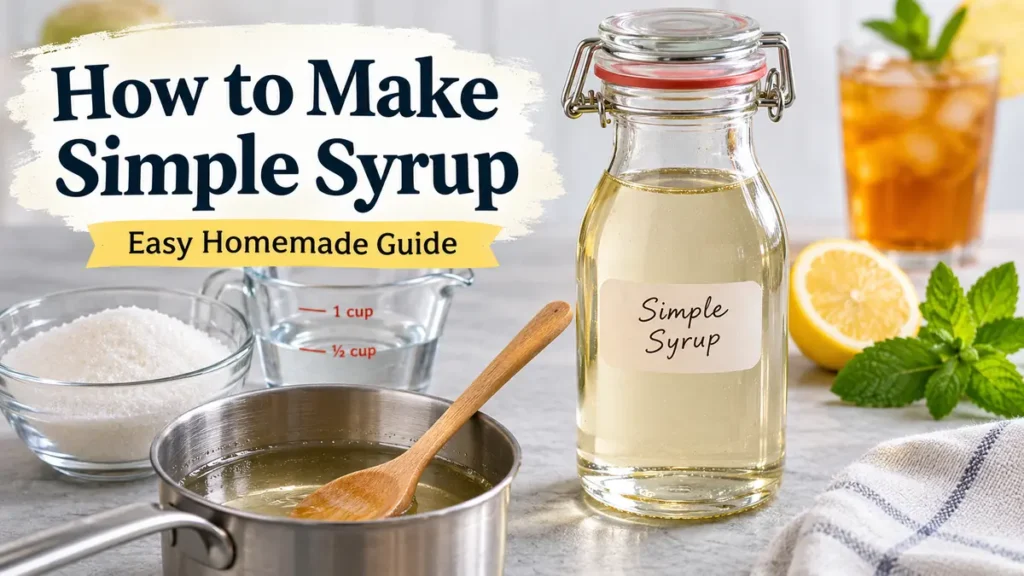
Simple syrup is one of the easiest ingredients to prepare at home, yet it can make a noticeable difference in coffee, iced tea, lemonade, cocktails, and desserts. Instead of waiting for granulated sugar to dissolve in a cold drink, you can add a smooth liquid sweetener that blends almost instantly.
Learning how to make simple syrup requires just two ingredients: granulated sugar and water. Combine equal parts sugar and water, heat gently while stirring until the sugar dissolves, then cool before using. The process usually takes about 5–10 minutes, and the finished syrup can be refrigerated for later use.
The basic recipe is simple, but understanding sugar ratios, heating methods, storage conditions, and flavor variations helps you get consistent results every time.
What Is Simple Syrup?
Simple syrup is a liquid sweetener made by dissolving sugar in water. It is widely used in beverages, baking, confectionery, and dessert preparation because it distributes sweetness evenly without leaving undissolved sugar crystals.
Unlike honey, maple syrup, or flavored commercial syrups, traditional simple syrup has a neutral sweetness. This makes it especially useful when you want to sweeten something without significantly changing its flavor.
The most common version uses a 1:1 ratio of sugar to water, measured by weight or volume. A more concentrated version, known as rich simple syrup, typically uses a 2:1 sugar-to-water ratio.
Why use simple syrup instead of regular sugar?
Granulated sugar dissolves slowly in cold liquids. If you stir sugar directly into iced coffee or lemonade, some crystals may settle at the bottom.
Simple syrup solves this problem because the sugar has already dissolved.
It also offers several practical benefits:
- Blends quickly into hot and cold drinks.
- Provides consistent sweetness when measured.
- Can be infused with herbs, spices, fruit, or citrus.
- Helps moisten cakes and sponge layers.
- Requires no specialized kitchen equipment.
Simple syrup is not inherently less sugary than granulated sugar. It simply provides a convenient way to incorporate dissolved sugar into recipes.
Ingredients and Equipment for Homemade Simple Syrup
Basic recipe
Prep: 2 min · Cook: 5 min · Makes about 1½ cups
| Granulated white sugar | 1 cup (about 200 g) |
| Water | 1 cup (240 ml) |
These measurements make a standard 1:1 syrup by volume. The final yield is approximately 1½ cups, although it can vary slightly depending on heating and evaporation.
Kitchen equipment
You will need a small saucepan, measuring cups or a kitchen scale, a spoon or silicone spatula, and a clean glass jar or food-safe bottle with a tight-fitting lid.
A funnel is helpful when transferring cooled syrup into a narrow bottle, but it is not essential.
Which sugar works best?
White granulated sugar is the standard choice because it dissolves readily and produces a clear syrup with a neutral taste.
Other sugars can be used, but they affect the finished syrup differently.
| Sugar type | Flavor and appearance | Best use |
|---|---|---|
| White granulated | Neutral, clear | Coffee, tea, lemonade, cocktails |
| Brown sugar | Caramel and molasses notes | Cold brew, desserts, spiced drinks |
| Demerara | Rich, slightly toffee-like | Cocktails and coffee |
| Turbinado | Mild caramel flavor | Tea and specialty drinks |
| Coconut sugar | Earthy, caramel-like | Selected desserts and beverages |
Less-refined sugars may produce darker or cloudier syrups. That is normal and does not necessarily indicate a preparation problem.
How to Make Simple Syrup Step by Step
How to Make Simple Syrup – Smith’s Food and Drug
Step 1: Combine sugar and water
Add 1 cup of granulated sugar and 1 cup of water to a small saucepan. Stir briefly to wet the sugar evenly.
Comment faire un sirop de sucre | Cointreau France
Step 2: Heat gently
Place the saucepan over medium-low heat. Stir occasionally as the water warms and the sugar begins dissolving. A vigorous boil is unnecessary.
Zuckersirup selber machen – das beste Blitz-Rezept! | Einfach Backen
Step 3: Dissolve completely
Continue heating until no sugar crystals remain. The mixture should look clear when using white sugar. This usually takes 3–5 minutes once heating begins, depending on the quantity and stove.
Сахарный сироп: как приготовить сироп из сахара и воды | ТестоВед
Step 4: Cool and transfer
Remove the saucepan from the heat. Let the syrup cool, then transfer it into a clean, food-safe container. Cover and refrigerate promptly.
How do you know when simple syrup is ready?
The syrup is ready when the sugar is fully dissolved. You should not see crystals on the bottom of the saucepan or feel gritty particles when stirring.
You do not need to reduce the mixture until it becomes thick. Standard simple syrup remains relatively thin and pourable, especially while warm.
Boiling it for too long evaporates water and changes the intended sugar concentration.
Can you make simple syrup without boiling?
Yes. Sugar can dissolve in water without reaching boiling temperature.
For a quick warm-water method, combine sugar with warm water and stir until fully dissolved. This works especially well for small batches.
A cold-process method is also possible: combine equal parts sugar and room-temperature water in a clean container and stir or shake repeatedly until dissolved.
Cold-process syrup may take longer to prepare, and the container should be refrigerated promptly after mixing. It should not be assumed to have the same storage stability as commercially manufactured syrups.
Simple Syrup Ratios: 1:1 vs. 2:1
The sugar-to-water ratio determines how sweet and concentrated your syrup becomes.
1:1 Standard Syrup
1 part sugar + 1 part water
Lighter, thinner, and easy to mix into everyday drinks.
2:1 Rich Syrup
2 parts sugar + 1 part water
Sweeter and more concentrated, requiring less syrup for similar sweetness.
| Feature | Standard 1:1 | Rich 2:1 |
|---|---|---|
| Sugar | 1 cup | 2 cups |
| Water | 1 cup | 1 cup |
| Consistency | Thin | Thicker |
| Sweetness per tablespoon | Lower | Higher |
| Common uses | Lemonade, iced tea, coffee | Cocktails, concentrated sweetening |
| Refrigeration | Required | Recommended |
These ratios are commonly described by volume in home recipes. Measuring by weight provides greater consistency, especially when using different types of sugar.
How to make rich simple syrup
Combine 2 cups of sugar with 1 cup of water in a saucepan. Warm gently and stir until completely dissolved.
Because the mixture contains more sugar, dissolving it may take slightly longer.
Allow the syrup to cool before transferring it into a clean container. Rich syrup can have better resistance to microbial growth than standard syrup because of its higher sugar concentration, but homemade rich syrup should still be refrigerated.
How much syrup should you use?
The amount depends on the drink, its acidity, and personal preference.
As a starting point, try 1–2 teaspoons of standard simple syrup in a cup of coffee or tea. For an 8-ounce glass of lemonade, start with about 1 tablespoon, taste, and adjust.
For cocktails, the recipe’s specified syrup ratio matters. Replacing standard syrup with the same volume of rich syrup can make the finished drink noticeably sweeter.
How to Make Simple Syrup for Coffee, Cocktails, and Desserts
Different recipes benefit from slightly different approaches to syrup preparation.
Simple syrup for iced coffee and cold brew
Coffee syrups should blend smoothly without overpowering the coffee’s natural flavor.
Standard white-sugar syrup works well for iced lattes, cold brew, and sweetened espresso drinks.
Brown sugar syrup is another option, especially when you want caramel or molasses notes.
For a basic brown sugar version, combine 1 cup of packed brown sugar with 1 cup of water and heat until dissolved.
Simple syrup for cocktails and mocktails
Bartenders commonly use simple syrup to balance acidic ingredients such as lemon and lime juice.
Drinks including the Daiquiri, Whiskey Sour, and Tom Collins traditionally rely on a balance of sweetness and acidity.
Simple syrup also works in alcohol-free mocktails, sparkling lemonade, and fruit spritzers.
Using measured quantities is helpful because small changes in sweetness can noticeably alter a drink’s balance.
Simple syrup for cakes and baking
Bakers often brush simple syrup onto sponge cakes to add moisture and sweetness.
For this purpose, use cooled standard syrup and apply a light, even coating with a pastry brush.
The amount depends on the cake’s size and texture. Start with a small quantity rather than soaking the entire surface.
Vanilla, citrus, or coffee-flavored syrup can complement different cake fillings and frostings.
Simple syrup for lemonade and iced tea
Lemonade is one of the most practical uses for homemade syrup.
Combine fresh lemon juice, cold water, and simple syrup, then adjust the balance to taste. Since the sugar is already dissolved, the drink can be mixed without additional heating.
The same method works for black tea, green tea, hibiscus tea, and fruit-infused iced teas.
How to Make Flavored Simple Syrup
Once you understand the basic recipe, you can create flavored syrups using herbs, spices, fruit, and extracts.
The general technique is to prepare standard syrup, add flavoring ingredients, allow them to steep, and strain before storing.
Mint Simple Syrup – Dirt and Dough
Mint simple syrup
Add a handful of washed fresh mint leaves to warm syrup. Steep for 10–15 minutes, then strain. Ideal for iced tea, lemonade, and mojitos.
How to Make Vanilla Syrup at Home | Dadora Vanilla
Vanilla simple syrup
Stir 1 teaspoon of vanilla extract into a cooled batch of syrup, or steep a split vanilla bean in warm syrup. Excellent for coffee, lattes, and desserts.
3 Ingredient Cinnamon Simple Syrup
Cinnamon simple syrup
Add 2 cinnamon sticks to the saucepan while heating. Allow them to steep for 15–20 minutes before removing. Suitable for spiced coffee and autumn beverages.
Strawberry simple syrup
Add 1 cup of chopped strawberries to the basic syrup. Simmer gently for about 5 minutes, let steep briefly, then strain and cool. Use in lemonade, iced tea, or desserts.
Other popular variations include ginger, lavender, rosemary, basil, orange peel, and lemon zest.
When preparing citrus syrup, use washed citrus peel and avoid excessive amounts of the bitter white pith. For lavender syrup, use food-grade culinary lavender and steep lightly because its flavor can become overpowering.
Fruit- and herb-infused syrups are more perishable than plain syrup. Refrigerate them immediately after cooling and make small batches that can be used quickly. University of Maine Cooperative Extension+1
How Long Does Homemade Simple Syrup Last?
Proper storage helps preserve flavor, consistency, and food safety.
For a standard homemade 1:1 syrup, a conservative approach is to use it within 1–2 weeks when refrigerated, although some published recipes allow three to four weeks under clean storage conditions.
Actual shelf life depends on preparation hygiene, refrigeration temperature, concentration, and added ingredients.
Best practices for storing simple syrup
- Use a thoroughly cleaned glass bottle or food-safe container.
- Let the syrup cool before sealing and refrigerating.
- Keep the container tightly closed.
- Store at 40°F (4°C) or below.
- Avoid dipping used spoons or other contaminated utensils into the syrup.
- Label the container with its preparation date.
Do not assume homemade simple syrup is shelf-stable simply because it contains sugar. University extension guidance recommends refrigeration and does not provide a validated general-purpose home-canning process for plain or infused simple syrup. Ask Extension+1
Can you freeze simple syrup?
Yes. Freezing is a practical option for preparing syrup in advance.
Pour cooled syrup into clean, freezer-safe containers or ice cube trays, leaving room for expansion. Once frozen, cubes can be transferred to a freezer-safe bag.
Standard syrup may remain somewhat soft or slushy depending on sugar concentration and freezer temperature.
For best quality, use frozen syrup within a few months. Thaw in the refrigerator when necessary.
How can you tell if simple syrup has gone bad?
Discard syrup if you notice mold, unexpected cloudiness, bubbles associated with fermentation, an unusual odor, or a significant change in texture.
Some crystallization can occur without spoilage, especially in concentrated syrups. However, a normal appearance does not guarantee that improperly stored syrup is safe.
Never taste questionable syrup to determine whether it has spoiled.
Common Simple Syrup Problems and How to Fix Them
Although the recipe uses only two ingredients, several small mistakes can affect the finished product.
| Problem | Likely cause | Solution |
|---|---|---|
| Sugar crystals remain | Insufficient stirring or dissolving time | Warm gently and stir until dissolved |
| Syrup is too thick | Excess sugar or water evaporation | Add a measured amount of water and dissolve again |
| Syrup is too thin | Expecting a thick sauce from 1:1 syrup | Use a 2:1 recipe if greater concentration is needed |
| Syrup turns amber | Excessive heating or caramelization | Use lower heat and remove once dissolved |
| Crystals appear after cooling | High concentration or crystallization | Reheat with a little water if otherwise fresh and safely stored |
| Syrup becomes cloudy unexpectedly | Possible contamination or spoilage | Discard rather than attempting to repair |
Why is my simple syrup crystallizing?
Crystallization occurs when dissolved sugar begins forming solid crystals again.
This can happen when the syrup is highly concentrated, water evaporates during cooking, or undissolved sugar crystals remain on the saucepan’s sides.
To reduce the risk, use accurate measurements, avoid unnecessary boiling, and ensure the sugar is fully dissolved.
A small amount of corn syrup or glucose syrup can help inhibit crystallization in certain confectionery preparations, although it is unnecessary for ordinary drink syrup.
Why is my syrup not thick?
Standard simple syrup is not supposed to resemble honey.
A 1:1 mixture contains enough water to remain relatively fluid. It becomes slightly more viscous as it cools but should still pour easily.
If you need a thicker syrup for a particular drink or dessert, prepare rich simple syrup rather than boiling standard syrup until substantial water evaporates.
Can you reheat simple syrup?
Yes, provided the syrup has been stored safely and shows no signs of spoilage.
Reheating can help dissolve harmless sugar crystals. However, heating does not reliably make spoiled syrup safe again.
If there is any indication of mold, fermentation, or contamination, discard the entire batch.
Simple Syrup Substitutes and Sugar-Free Alternatives
Sometimes you may want to sweeten a drink without preparing traditional sugar syrup.
Several alternatives work, although each changes the flavor or consistency.
| Substitute | Main characteristic | Consideration |
|---|---|---|
| Honey syrup | Floral sweetness | Honey flavor affects the drink |
| Agave syrup | Mild, concentrated sweetness | Sweeter than some standard syrups |
| Maple syrup | Distinct maple flavor | Changes the flavor profile |
| Date syrup | Rich, fruity sweetness | Darker color and stronger taste |
| Stevia-based syrup | Low- or no-sugar option | Sweetness and texture vary by formulation |
| Monk fruit sweetener syrup | Alternative sweetening option | May require stabilizers for syrup-like consistency |
How to make honey syrup
Combine 1 part honey with 1 part warm water and stir until smooth.
Honey syrup is easier to incorporate into cold drinks than thick honey straight from the jar.
Because honey and sugar have different sweetness profiles, substitutions may require adjustments.
Can you make sugar-free simple syrup?
Yes, but the result depends on the sweetener.
Some sugar substitutes, including erythritol, can recrystallize as the mixture cools. Others dissolve readily but lack the viscosity that sucrose provides.
For a homemade version, use a sweetener specifically labeled for liquid applications and follow its recommended dilution instructions.
Sugar-free alternatives should not automatically be assumed to have the same storage life as traditional syrup.
Simple Syrup Measurements and Recipe Scaling
One useful feature of simple syrup is that the recipe can be increased or reduced without changing the basic method.
Simple Syrup Recipe Calculator
Select a batch size and sugar-to-water ratio. Measurements are by volume.Water quantity½ cup1 cup2 cups4 cupsSyrup concentration
1:1 Standard2:1 Rich
YOUR INGREDIENTS
1
Cups of sugar
1
Cups of water
Approximate sugar weight: 200 g. Dissolve gently, cool, and refrigerate.
Copy recipe
How much sugar is in one tablespoon of simple syrup?
A standard 1:1 syrup prepared with 1 cup of sugar and 1 cup of water contains approximately 200 grams of sugar in the full batch.
If the finished yield is about 1½ cups, that works out to roughly 8 grams of sugar per tablespoon.
The actual amount varies with the recipe’s measurements and final volume.
Rich syrup contains more sugar per tablespoon, so measuring accurately matters when comparing sweetness or calculating nutritional information.
Is simple syrup the same as liquid sugar?
In everyday food preparation, the terms are often used interchangeably.
However, commercial liquid sugar may have a different concentration, composition, or processing method.
Some manufacturers use invert sugar syrups, in which sucrose has been broken down into glucose and fructose. These formulations can have different sweetness and crystallization properties from ordinary homemade simple syrup.
Does simple syrup need to boil?
No. Sugar dissolution is the goal, not boiling.
Gentle heat speeds up dissolution, while prolonged boiling can evaporate water and change the ratio.
For most home recipes, remove the saucepan from the heat as soon as the sugar has completely dissolved.
Final Tips for Making Perfect Simple Syrup
Learning how to make simple syrup is mainly about getting the sugar-to-water ratio right and stopping the heating process at the correct time.
For everyday drinks, start with equal volumes of sugar and water. Use gentle heat, stir until clear, and refrigerate the cooled syrup in a clean, sealed container.
Choose a 2:1 ratio when you need a more concentrated sweetener, and experiment with mint, vanilla, cinnamon, or fruit when you want additional flavor.
The easiest way to begin is with a small batch of standard syrup. Once you know how it tastes and pours, adjusting its sweetness and flavor for coffee, lemonade, cocktails, or cakes becomes straightforward.