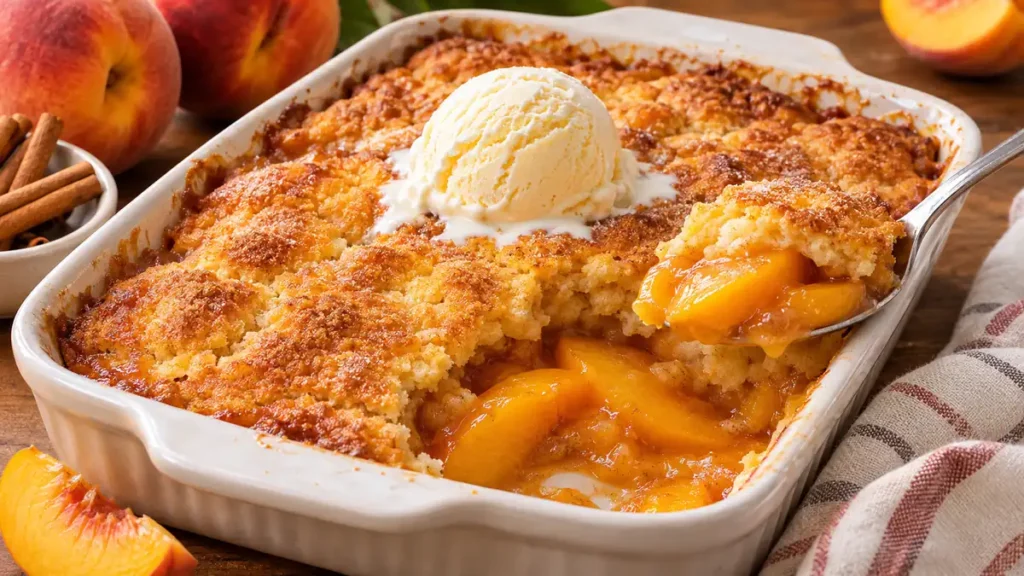
A great peach cobbler has three things: tender, juicy peaches, a golden buttery crust, and just enough sweetness to let the fruit shine. The best part? You don’t need complicated baking techniques or expensive ingredients to make this classic Southern dessert.
Peach cobbler is a baked fruit dessert made with sweetened peaches and a biscuit-like, cake-like, or pastry topping. As it bakes, the peaches release their juices, creating a warm fruit filling beneath a golden crust. It is traditionally served warm, often with vanilla ice cream or whipped cream.
This guide explains how to make homemade peach cobbler, choose the right peaches, adjust the sweetness, prevent a soggy crust, and store leftovers. The recipe uses a simple Southern-style batter that works with fresh, frozen, or canned fruit.
What Is peach cobbler?
Peach cobbler is a traditional American baked dessert featuring peaches beneath or among a soft, golden topping. It is particularly associated with Southern cooking, where fruit cobblers have long been a popular way to prepare seasonal produce.
Unlike peach pie, which typically uses a pastry crust, cobbler can have several different toppings:
- Biscuit topping: Tender, slightly crumbly dough placed over the fruit.
- Cake-like batter: A soft topping that rises around the peaches during baking.
- Pastry topping: Rolled or layered pastry that creates a flaky crust.
- Drop-biscuit topping: Small portions of dough distributed across the fruit, leaving gaps where the filling bubbles through.
The name cobbler is commonly associated with the uneven, cobbled appearance of traditional biscuit toppings.
What makes Southern peach cobbler different?
Southern-style peach cobbler often emphasizes a buttery crust, sweet peaches, and familiar baking ingredients such as flour, milk, sugar, and butter.
Some versions use a biscuit dough, while others rely on a pourable batter that rises around the fruit. Both approaches produce a comforting dessert, but their textures differ.
A batter-style cobbler is especially convenient for beginners because it requires no rolling, kneading, or pastry cutting.
Ingredients for Homemade peach cobbler
This easy peach cobbler recipe uses common pantry ingredients and approximately four cups of sliced peaches.
Recipe overview
| Detail | Amount |
|---|---|
| Preparation time | 15–20 minutes |
| Baking time | 40–45 minutes |
| Total time | Approximately 1 hour |
| Servings | 8 |
| Oven temperature | 375°F (190°C) |
| Baking dish | 9 × 13 inches |
| Difficulty | Easy |
Ingredients for the peach filling
| Ingredient | Quantity |
|---|---|
| Fresh sliced peaches | 4 cups |
| Granulated sugar | ½ cup |
| Fresh lemon juice | 1 tablespoon |
| Ground cinnamon | ½ teaspoon |
| Ground nutmeg | ⅛ teaspoon, optional |
| Vanilla extract | 1 teaspoon |
Ingredients for the buttery cobbler topping
| Ingredient | Quantity |
|---|---|
| All-purpose flour | 1 cup |
| Granulated sugar | ¾ cup |
| Baking powder | 2 teaspoons |
| Salt | ¼ teaspoon |
| Whole milk | 1 cup |
| Unsalted butter | ½ cup (113 g) |
The topping uses baking powder to create lift. Milk supplies moisture, while melted butter helps produce a rich, golden exterior.
Choosing the best peaches
Fresh, ripe peaches generally provide the most pronounced fruit flavor and a pleasing balance of sweetness and acidity.
Look for peaches that:
- Have a noticeable fruity aroma.
- Yield slightly when pressed gently.
- Feel heavy for their size.
- Have no large bruises or moldy areas.
- Are ripe but not excessively soft.
Yellow peaches are especially suitable because their mild acidity balances the sugar and buttery topping.
White peaches can also be used, although their lower perceived acidity may produce a sweeter-tasting dessert.
Freestone peaches are convenient because the flesh separates more easily from the pit. Clingstone peaches work too, but preparing them can take longer.
How to Make peach cobbler Step by Step
This recipe uses the traditional batter-and-butter layering technique. The layers should remain separate before baking because the batter expands and rises around the fruit in the oven.
Step 1: Preheat the oven
Preheat your oven to 375°F (190°C).
Place the butter in a 9 × 13-inch baking dish and set the dish in the oven briefly until the butter melts.
Remove the dish carefully and place it on a heat-resistant surface.
The butter should be melted, not browned or burned.
Step 2: Prepare the peach filling
Place the sliced peaches in a medium saucepan.
Add the filling sugar, lemon juice, cinnamon, nutmeg, and vanilla extract.
Cook over medium heat for approximately 4–6 minutes, stirring gently.
The peaches should soften slightly and release some juice while maintaining their shape.
Avoid prolonged cooking because the fruit will continue softening in the oven.
If the peaches are already very soft or canned, skip this stovetop step and simply combine the filling ingredients.
Step 3: Mix the cobbler batter
In a mixing bowl, combine:
- All-purpose flour
- Granulated sugar
- Baking powder
- Salt
Whisk until evenly distributed.
Add the milk and stir until the dry ingredients are incorporated.
A few small lumps are acceptable. Excessive mixing can make the topping less tender.
The finished mixture should resemble a pourable cake batter.
Step 4: Layer the ingredients
Pour the prepared batter evenly over the melted butter in the baking dish.
Do not stir the batter into the butter.
Next, spoon the peaches and their accumulated juices evenly over the batter.
Do not mix the layers.
During baking, the batter rises around the fruit, creating the characteristic golden crust and pockets of juicy peaches.
Step 5: Bake until golden
Place the baking dish on the center oven rack.
Bake for approximately 40–45 minutes, until:
- The surface is golden brown.
- The fruit juices are bubbling around the edges.
- The center no longer looks like raw, liquid batter.
- The topping feels set when gently touched.
If the surface browns before the center finishes baking, loosely cover the dish with aluminum foil and continue baking.
Actual baking time depends on your oven, dish material, and the moisture content of the peaches.
Step 6: Allow the cobbler to rest
Remove the baked cobbler from the oven and let it rest for 15–20 minutes.
Resting allows the hot filling to settle and thicken slightly.
Serving immediately can result in a runnier dessert because the fruit juices are still extremely hot.
For a classic presentation, spoon the warm cobbler into bowls and add a scoop of vanilla ice cream.
Can You Make peach cobbler With Frozen or Canned Peaches?
Yes. Fresh, frozen, and canned peaches can all be used to prepare peach cobbler, although each requires slightly different handling.
| Peach type | Preparation | Expected texture |
|---|---|---|
| Fresh | Slice and season | Firm, juicy, distinct fruit pieces |
| Frozen | Thaw and drain excess liquid | Soft but generally holds shape |
| Canned | Drain thoroughly | Softer, more tender filling |
Making peach cobbler with frozen peaches
Frozen peaches are a practical alternative when fresh peaches are unavailable.
For this recipe:
- Measure approximately four cups of frozen peach slices.
- Thaw them in the refrigerator.
- Drain excess liquid.
- Pat lightly with paper towels if particularly wet.
- Prepare the filling as directed, reducing the stovetop cooking if the fruit is already soft.
Unsweetened frozen peaches are preferable because they allow better control over the dessert’s sugar content.
Adding frozen fruit directly to the batter may increase baking time and produce additional moisture. Thawing first provides more predictable results.
Making peach cobbler with canned peaches
Canned peaches offer convenience and consistent availability.
Choose peaches packed in juice rather than heavy syrup when possible.
Drain thoroughly and use approximately four cups of sliced fruit.
Because canned peaches are already softened, they generally do not need stovetop cooking.
If using peaches packed in syrup, reduce the filling sugar substantially or omit it, depending on sweetness.
Canned fruit can produce a softer filling than fresh peaches, but it still works well with a cake-style topping.
Which type of peaches works best?
Fresh peaches offer the best balance of flavor and structure when ripe, seasonal fruit is available.
Frozen peaches are a strong alternative for year-round baking, particularly when properly thawed and drained.
Canned peaches are useful when convenience matters most, although their softer texture makes them less suitable for recipes requiring distinct fruit slices.
How to Get a Perfect Golden peach cobbler Crust
The crust is one of the defining features of a well-made cobbler.
A successful topping should be lightly crisp on the surface while remaining tender beneath.
Several factors influence the result.
Use the correct flour and leavening
All-purpose flour and baking powder create a soft, cake-like topping.
Baking powder releases gas during baking, helping the batter expand.
Check that the baking powder is fresh. Old or ineffective baking powder can leave the topping dense and flat.
Self-rising flour can be used in some cobbler recipes, but it already contains leavening and salt.
For this recipe, replace the all-purpose flour, baking powder, and salt with one cup of self-rising flour rather than adding the leavening twice.
Avoid overmixing the batter
Mix only until the flour is incorporated.
Overmixing encourages gluten development, potentially producing a tougher texture.
A smooth but slightly lumpy batter is preferable to one that has been beaten excessively.
Maintain the butter and batter layers
In this particular recipe, melted butter goes into the baking dish first.
The batter follows, and the peaches are added last.
Stirring the layers together changes how the topping rises and may result in a more uniform, dense texture.
Bake until the center is set
A golden surface does not always mean the cobbler is fully baked.
Check the center for uncooked batter.
If needed, insert a toothpick into a section containing mostly topping rather than fruit. It should come out without wet, raw batter, although moist crumbs are normal.
Bubbling juices around the edges also indicate that the fruit filling is hot.
Choose the right baking dish
A 9 × 13-inch dish provides sufficient surface area for the batter to spread and bake evenly.
Glass, ceramic, and metal dishes can all work, but they conduct and retain heat differently.
Use an oven-safe dish and avoid sudden temperature changes with glass or ceramic bakeware.
A deeper, smaller dish may require a longer baking time and can produce a thicker, softer topping.
Common peach cobbler Problems and How to Fix Them
Even a simple dessert can develop texture problems when the fruit is unusually juicy or the batter proportions change.
Why is my peach cobbler watery?
Peaches naturally contain substantial moisture.
When heated, they release juice that combines with sugar and other filling ingredients.
A slightly syrupy filling is normal. Excessive liquid, however, can make the dessert difficult to serve.
Common causes include:
- Using very ripe or overripe peaches.
- Adding frozen peaches without draining.
- Including too much canned peach syrup.
- Removing the cobbler before the filling has heated thoroughly.
- Serving before the filling has rested.
How to fix it: Drain excess liquid from frozen or canned peaches, avoid adding unnecessary water, and allow the finished cobbler to rest.
If your fresh peaches are extremely juicy, toss them with one tablespoon of cornstarch before cooking. This optional adjustment can help thicken the filling, although it will change the texture slightly.
Why is the topping soggy?
A soggy topping often results from excessive fruit liquid, an overly deep baking dish, or insufficient baking time.
The topping needs enough heat to set its structure.
For better results, use the recommended baking dish, avoid overloading it with fruit, and continue baking until the center is set.
Why is my cobbler too sweet?
Peach sweetness varies with variety and ripeness.
Using canned peaches in syrup alongside the full quantity of sugar can produce an overly sweet dessert.
Taste the fruit before adding sugar.
For particularly sweet peaches, reduce the filling sugar from ½ cup to ¼ cup.
Lemon juice also provides acidity that balances sweetness without requiring additional sugar.
Why is the crust hard or dry?
A dry topping may result from too much flour, too little milk, or excessive baking.
Measure flour carefully. Spoon it into the measuring cup and level the surface rather than packing it tightly.
Avoid baking far beyond the point when the topping is golden and fully set.
Why did the cobbler turn out dense?
Dense cobbler may result from expired baking powder, overmixed batter, or incorrect ingredient proportions.
Use fresh leavening, measure accurately, and mix gently.
Remember that cake-style cobbler is naturally denser and moister than a fluffy sponge cake.
peach cobbler vs. Peach Crisp, Crumble, and Pie
Peach cobbler belongs to a broader family of baked fruit desserts, but its topping distinguishes it from similar recipes.
| Dessert | Typical topping | Texture |
|---|---|---|
| Peach cobbler | Biscuit dough, batter, or pastry | Tender, cake-like, or biscuit-like |
| Peach crisp | Crumb mixture commonly containing oats | Crunchy and crumbly |
| Peach crumble | Flour, sugar, and butter crumbs | Soft, sandy, and crumbly |
| Peach pie | Rolled pastry crust | Flaky and structured |
| Peach buckle | Cake batter with fruit | Soft, cake-like crumb |
Is peach cobbler the same as peach crisp?
No.
Peach crisp typically features a crumbly topping containing oats, butter, sugar, and sometimes nuts.
Peach cobbler traditionally uses biscuit dough, pastry, or cake-like batter.
Both contain baked fruit, but their toppings create noticeably different textures.
What is the difference between cobbler and crumble?
A crumble generally uses a loose mixture of flour, butter, and sugar scattered over the fruit.
A cobbler uses a more substantial dough or batter topping.
Regional terminology varies, and some recipes combine elements of multiple desserts.
Is peach cobbler easier than peach pie?
For many home bakers, yes.
Peach pie usually requires preparing or purchasing pastry, fitting it into a pie plate, and managing the crust during baking.
A simple batter-style cobbler eliminates rolling and shaping dough.
It also has a more rustic presentation, making small imperfections less noticeable.
Delicious peach cobbler Variations
The basic recipe can be adapted to suit different preferences and available ingredients.
Old-fashioned peach cobbler with biscuit topping
For a more traditional biscuit-style variation, prepare the peaches as a separate filling.
Instead of pouring batter underneath, place spoonfuls of biscuit dough over the fruit.
A typical biscuit topping combines flour, baking powder, sugar, salt, cold butter, and buttermilk.
Bake until the biscuits are golden and cooked through and the peach filling is bubbling.
This variation has a more defined biscuit texture than the main recipe.
peach cobbler with brown sugar
Brown sugar adds mild caramel and molasses notes.
Replace some of the granulated sugar in the filling with light brown sugar.
For example, use ¼ cup granulated sugar and ¼ cup light brown sugar instead of ½ cup white sugar.
The result is a slightly deeper flavor that pairs well with cinnamon and vanilla.
peach cobbler with cinnamon and nutmeg
Cinnamon and nutmeg complement the natural sweetness of peaches.
Use them sparingly so they enhance rather than overpower the fruit.
A small amount of ground ginger or cardamom can also add warmth.
Peach and blueberry cobbler
Blueberries add color, acidity, and a contrasting fruit flavor.
Replace one cup of sliced peaches with one cup of blueberries.
Keep the total fruit quantity approximately the same to preserve the filling-to-topping ratio.
This combination is particularly appealing during summer when both fruits are readily available.
Peach and blackberry cobbler
Blackberries provide a sharper, more tart contrast to sweet peaches.
Substitute one cup of peaches with blackberries.
Because blackberries can release significant juice, consider adding a small amount of cornstarch if the filling looks particularly wet.
Gluten-free peach cobbler
A gluten-free version can be prepared using a suitable one-to-one gluten-free baking flour blend.
Choose a blend designed to replace all-purpose flour in baked goods.
Texture and liquid absorption may vary between brands, so follow the manufacturer’s substitution guidance.
Check that all other ingredients are gluten-free if preparing the dessert for someone with celiac disease.
Dairy-free peach cobbler
For a dairy-free adaptation, use plant-based milk and a suitable dairy-free butter alternative.
Unsweetened oat milk or soy milk can work in a batter-style topping.
The finished crust may differ slightly in richness and browning.
How to Serve peach cobbler
Peach cobbler is particularly enjoyable when served warm, although it can also be eaten at room temperature or chilled.
The warm filling contrasts well with cold, creamy toppings.
Classic serving ideas
Vanilla ice cream: The most familiar pairing. The ice cream melts gently over the warm fruit and buttery crust.
Whipped cream: A lighter-feeling topping that complements the sweetness of the peaches.
Greek yogurt: Plain or lightly sweetened yogurt adds tanginess and a creamy texture.
Caramel sauce: A small drizzle adds richness, although it can make an already sweet cobbler considerably sweeter.
Toasted pecans: Chopped pecans add crunch and a nutty contrast.
Should peach cobbler be served hot or cold?
Both are acceptable.
Warm cobbler highlights the aroma of baked peaches, cinnamon, and butter.
Chilled cobbler generally has a firmer filling and softer topping.
For the best contrast between warm fruit and cold ice cream, let the dessert cool briefly after baking rather than serving it straight from the oven.
Can you serve peach cobbler for breakfast?
Although it is traditionally a dessert, leftover cobbler is sometimes served with yogurt.
Keep in mind that cobbler contains added sugar and butter, so it is nutritionally closer to dessert than an everyday fruit breakfast.
How to Store, Freeze, and Reheat peach cobbler
Proper storage helps preserve flavor, texture, and food safety.
How long does peach cobbler last?
Allow the cobbler to cool, then cover and refrigerate it within two hours of baking.
Store it in an airtight container or a tightly covered baking dish.
For best quality, eat refrigerated leftovers within 3–4 days.
Do not leave a cooked fruit dessert sitting at room temperature overnight.
Can you freeze peach cobbler?
Yes.
Let the baked cobbler cool completely before freezing.
Divide it into portions if convenient, then wrap tightly or place in freezer-safe airtight containers.
For best quality, use within approximately 2–3 months.
The topping may become softer after freezing and thawing, but the dessert should retain much of its flavor.
Thaw overnight in the refrigerator before reheating.
How to reheat peach cobbler in the oven
The oven is a good choice when you want to restore some of the topping’s texture.
- Preheat to 350°F (175°C).
- Transfer the cobbler to an oven-safe dish if necessary.
- Cover loosely with foil if the surface is already browned.
- Heat for approximately 15–20 minutes for a small portion, or longer for a larger dish.
- Continue until the center is thoroughly hot.
Can you reheat it in the microwave?
Yes.
Place an individual serving in a microwave-safe bowl.
Heat in short intervals, checking between each interval until hot throughout.
Microwaving is convenient, but it usually softens the crust rather than making it crisp.
Can You Prepare peach cobbler Ahead of Time?
Peach cobbler can be partially prepared in advance, making it useful for family meals, holidays, and gatherings.
For the freshest texture, prepare the components separately.
Preparing the peach filling in advance
Slice and season the peaches, then refrigerate them in a covered container.
Ideally, use the prepared filling within 24 hours.
Fresh peaches may release additional liquid during storage, so check the mixture before assembling the dessert.
If necessary, drain excess juice.
Preparing the dry topping ingredients
Combine the flour, sugar, baking powder, and salt ahead of time.
Store the mixture in a sealed container in a cool, dry location.
Add the milk immediately before baking.
Keeping the wet and dry ingredients separate prevents the baking powder from reacting prematurely.
Can you assemble cobbler the night before?
For this batter-style recipe, assembling the entire dessert the night before is not ideal.
The batter may absorb fruit liquid, and the baking powder can lose some of its effectiveness before reaching the oven.
A better approach is to refrigerate the prepared fruit and dry ingredients separately, then assemble shortly before baking.
Alternatively, bake the cobbler ahead and reheat it before serving.
Tips for Making Better Homemade peach cobbler
A few small adjustments can make a noticeable difference in the finished dessert.
Balance sweetness with acidity
Sweetness alone does not create a flavorful peach filling.
Lemon juice brightens the fruit and helps balance sugar.
If the peaches taste particularly sweet, use less added sugar rather than increasing the lemon juice excessively.
Keep peach slices reasonably uniform
Cutting the fruit into similar-sized pieces promotes even cooking.
Slices approximately ½ inch thick work well for a soft filling that still retains recognizable pieces of peach.
Very thin slices may break down too quickly, especially when using ripe fruit.
Don’t automatically peel every peach
Peeling is optional.
Peach skins are edible and soften during baking, although some people prefer the smoother texture of peeled fruit.
To peel peaches easily, briefly blanch them in boiling water, transfer them to ice water, and slip off the skins.
For peaches with stubborn skins, a vegetable peeler or paring knife may be more effective.
Avoid adding too much fruit
Extra peaches may sound appealing, but substantially increasing the fruit quantity without adjusting the topping can produce an excessively wet dessert.
For the recipe provided here, approximately four cups offers a balanced starting point.
If you prefer a fruit-heavy cobbler, increase the fruit gradually and consider using a little cornstarch to manage the additional juices.
Let the fruit flavor remain noticeable
Vanilla, cinnamon, nutmeg, and brown sugar all complement peaches.
However, too many strong flavorings can mask the fruit.
Use spices in modest quantities and adjust according to the sweetness and aroma of the peaches.
Use visual cues rather than relying only on the timer
Ovens vary in temperature accuracy, and different baking dishes affect cooking time.
Look for a golden topping, bubbling filling, and a set center.
These signs are more useful than following the timer without checking the dessert.
Final Thoughts on Homemade peach cobbler
Homemade peach cobbler is a simple way to turn fresh or preserved peaches into a comforting baked dessert. Its appeal comes from the contrast between juicy fruit and a golden, buttery topping.
Fresh peaches offer excellent flavor during peach season, while frozen and canned peaches make the recipe practical throughout the year.
For reliable results, measure the ingredients carefully, manage excess fruit moisture, avoid stirring the batter layers, and bake until the topping is fully set.
Start with the basic peach cobbler recipe, then experiment with cinnamon, brown sugar, blueberries, or a biscuit-style topping to discover the version you enjoy most.