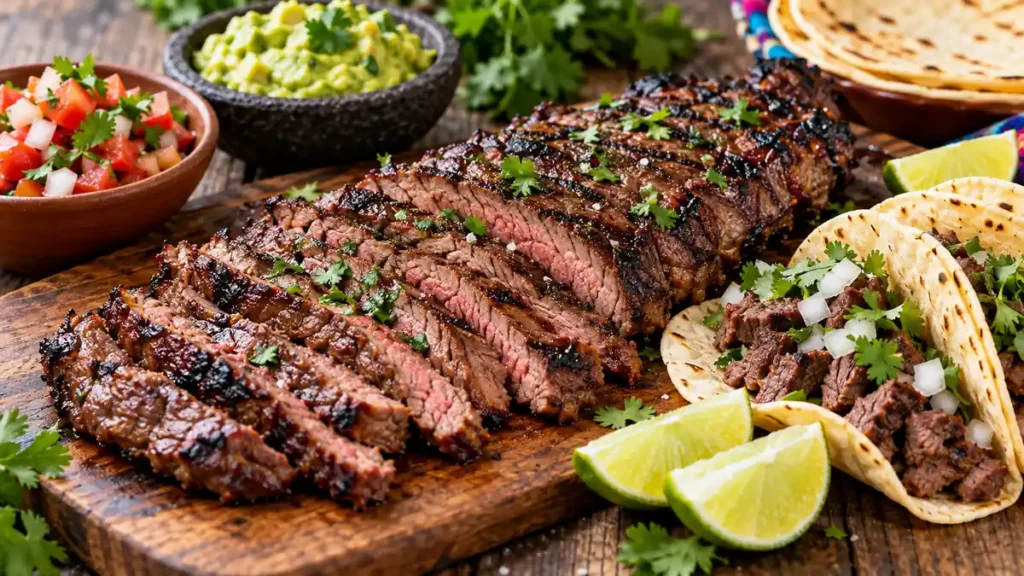
Few foods capture the smell and flavor of a hot grill quite like carne asada. The combination of beef, intense heat, browned edges, smoke, warm tortillas, and fresh salsa turns a relatively simple preparation into one of the most recognizable dishes associated with northern Mexican cooking. Food Network
Carne asada literally means “grilled meat.” In Mexican cooking, it generally refers to beef—often skirt, flank, flap, or another thin steak—seasoned or marinated and cooked quickly over high heat. The finished steak is rested, sliced thinly against the grain, and served on its own or in tacos, burritos, tortas, and other dishes. Cambridge Dictionary
The basic method is simple. What makes great carne asada different from ordinary grilled steak is how the cut, seasoning, heat, char, resting time, and slicing technique work together.
What Is Carne Asada?
Carne asada is a preparation of grilled beef strongly associated with Mexico, particularly the northern regions where cattle ranching and outdoor grilling have long been important parts of food culture. Food Network
The Spanish words explain the basic idea:
- Carne means meat.
- Asada means roasted or grilled.
That simple translation can be misleading, however. Carne asada isn’t one standardized recipe with a universally required ingredient list.
Different Mexican regions, families, taquerias, and grill cooks prepare the meat differently. Some use little more than salt. Others incorporate lime or orange juice, garlic, pepper, beer, soy sauce, chiles, herbs, or other seasonings. México in My Kitchen notes that northern Mexican preparations may be very simply seasoned, while other regional versions use citrus and marinades. Mexico In My Kitchen
The defining elements are generally the beef, high-heat cooking, browned or charred exterior, and the way the finished meat is served.
Is Carne Asada the Same as Steak?
Not exactly.
Steak describes a cut of beef, while carne asada describes a preparation. A steak becomes carne asada through the combination of seasoning and high-heat grilling or searing associated with the dish.
Carne asada is also commonly cut into thin strips or small pieces after cooking, especially when destined for tacos.
Carne Asada vs. Asado
The terms are related but shouldn’t always be treated as interchangeable.
In Mexico and parts of Central America, carne asada commonly describes grilled beef. In countries such as Argentina and Uruguay, asado has its own culinary traditions and can describe both a style of barbecue and the gathering surrounding it. Food Network
Where Did Carne Asada Originate?
Carne asada is especially connected with northern Mexico, a region with a strong cattle-ranching tradition.
Sonora and Nuevo León are frequently associated with the dish. Monterrey, the capital of Nuevo León, also has a particularly strong carne asada culture. Food Network
Yet trying to identify one definitive birthplace oversimplifies the food.
Grilling beef over fire exists throughout Latin America, and preparations vary considerably by location. Even within Mexico, what goes onto the steak before it reaches the grill can change from one household to another.
Carne asada is also more than a taco filling. Cooking meat outdoors can be a social occasion—a meal built around gathering people while the grill is hot.
That context helps explain why there is no single marinade that determines whether carne asada is “authentic.”
What Is the Best Meat for Carne Asada?
Choosing the right beef makes a noticeable difference.
Several cuts work, but thin steaks with a pronounced beef flavor are particularly well suited to fast, high-temperature cooking.
| Beef cut | Texture | Flavor | Best quality |
|---|---|---|---|
| Skirt steak | Loose, pronounced grain | Rich and beefy | Fast grilling |
| Flank steak | Lean and firm | Strong beef flavor | Easy slicing |
| Flap steak | Loose and tender | Rich | Excellent for tacos |
| Sirloin | Moderately tender | Balanced | Widely available |
| Ribeye | Very tender and fatty | Rich | Whole-steak serving |
Skirt and flank steak appear particularly frequently in modern carne asada recipes, while flap steak is another traditional-friendly option. Other cuts can work as well. Rick Bayless, for example, uses outer skirt steak while also offering ribeye, strip, or tenderloin as alternatives for a carne asada dinner. Rick Bayless
Skirt Steak
Skirt steak is an excellent choice when you want deep beef flavor and plenty of browned surface.
Its loose grain takes seasoning well and cooks rapidly. Because those muscle fibers are pronounced, however, cutting the cooked steak against the grain is essential.
Flank Steak
Flank steak is leaner and thicker than many skirt steaks.
It works particularly well when marinated, grilled quickly, rested, and thinly sliced. It is also widely available, which explains its frequent appearance in home carne asada recipes.
Flap Steak
Flap meat can be an outstanding option when available. Its loose texture and beefy character make it particularly suitable for chopping into taco-size pieces.
The best choice ultimately depends on availability. Proper cooking and slicing matter more than chasing one supposedly mandatory cut.
Does Carne Asada Need a Marinade?
Not necessarily.
This is one of the biggest misconceptions surrounding carne asada.
Some Mexican preparations are seasoned very simply, sometimes primarily with salt. Other cooks use citrus-heavy marinades, beer, soy sauce, garlic, chiles, or combinations of these ingredients. Rick Bayless also notes that Mexican grilled-steak preparations range from simple seasoning to marinades containing savory ingredients such as Worcestershire or soy sauce. Rick Bayless
A marinade is therefore an option and regional/style choice, rather than a universal requirement.
A Balanced Carne Asada Marinade
For a flavorful home version, you can use:
- 2 pounds skirt or flank steak
- 1/4 cup fresh orange juice
- 3 tablespoons fresh lime juice
- 2 tablespoons neutral oil
- 3 garlic cloves, minced
- 2 tablespoons chopped cilantro
- 1 finely chopped jalapeño
- 1 teaspoon ground cumin
- 1 teaspoon dried Mexican oregano
- 1 teaspoon kosher salt
- 1/2 teaspoon freshly ground black pepper
Orange brings sweetness and citrus flavor, while lime contributes acidity. Garlic, chile, cilantro, cumin, oregano, salt, and pepper build the savory profile.
These ingredients shouldn’t be interpreted as a definitive historical formula. Current recipes vary significantly: some contain soy sauce, vinegar, beer, tequila, or different combinations of citrus and herbs. Food Network
How Long Should You Marinate Carne Asada?
For a thin skirt or flank steak, a few hours is generally enough for a citrus-based marinade.
Many recipes use roughly 1–4 hours, although exact recommendations vary according to the marinade and cut. Isabel Eats, for example, recommends 2–4 hours, while Rick Bayless uses shorter marinating periods in some preparations. Isabel Eats
Longer isn’t automatically better.
Highly acidic marinades can eventually affect the exterior texture of meat. The goal is to season the steak, not soak it indefinitely.
If you’re short on time, season the steak simply and concentrate on achieving excellent browning. Great grilling can compensate for a minimalist marinade surprisingly well.
How to Make Carne Asada Step by Step
Good carne asada depends more on technique than complexity.
1. Prepare the Steak
If necessary, trim away unusually thick pieces of exterior fat or silver skin.
Keep the steak relatively intact rather than cutting it into taco pieces before grilling. A larger piece is easier to sear without drying out.
2. Season or Marinate
Combine your marinade ingredients and coat the steak evenly.
Place it in a nonreactive container or sealed food-safe bag and refrigerate.
If you prefer a minimalist northern-style approach, you can skip the elaborate marinade and season the meat more simply.
3. Preheat the Grill
High heat is crucial.
You want the exterior to brown rapidly while the interior remains juicy. A charcoal grill is especially useful because it adds the smoky character commonly associated with grilled carne asada, although gas grills and cast-iron cookware can also produce excellent results.
The cooking surface should be thoroughly preheated before the steak goes on.
4. Remove Excess Marinade
Take the meat from the marinade and allow excess liquid to drip away.
An extremely wet steak can steam instead of sear. Large pieces of garlic or herbs clinging to the surface may also burn before the beef finishes cooking.
Never reuse raw-meat marinade as a finishing sauce unless it has been handled and cooked safely.
5. Grill Over High Heat
Place the steak directly over the hottest portion of the grill.
Thin skirt steaks may need only a few minutes per side, while thicker flank steaks require longer. Cooking time should therefore be treated as a guideline rather than a guarantee.
Look for deep browning and some char on the exterior.
That contrast—dark, smoky edges surrounding juicy beef—is one of the defining pleasures of carne asada.
6. Check the Temperature
A food thermometer is more reliable than judging doneness by color alone.
For food safety, the USDA recommends cooking whole beef steaks to a minimum internal temperature of 145°F (62.8°C) followed by at least a three-minute rest. Ask USDA
Insert the thermometer into the thickest portion of the steak.
7. Rest the Meat
Don’t slice the steak immediately after taking it off the heat.
Resting is particularly useful before carving because cutting straight from the grill releases more liquid onto the cutting board.
A short rest also gives you time to warm tortillas and arrange the salsa and garnishes.
8. Slice Against the Grain
This may be the most important step for tenderness.
Look closely at the steak and identify the direction in which the muscle fibers run. Turn your knife perpendicular to those lines and slice across them rather than parallel to them.
Cutting against the grain shortens the long muscle fibers, making each bite easier to chew.
For tacos, slice thinly first and then chop the strips into smaller pieces.
How to Cook Carne Asada Without a Grill
No outdoor grill? You can still make excellent carne asada.
A heavy cast-iron skillet or grill pan can generate the intense surface heat needed for good browning. Food Network and other recipe sources specifically recognize cast iron or grill-pan cooking as practical alternatives. Bon Appétit
Heat the pan thoroughly before adding the meat.
Cook in batches if necessary. Crowding several steaks into a small skillet lowers the surface temperature and traps moisture, which encourages steaming rather than searing.
Ventilation also matters. High-heat steak cooking can produce considerable smoke, particularly when marinade, oil, herbs, or garlic hit a very hot pan.
The flavor won’t be identical to charcoal-grilled steak, but the essential combination of seasoned beef and intense browning remains.
How to Get Tender Carne Asada
When carne asada turns out tough, the marinade isn’t always the problem.
Technique is usually the first place to look.
Use a Suitable Cut
Skirt, flank, and flap steak have strong muscle fibers. They’re flavorful, but they benefit from fast cooking and careful slicing.
Don’t Cook by Time Alone
Two flank steaks can have different thicknesses and therefore require different cooking times.
Use temperature and the actual steak rather than blindly following a timer.
Use High Heat
Carne asada benefits from quick surface browning.
Starting with an insufficiently hot cooking surface makes it harder to develop char before the meat loses too much moisture.
Let It Rest
Give the steak a few minutes before carving.
Always Find the Grain
Even a beautifully grilled skirt steak can seem chewy if sliced parallel to its long fibers.
Thin slices cut across the grain can dramatically change the eating experience.
Quick takeaway: Good carne asada comes down to flavorful beef, strong heat, proper browning, controlled cooking, resting, and thin slicing against the grain. A complicated marinade cannot compensate for poor grilling technique.
Charcoal Grill vs. Gas Grill vs. Cast Iron
You don’t need specialized equipment, but each method produces slightly different results.
| Method | Main advantage | Limitation |
|---|---|---|
| Charcoal grill | Smoke and strong char | Requires more setup |
| Gas grill | Convenient temperature control | Less charcoal flavor |
| Cast-iron skillet | Excellent indoor searing | Can create substantial smoke |
| Grill pan | Convenient grill-style cooking | Less direct surface contact |
If flavor is the priority, charcoal is hard to beat.
If convenience matters most, a gas grill is easier to light, regulate, and clean.
For apartment or indoor cooking, cast iron offers perhaps the best compromise. Preheat it thoroughly and avoid overcrowding the pan.
What Goes With Carne Asada?
Carne asada can be the centerpiece of a complete meal rather than simply a taco ingredient.
Common accompaniments include:
- Warm corn or flour tortillas
- Salsa roja
- Salsa verde
- Pico de gallo
- Guacamole or sliced avocado
- Chopped white onion
- Fresh cilantro
- Lime wedges
- Grilled onions
- Grilled chiles
- Refried or whole beans
- Mexican-style rice
Rick Bayless pairs grilled steak tacos with dishes such as arroz rojo, frijoles refritos, roasted tomatillo salsa, chipotle salsa, and pico de gallo. Rick Bayless
The best sides provide contrast. Rich beef works particularly well with acidic salsa, crisp onion, fresh cilantro, lime, and warm tortillas.
How to Make Carne Asada Tacos
Carne asada tacos demonstrate why this preparation is so versatile.
Start with freshly grilled steak and cut it thinly against the grain. Chop the slices into bite-size pieces.
Warm corn tortillas on a dry comal, skillet, or directly over a flame until soft and pliable.
Add a modest amount of beef to each tortilla and finish with chopped white onion, cilantro, salsa, and lime.
That’s enough.
You can add guacamole, grilled onions, cheese, or other toppings, but piling on too many ingredients can bury the flavor of the steak.
Corn or Flour Tortillas?
Both work.
Corn tortillas provide a pronounced toasted-corn flavor and are widely used for tacos. Flour tortillas are especially common in northern Mexican food traditions and work beautifully with grilled beef.
Choose based on the style of meal you’re making rather than treating one as universally correct.
Other Ways to Serve Carne Asada
Once the steak is cooked properly, it can become the foundation of several meals.
Burritos
Combine chopped steak with beans, rice, salsa, avocado, and other fillings inside a warm flour tortilla.
Tortas
Layer carne asada into a Mexican-style sandwich with avocado, salsa, beans, onion, or other toppings.
Quesadillas
Pair chopped steak with melted cheese inside a toasted tortilla.
Nachos
Scatter smaller pieces over tortilla chips with cheese, beans, salsa, jalapeños, and guacamole.
Carne Asada Fries
This Mexican-American preparation combines French fries with chopped carne asada and toppings such as cheese, guacamole, sour cream, salsa, onion, or cilantro. Isabel Eats
Bowls and Salads
For a tortilla-free meal, serve the beef over rice, beans, lettuce, grilled vegetables, or a combination of them.
Common Carne Asada Mistakes
The ingredient list gets most of the attention, but small technique errors cause many disappointing results.
Using a Cold Cooking Surface
A lukewarm grill won’t produce the aggressive sear associated with good carne asada.
Preheat thoroughly.
Putting Dripping-Wet Meat on the Grill
Excess liquid slows browning.
Let extra marinade drip away before grilling.
Burning the Marinade
Garlic, herbs, and sugars can burn quickly over intense heat.
Remove large pieces stuck to the steak before cooking.
Overcooking Thin Steak
Skirt steak cooks surprisingly quickly.
Stay near the grill instead of relying on a long preset cooking time.
Skipping the Rest
Give the meat a short resting period before slicing.
Cutting With the Grain
This is one of the easiest ways to make an otherwise good steak seem tough.
Always identify the grain before carving.
Assuming More Ingredients Mean More Authenticity
Carne asada doesn’t require a huge marinade.
Some traditional preparations are remarkably simple, and Mexican recipes vary substantially from one cook and region to another. Mexico In My Kitchen
Can You Prepare Carne Asada Ahead of Time?
Yes.
You can prepare the marinade and steak several hours before cooking and keep the meat refrigerated until you’re ready to grill.
For the best texture, however, grill the meat relatively close to serving time.
Leftover cooked steak should be refrigerated promptly in a covered container. When reheating, use enough heat to warm it without repeatedly cooking thin pieces until they become dry.
Leftovers are especially useful in quesadillas, breakfast eggs, rice bowls, nachos, burritos, and tacos.
What Makes Great Carne Asada?
Great carne asada doesn’t depend on finding one secret ingredient.
Start with a flavorful cut such as skirt, flank, or flap steak. Season it simply or use a balanced marinade, depending on the regional style and flavor you want. Cook over strong heat to create deep browning and char, verify safe cooking with a thermometer, let the beef rest, and slice it thinly against the grain.
Most importantly, remember that carne asada is a flexible Mexican grilling tradition rather than one rigid recipe. Different cooks use different cuts, marinades, seasonings, and accompaniments. Mexico In My Kitchen
Master the heat and slicing first. Once those fundamentals are right, you can adjust the citrus, chile, garlic, herbs, salsa, and sides until the carne asada tastes exactly the way you want it.