Every spring, thousands of people apply for a shot at watching bugs blink in the dark. That’s not a joke — it’s one of the hardest reservations to score in any U.S. national park, and once you’ve seen it, you understand why.
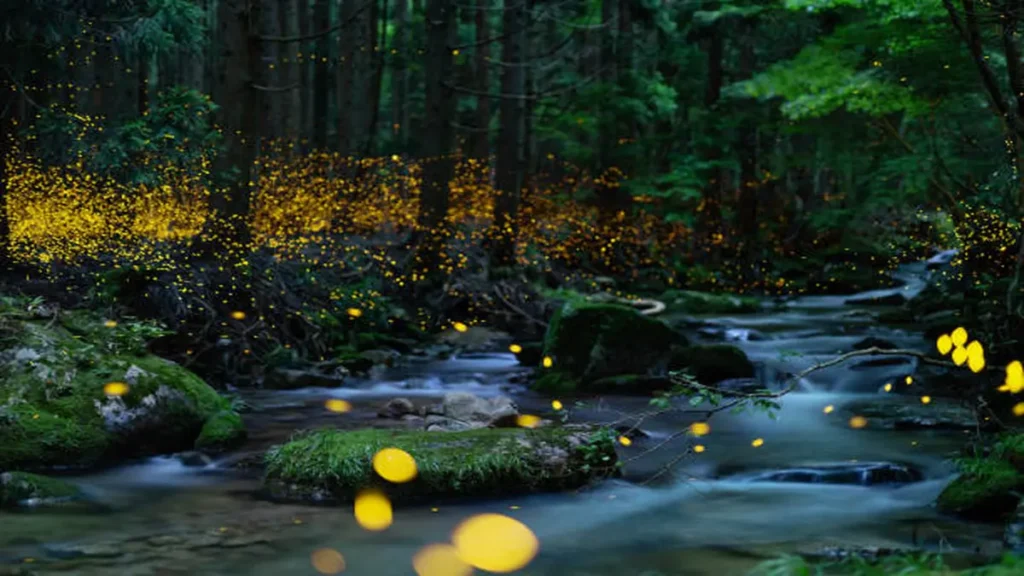
Great Smoky Mountains fireflies, known as synchronous fireflies (Photinus carolinus), light up the Elkmont area of the park for about eight nights each late May, flashing in unison rather than randomly. In 2026, the National Park Service set viewing dates for May 20–27, with a paid lottery through Recreation.gov required for vehicle access.
If you’ve only ever seen fireflies scattered across a backyard, this is a different thing entirely. Picture a dark hollow along the Little River, then a single flash, then a pause, then dozens more flashing together, then total darkness again — a wave repeating every few seconds for hours.
What Makes Elkmont’s Synchronous Fireflies So Rare
Great Smoky Mountains National Park is home to 19 species of fireflies, but one species draws the crowds: Photinus carolinus. It’s one of only a small number of firefly species on Earth that can flash in sync — most fireflies just blink randomly and independently.
The display is a mating ritual. Males fly through the forest flashing in coordinated bursts; females, perched low on vegetation, answer with their own flash if they’re interested. The choreography isn’t decoration — it helps females pick out males of the correct species in a dark forest crowded with other light.
The adults you’re watching don’t live long. The species lives for one to two years, with most of its life spent in the larval stage — the adults themselves survive for only three to four weeks.That narrow window is exactly why the park’s viewing dates shift slightly every year, based on temperature and the pace of spring.
Quick takeaway: This isn’t a general “fireflies in the Smokies” experience — it’s a specific, short-lived reproductive display by one species, at one place, for about a week a year.
2026 Dates and Lottery at a Glance
Great Smoky Mountains National Park hosted its 2026 synchronous firefly event at Elkmont from May 20 through May 27.The lottery for vehicle reservations opened at 10 a.m. April 24 and closed at 11:59 p.m. April 27 (EDT), with a $1 entry fee through Recreation.gov.
| Detail | 2026 Info |
|---|---|
| Viewing window | May 20–27 |
| Lottery opens | April 24, 10 a.m. EDT |
| Lottery closes | April 27, 11:59 p.m. EDT |
| Entry fee | $1 (non-refundable) |
| Reservation fee if selected | $29 per vehicle |
| Reservations issued | 120 per night, 960 total across the event |
| Vehicle capacity | Up to 7 occupants per reservation |
| Notification date | By May 6 |
For context on how the schedule moves year to year: the event ran May 29–June 5 in 2025, June 3–10 in 2024, and June 4–11 in 2023 — so treat “late May or early June” as the general rule, and always confirm exact dates on nps.gov once the park announces them, usually in late April.
If you’re reading this outside the current lottery window, bookmark the park’s official news releases page — that’s the fastest way to catch next year’s dates the moment they’re announced, since they typically post only 3–4 weeks before the event.
How to Apply for the Firefly Lottery, Step by Step
- Watch for the announcement. The park typically posts the year’s dates on nps.gov in the third or fourth week of April.
- Go to Recreation.gov and search “Great Smoky Mountains Firefly Viewing Lottery.”
- Create or log into an account, then submit your application during the open window. You pay a $1 processing fee just to enter.
- Select your preferred nights. You can list two preferred viewing days on the application.
- Wait for notification, sent by email around May 6.
- If selected, your card is automatically charged the $29 reservation fee, and that reservation is locked to your specific date — non-refundable, non-transferable, and valid only for the date issued.
A rule that trips people up: the park allows only one lottery application per household per season, so don’t have multiple family members apply separately hoping to improve your odds — that’s against the rules and can get entries disqualified.
Quick takeaway: Apply once, pick your two best nights honestly (mid-week nights in the middle of the window tend to have better odds and better conditions), and don’t overthink strategy — it’s a straight lottery.
What It Actually Costs
People are often surprised the “free” natural phenomenon comes with real costs attached. Budgeting for a typical group:
- Lottery entry: $1, charged whether or not you win
- Reservation fee: $29 per vehicle if selected — this covers the reservation itself, portable restrooms, supplies, and staffing for the event
- Parking and shuttle logistics vary by year — in some past years a separate cash shuttle fee applied per person between Sugarlands Visitor Center and Elkmont; check the current year’s confirmation details, since the park has changed check-in logistics before (recent years have checked vehicles in directly near the Elkmont Campground Kiosk rather than routing everyone through a shuttle)
- Gas and lodging if you’re driving in from outside the Gatlinburg/Pigeon Forge area
None of this is refundable if you get sick, the weather turns, or your plans change — so only apply for dates you’re confident you can make.
What to Expect on Viewing Night
Gates and check-in typically open in the afternoon, but the actual show doesn’t start until well after sunset — most nights the flashing ramps up somewhere between 9:15 and 9:45 p.m., depending on darkness and temperature. Bring dinner already eaten, because you’ll be standing or sitting in the woods for hours.
Once you’re parked and checked in, you’ll walk into the viewing area — often along the Little River Trail near Elkmont Campground, which locals consistently point to as the most reliable stretch for a strong display.
Expect to stay late. Some families see enough after 30–45 minutes and head back early; plenty of others post up for the full show. Either way, budget for a line at the return point — everyone leaves through the same narrow trail and parking area, so getting back to your car by 11 p.m. is realistic even if the show itself wraps up earlier.
Is it kid-friendly? Yes, with caveats. It’s a late night in the dark woods with a lot of standing around and walking on uneven trail — fine for most school-age kids, tougher for toddlers who need an early bedtime. Bring a small blanket to sit on and layers; even late May nights in the mountains can turn cool.
Didn’t Win the Lottery? Here’s Your Backup Plan
The odds aren’t in your favor — with only 960 total reservations available against tens of thousands of applicants, most people who apply don’t get selected. That doesn’t mean your trip is off.
- Try other synchronous firefly locations in the park. Photinus carolinus also shows up around Norton Creek and parts of Cataloochee Valley, along with other backcountry creek corridors — no permit required, though the display is less concentrated and less predictable than Elkmont’s.
- Watch for cancellations. Reservations are non-transferable, but no-shows and last-minute cancellations do happen; some travelers refresh Recreation.gov in the days leading up to the event.
- Look at nearby state parks and preserves in the southern Appalachians — several host their own (unpermitted, smaller-scale) synchronous firefly viewing nights during the same general window, often with less crowd management but a similar phenomenon.
- Come back another year. Losing the lottery once doesn’t affect your odds the next season.
Quick takeaway: Elkmont is the marquee event, but it’s not the only place in the region to see this species do its thing — worth remembering if the lottery doesn’t go your way.
Tips From People Who’ve Actually Gone
- Cover your flashlight with red cellophane and only use it while walking to and from your spot — never during the display itself. White light disrupts the fireflies’ mating signals and ruins everyone’s night vision.
- Don’t use bug spray on your hands right before the show — you’ll likely be adjusting gear or touching your face, and some repellents can affect nearby insects and plants in a heavily protected habitat.
- Skip the flash photography. It won’t capture the fireflies well anyway, and it disturbs the display for people around you. If you want photos, use a tripod, a slow shutter speed (several seconds), and a low ISO — this is a long-exposure subject, not a quick-snap one.
- Set your expectations honestly. Some nights are subtle — a handful of flash waves you have to be patient for. Other nights, especially mid-window on a warm, calm evening, the woods genuinely pulse with light. Weather and timing both matter more than most people expect going in.
- Pack like you’re going on a short hike after dark: sturdy shoes, a light jacket, bug spray applied well before you’re near the viewing area, and a portable phone charger since you’ll likely be out for hours.
Where to Stay Near Elkmont
Elkmont sits close to Gatlinburg and Sugarlands Visitor Center, which makes it the natural home base — most travelers report roughly a 20–25 minute drive between Gatlinburg-area lodging and the check-in point. Pigeon Forge is a workable second option, typically adding another 10–15 minutes each way.
Because the return shuttle or walk-out can run past 11 p.m., staying farther out (say, Knoxville or Wears Valley on the far side) means a long, tired drive after an already late night. If your dates are locked in, book lodging close to Sugarlands or Gatlinburg first — rooms and cabins near the park fill up fast once the lottery dates are public.
The Bottom Line
Seeing Great Smoky Mountains fireflies at Elkmont takes planning most day trips don’t require — a lottery application, a real financial commitment, and a late night in the woods. For the people who make it in, it’s consistently described as one of the more genuinely surprising natural experiences in the eastern United States. If the lottery doesn’t go your way, you’re not out of luck: other spots in the park host the same species, just without the crowds — or the reservation.
Next step: Mark your calendar for late April, when the park typically announces the following year’s exact dates, and set a reminder to apply the day the lottery opens — entries are weighted equally regardless of when during the window you submit, so there’s no benefit to rushing, only to remembering.
For more trip-planning tips and things to do, check out our Nashville travel planning hub.
FAQ Section
Q1: When is the best time to see fireflies in the Great Smoky Mountains?
The peak synchronous display usually falls in late May to early June, timed to the Elkmont event dates the park announces each spring. Mid-week nights in the middle of the viewing window tend to offer the most consistent shows.
Q2: How do you get tickets for the Elkmont fireflies?
You apply through a Recreation.gov lottery, not a direct ticket purchase. Entry costs $1; if selected, you’re charged a $29 reservation fee tied to a specific date.
Q3: Are the Smoky Mountains fireflies worth it?
Most visitors say yes, especially on a calm, warm night mid-window. Go in expecting an unusual natural phenomenon rather than a guaranteed spectacular show, since intensity varies night to night.
Q4: What time do the fireflies start flashing at Elkmont?
The display usually ramps up between roughly 9:15 and 9:45 p.m., once the forest is fully dark. Plan to arrive well before then and stay until at least 10 p.m. for the best of it.
Q5: Can you see synchronous fireflies without a lottery pass?
Yes. Photinus carolinus also appears in less-managed spots like Norton Creek and parts of Cataloochee Valley, without a permit — though sightings there are less concentrated and less predictable than at Elkmont.
Q6: What if it rains during firefly season?
Cold or rainy nights typically suppress the display, and reservations aren’t refunded for bad weather. Check the forecast for your reserved date and adjust expectations rather than expecting a rain date.
Q7: How many firefly species live in Great Smoky Mountains National Park?
The park is home to at least 19 firefly species, but Photinus carolinus is the one known for synchronizing its flashes, which is what draws visitors to Elkmont specifically.
Q8: Is the firefly event kid-friendly?
Generally yes for school-age kids who can handle a late night and some walking on uneven trail. It’s tougher for toddlers, given the late start time and hours spent outdoors after dark.