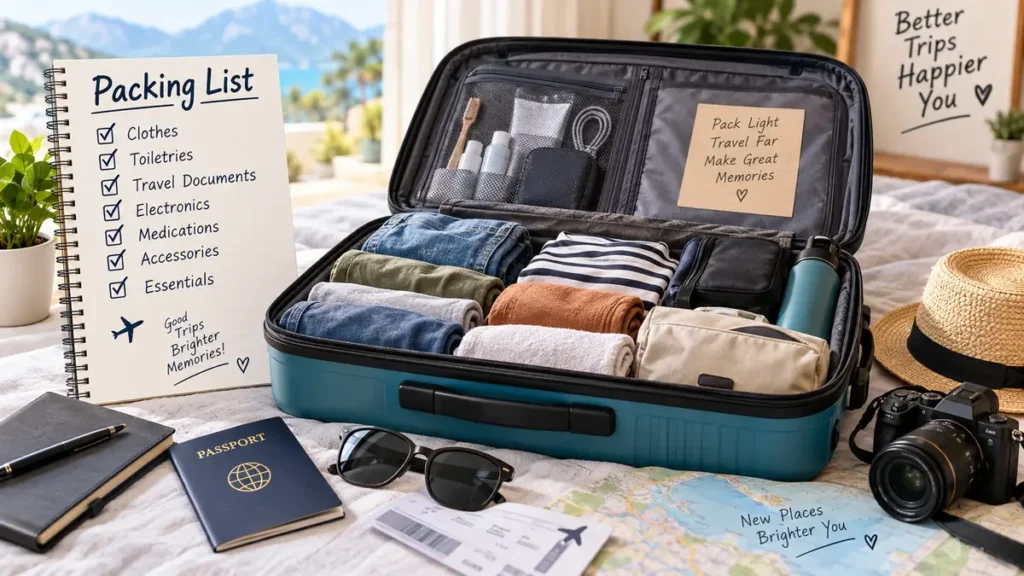
Packing for Europe looks simple until you start thinking about cobblestone streets, long train journeys, changing weather, airline baggage limits, cathedral dress expectations, and the possibility of visiting several climates in one trip.
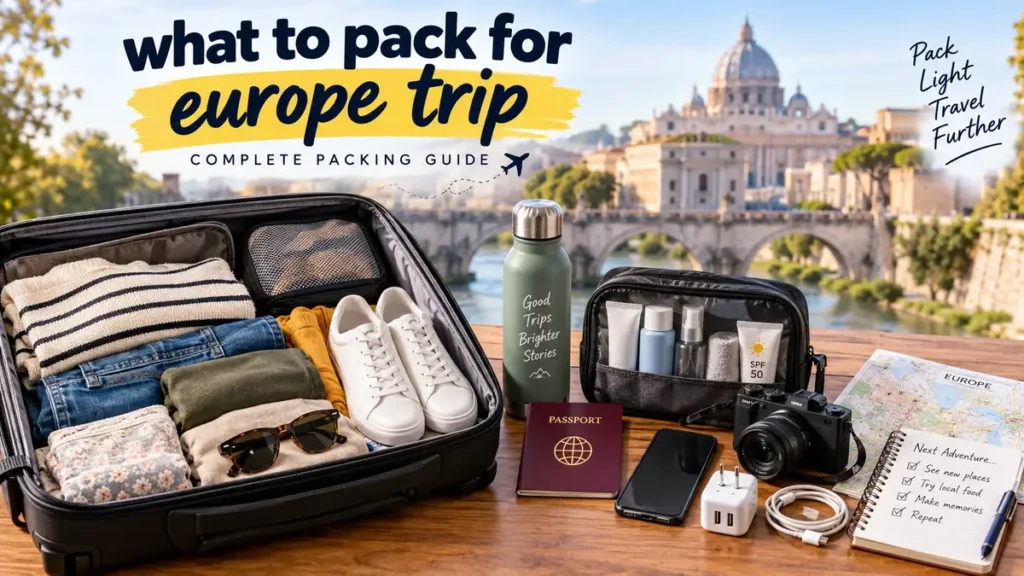
If you are wondering what to pack for europe trip, focus on versatile clothing, comfortable walking shoes, weatherproof layers, essential documents, compact toiletries, a travel adapter, phone and charging gear, medication, and a secure day bag. Pack enough clothing for roughly one week and plan to do laundry on longer trips rather than carrying an outfit for every day.
The key is not packing more. It is building a lightweight, adaptable packing system that works when you’re walking through Rome, catching a train in Paris, dealing with rain in Amsterdam, or moving between several European countries.
Quick what to pack for europe trip Checklist
For a typical 7- to 14-day European vacation, this checklist covers the essentials.
| Category | What to Pack |
|---|---|
| Documents | Passport, visa or authorization if required, travel insurance details, reservations |
| Money | Two payment cards, small amount of local cash |
| Tops | 5–7 versatile shirts or tops |
| Bottoms | 3–4 trousers, jeans, skirts, or shorts |
| Layers | Sweater or fleece, lightweight jacket |
| Underwear | 7–8 pairs |
| Socks | 5–7 pairs |
| Shoes | Comfortable walking shoes plus one versatile second pair |
| Rain protection | Lightweight waterproof jacket or compact umbrella |
| Electronics | Phone, chargers, travel adapter, power bank |
| Toiletries | Travel-size personal-care products |
| Medication | Prescription medication and a small personal medical kit |
| Day bag | Small backpack, sling, or secure crossbody bag |
| Extras | Sunglasses, reusable water bottle, laundry bag |
Treat this as a starting point rather than a universal list. A July trip to Greece requires very different clothing from a December Christmas-market trip through Germany and Austria.
Quick Takeaway: Pack for the weather and activities on your actual itinerary—not for an imaginary version of “Europe.”
What Clothes Should You Pack for Europe?
Clothing takes up most of the space in a suitcase, so this is where smart decisions make the biggest difference.
For most trips, build a small capsule wardrobe where nearly every top works with nearly every bottom.
A practical 7- to 14-day clothing list
Consider packing:
- 5–7 lightweight tops or T-shirts
- 2–3 trousers, jeans, skirts, or other everyday bottoms
- 1 pair of shorts in warm weather
- 1 comfortable travel outfit
- 1 sweater, cardigan, or fleece
- 1 lightweight waterproof outer layer
- 1 slightly smarter outfit
- 7–8 pairs of underwear
- 5–7 pairs of socks
- Sleepwear
- Swimwear if relevant
- Hat or cap depending on the season
You don’t need 14 separate outfits for a two-week vacation. Several current Europe packing guides recommend packing a smaller mix-and-match wardrobe and doing laundry during longer trips.
Quick-drying fabrics are particularly convenient because you can hand-wash an item in the evening and potentially wear it again soon afterward.
Use the layering system
Layering is more useful than packing one heavy item for every possible temperature.
A simple system is:
- Base layer: T-shirt, blouse, or lightweight long-sleeve shirt.
- Warm layer: Cardigan, sweater, fleece, or light insulated jacket.
- Weather layer: Packable waterproof or wind-resistant shell.
You can combine all three when it gets cold and remove them individually as temperatures rise.
This becomes especially valuable on multi-country trips. London, Paris, Switzerland, and Rome can have very different conditions during the same itinerary.
Choose clothes that mix easily
Instead of planning individual outfits, think in combinations.
Five tops that work with three bottoms theoretically give you 15 basic combinations before you even add layers or accessories.
Neutral colors can make mixing easier, but you don’t need an all-black travel wardrobe. The important part is compatibility.
The Best Shoes for a Europe Trip
If there is one area where comfort should beat appearance, it is footwear.
European sightseeing can mean hours on your feet, with historic centers adding cobblestones, stone steps, steep streets, and uneven pavement. Comfortable walking shoes repeatedly appear as a priority across current Europe packing guides.
For most vacations, two pairs are enough:
Pair one: everyday walking shoes
Choose supportive sneakers or walking shoes that you have already worn for long periods.
Pair two: activity-specific or smarter shoes
Depending on the itinerary, this could mean sandals, loafers, flats, lightweight boots, or hiking footwear.
Avoid packing brand-new shoes. A shoe that feels comfortable during five minutes in a store can become painful after an entire sightseeing day.
A small blister-care kit is also worth carrying. A few adhesive bandages or blister patches occupy almost no space.
Do you need hiking boots?
Not automatically.
Heavy hiking boots are unnecessary for ordinary city sightseeing. Bring them when your itinerary actually includes hiking or terrain requiring them.
For casual trails and city-heavy itineraries, suitable walking shoes may be enough.
Documents, Money, and Entry Requirements
Clothing is replaceable. Your passport and required travel documents are much harder to replace.
Keep critical documents in your personal item rather than checked baggage.
Pack or securely store:
- Passport
- Required visa
- Travel authorization where applicable
- Boarding passes
- Accommodation confirmations
- Train or transport reservations
- Travel insurance information
- Emergency contact details
- Driving licence if needed
- International Driving Permit where required
- Copies of important documents
- Prescription information for essential medication
Europe is not a single immigration zone. Entry requirements depend on your nationality and the countries you visit.
The Schengen Area currently comprises 29 countries. Short-stay rules generally use a maximum of 90 days within a rolling 180-day period for applicable visitors, although visa requirements depend on nationality.
EES and ETIAS in 2026
This is one area where older packing guides can quickly become outdated.
The EU’s Entry/Exit System (EES) is operational for short-stay non-EU travelers at participating external borders. It digitally records relevant border information and biometrics.
As of September 2026, ETIAS is not yet operational. The official EU ETIAS website says it is expected to begin in the last quarter of 2026 and that travelers do not currently need to take action.
Because these rules can change, verify the requirements for your passport and destination shortly before departure rather than relying on an old travel checklist.
Carry two payment methods
A sensible setup is:
- Primary credit or debit card
- Backup card stored separately
- Small amount of cash
Don’t keep your passport, every bank card, and all your cash in the same wallet. Losing one bag should not remove every way you have to access money or identification.
Electronics and Travel Adapters for Europe
Electronics are another category where travelers often pack too much.
For most people, the core kit is simple:
- Smartphone
- Phone charging cable
- Wall charger
- Travel plug adapter
- Power bank
- Earbuds or headphones
- Smartwatch charger if needed
- Camera and memory card if photography is a priority
A phone can replace several standalone devices by handling maps, boarding passes, hotel confirmations, translation, tickets, entertainment, and photography.
Adapter vs. voltage converter
These are not the same thing.
A plug adapter changes the physical shape of the plug so that it fits the wall socket.
A voltage converter changes electrical voltage.
Many modern phone, laptop, tablet, and camera chargers accept a wide input-voltage range. Check the tiny input label on your charger before connecting it.
Do not assume every electrical appliance will work simply because you have the correct plug adapter. High-powered devices such as some hair dryers and styling tools can cause problems when they are not designed for the local voltage.
Europe doesn’t use one plug everywhere
Much of continental Europe uses Type C and related European sockets, but socket standards differ in places such as the UK, Ireland, Switzerland, and Italy.
A compact universal travel adapter is often more convenient on multi-country itineraries.
Toiletries and Personal Care Essentials
The easiest way to overpack toiletries is to bring full-size versions of everything you use at home.
For a normal vacation, take only what you’ll realistically use.
A practical toiletry kit might include:
- Toothbrush and toothpaste
- Deodorant
- Shampoo and conditioner
- Soap or body wash
- Face cleanser
- Moisturizer
- Sunscreen
- Razor
- Hairbrush or comb
- Menstrual products if required
- Contact lenses and solution
- Small cosmetics kit
- Lip balm
- Hand sanitizer
Most ordinary toiletries can be purchased throughout Europe, so forgetting shampoo isn’t a travel emergency.
Remember cabin liquid restrictions
When flying from EU airports, liquids, aerosols, and gels in cabin baggage generally need to be in containers no larger than 100 ml, placed in a transparent resealable bag with a maximum capacity of one liter. Essential medicines and certain special dietary products have exemptions.
Some airports have newer security equipment, but requirements are not identical everywhere. Packing according to the standard 100 ml rule remains the safer approach when your itinerary includes multiple airports.
Solid toiletries can help reduce your liquid load.
Medication and a Small Travel Health Kit
Bring enough regular prescription medication for the entire trip, ideally with a little contingency for unexpected delays where permitted.
Keep essential medicine in your cabin or personal bag rather than placing all of it in checked luggage.
A compact personal kit can include:
- Prescription medications
- Adhesive bandages
- Blister treatment
- Pain relief you normally use
- Antihistamine if normally required
- Motion-sickness medication if appropriate
- Oral rehydration product
- Any personal medical supplies
Keep medication in appropriately labeled packaging when possible and check destination-specific rules for controlled or restricted medicines before traveling.
You don’t need to pack a miniature pharmacy. Pharmacies are widely available throughout European cities, although brands, formulations, and prescription requirements can differ.
What to Pack for Europe in Summer
European summers vary considerably by region.
Southern destinations such as Spain, Portugal, Italy, and Greece can be hot, while Northern Europe, mountain regions, and Atlantic destinations can still produce cool evenings or rainy days.
For a summer Europe packing list, add:
- Breathable T-shirts and tops
- Lightweight trousers or skirts
- Shorts where appropriate
- Comfortable sandals
- Swimsuit
- Sunglasses
- Sun hat
- Sunscreen
- Lightweight rain jacket
- Reusable water bottle
- One light sweater or cardigan
Even during summer, don’t eliminate warm layers completely if your itinerary includes mountains, northern destinations, or cool evenings.
Pack something suitable for religious sites
Churches, cathedrals, monasteries, and other religious sites may expect modest clothing.
A lightweight scarf, longer skirt, trousers, or top that provides suitable coverage can prevent problems without requiring a dedicated outfit.
Research specific sites on your itinerary because dress requirements vary.
What to Pack for Europe in Spring
Spring is a classic layering season.
You may experience sunshine, rain, chilly mornings, and warmer afternoons during the same day.
Consider adding:
- Lightweight waterproof jacket
- Sweater or cardigan
- Long-sleeve shirts
- T-shirts
- Jeans or comfortable trousers
- Water-resistant walking shoes
- Compact umbrella
- Light scarf
Avoid relying on one thick coat unless forecasts justify it. Multiple lighter layers usually give you more flexibility.
What to Pack for Europe in Fall
Autumn can behave similarly to spring, but temperatures generally become cooler as the season progresses.
Pack:
- Long-sleeve tops
- Sweater or fleece
- Medium-weight jacket
- Waterproof outer shell
- Trousers or jeans
- Comfortable closed shoes
- Scarf
- Compact umbrella
September in southern Europe may still feel like summer, while November in Central or Northern Europe can feel distinctly wintry.
Check historical averages during planning, then check the actual forecast shortly before departure.
What to Pack for Europe in Winter
Winter is where luggage can become bulky quickly.
Instead of filling your suitcase with several heavy sweaters, build around effective layers.
A winter list may include:
- Thermal base layers
- Long-sleeve tops
- 2–3 warm sweaters
- Insulated winter coat
- Waterproof or water-resistant footwear
- Warm socks
- Gloves
- Scarf
- Warm hat
- Comfortable trousers
- Compact umbrella
If you’re heading into the Alps or another snowy mountain region, your requirements become more specialized.
Skiing, snowboarding, winter hiking, and ordinary Christmas-market sightseeing should not use the same packing list.
What to Pack for a 10-Day Europe Trip
A 10-day trip is long enough to require variety but short enough that carry-on-only travel can be realistic for many travelers.
A practical clothing formula is:
| Item | Suggested Quantity |
|---|---|
| Tops | 5–6 |
| Bottoms | 3 |
| Sweater/fleece | 1–2 |
| Jacket | 1 |
| Underwear | 7–8 |
| Socks | 5–7 |
| Walking shoes | 1 pair |
| Second shoes | 1 pair |
| Sleepwear | 1 |
| Smart outfit | 1 |
| Swimwear | 1 if relevant |
Do one laundry load around the middle of the trip if necessary.
The benefit goes beyond saving baggage fees. A lighter bag is easier to lift onto trains, carry through stations, fit into luggage racks, and move over historic streets.
What to Pack for a Two-Week Europe Trip
Surprisingly, a two-week packing list doesn’t need to be much larger than a one-week list.
Pack approximately seven days of clothing and wash it.
For 14 days, the essentials remain:
- 5–7 tops
- 3–4 bottoms
- 1–2 warm layers
- 1 weatherproof layer
- 7–8 sets of underwear
- 5–7 pairs of socks
- 2 pairs of shoes
- Sleepwear
- Appropriate seasonal accessories
This approach is particularly useful for rail trips and multi-city itineraries.
Packing 14 shirts because you’re traveling for 14 days solves the laundry problem by creating a luggage problem.
Carry-On vs. Checked Luggage for Europe
There is no universal winner.
The right choice depends on your trip.
Carry-on makes sense when:
- You’re moving between several cities.
- You’ll frequently use trains or public transportation.
- Your accommodation has limited storage.
- You can do laundry.
- Your trip is primarily urban.
- You prefer traveling light.
Checked luggage may make sense when:
- You’re carrying specialist equipment.
- You need substantial winter clothing.
- You’re traveling with children.
- You have equipment that cannot go in cabin baggage.
- You’re staying mainly in one place.
Always check your actual airline’s baggage allowance.
“Carry-on size” is not one universal European measurement, and budget airlines can have stricter size and weight limits than other carriers.
Check dimensions and weight for every airline on a multi-flight itinerary rather than assuming that acceptance by your first airline means acceptance by the next.
What Should Go in Your Personal Item?
Your personal item should contain everything you would seriously miss if your main suitcase were delayed.
Pack:
- Passport
- Wallet
- Phone
- Charging cable
- Power bank
- Essential medication
- Travel documents
- Headphones
- Glasses or contact-lens essentials
- One basic change of underwear
- Valuable electronics
For longer flights, you might also want compression socks, an eye mask, earplugs, and a light layer.
Never put your passport, essential medication, or irreplaceable valuables in checked luggage.
Day Bag Essentials for Sightseeing
You don’t want to carry your main travel backpack around Rome or Barcelona all day.
Use a lightweight backpack, sling, or crossbody bag.
Your everyday sightseeing kit might include:
- Phone
- Wallet
- Small amount of cash
- Portable charger
- Water bottle
- Sunglasses
- Sunscreen
- Compact rain protection
- Tissues
- Hand sanitizer
- Medication needed during the day
- Digital or printed reservation details
Keep it light. After six hours of sightseeing, every unnecessary item starts feeling heavier.
In busy tourist areas and on crowded public transport, keep valuables secure and avoid casually placing your phone or wallet in easily accessible external pockets.
Packing Cubes, Compression Bags, and Organization
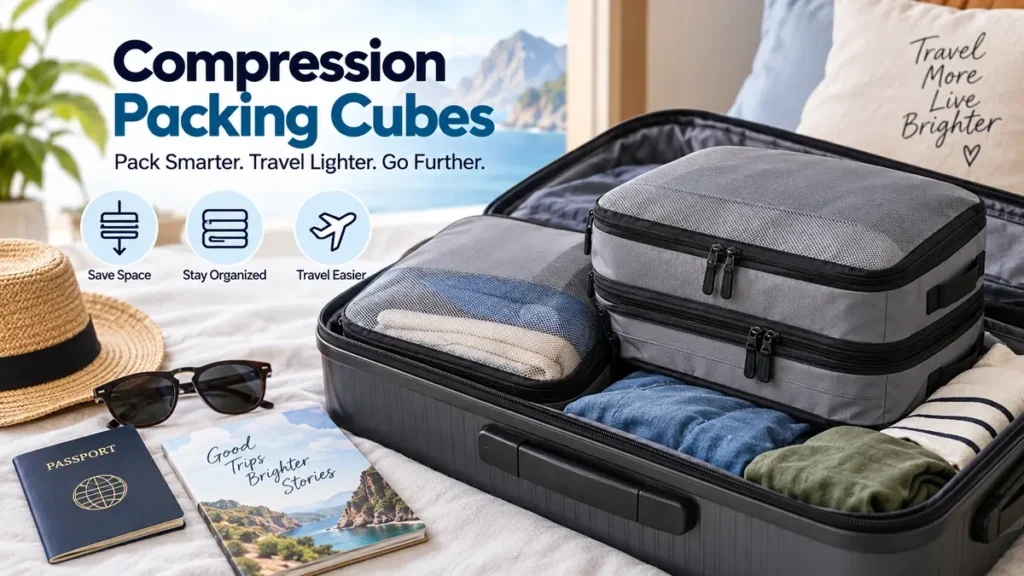
Packing cubes don’t magically create more luggage capacity, but they can make a suitcase much easier to manage.
A useful system is:
Cube 1: Tops
Cube 2: Bottoms
Cube 3: Underwear and socks
Cube 4: Sleepwear or miscellaneous clothing
Keep dirty clothes in a separate laundry bag.
Compression cubes can reduce the volume of soft clothing, but there’s a catch: compressing clothes does not reduce their weight.
That matters when an airline enforces a strict cabin-bag weight allowance.
Laundry Is the Secret to Packing Light
Laundry is one of the simplest answers to what to pack for europe trip when the vacation lasts longer than a week.
Instead of doubling your wardrobe for a two-week trip, pack roughly a week’s worth of clothing.
Depending on your accommodation, you can use:
- Hotel laundry
- Apartment washing machine
- Hostel facilities
- Self-service laundromat
- Sink washing for lightweight items
A tiny laundry detergent sheet or small amount of travel detergent takes far less space than seven additional outfits.
Quick-dry underwear, socks, and tops are particularly useful for this strategy.
Quick Takeaway: Trip length should not determine your clothing quantity indefinitely. Once you’re traveling beyond about a week, laundry becomes more efficient than additional clothes.
Don’t Forget Your Phone Setup
Preparing your smartphone is now almost as important as packing the right charger.
Before departure:
- Download offline maps for key destinations.
- Save accommodation addresses.
- Install airline and rail apps you’ll actually use.
- Save tickets or boarding passes for offline access where possible.
- Check roaming or mobile-data arrangements.
- Back up important photos and information.
- Enable device tracking.
- Protect the phone with a PIN or biometric lock.
Keep important booking information accessible even without mobile data.
A dead battery or weak signal shouldn’t prevent you from finding your hotel after arriving in an unfamiliar city.
Common Packing Mistakes to Avoid
Packing too many shoes
Shoes consume an enormous amount of suitcase space.
Most travelers need two useful pairs, not five highly specific ones.
Packing for every possible situation
Don’t pack hiking equipment because you might hike, formal clothes because you might visit an elegant restaurant, and beach equipment because you might take an unplanned coastal trip.
Pack around your itinerary.
Bringing uncomfortable fashionable shoes
Historic European streets can punish poor footwear quickly.
Wear style-conscious shoes if you enjoy them—but make sure you can comfortably walk in them.
Taking full-size toiletries
For shorter trips, they add unnecessary weight and can complicate cabin baggage.
Packing too many electronics
Ask whether each device does something your phone cannot reasonably handle.
Ignoring the weather forecast
“Europe in October” is not a useful weather forecast.
Check every major stop shortly before departure.
Forgetting airline-specific baggage rules
A suitcase accepted by one carrier may exceed another carrier’s allowance.
Filling your suitcase completely
Leave some room.
You may buy clothing, food products, gifts, books, or souvenirs during the trip, and repacking an already overstuffed suitcase becomes frustrating.
What You Usually Don’t Need to Pack
Removing unnecessary items can improve your trip as much as adding essentials.
Think carefully before bringing:
- More than 2–3 pairs of shoes
- Full-size toiletries
- Large amounts of cash
- Heavy guidebooks
- Excessive jewelry
- Multiple “just in case” outfits
- Large towels unless your accommodation requires one
- Duplicate electronics
- Large hair appliances
- Bulky clothing without a clear purpose
Most European destinations have supermarkets, pharmacies, clothing stores, and convenience shops.
Forgetting an ordinary T-shirt is inconvenient. Carrying unnecessary kilograms through five cities is inconvenient every day.
Final Check the Night Before Departure
Before closing the suitcase, work through your trip rather than your wardrobe.
Airport: Passport, documents, phone, wallet.
Flight: Medication, charger, headphones, warm layer.
Arrival: Mobile data, accommodation address, local transport information.
Sightseeing: Walking shoes, day bag, weather protection.
Activities: Appropriate clothes for beaches, hiking, religious sites, restaurants, or special events.
Return journey: Enough spare luggage capacity for anything you acquire.
Then check the weather forecast and airline baggage allowance one final time.
Final Thoughts on what to pack for europe trip
The best answer to what to pack for europe trip is simpler than most oversized packing checklists suggest: bring fewer things that perform more jobs.
Build your luggage around comfortable walking shoes, versatile layers, weather protection, essential documents, medication, a phone and charger, the correct travel adapter, compact toiletries, and a secure day bag. Adjust that foundation for your destinations, season, and planned activities.
For longer vacations, don’t pack a fresh wardrobe for every day. Pack approximately one week of mix-and-match clothing and use laundry facilities along the way. That keeps your luggage manageable on trains, stairs, public transportation, and cobblestone streets—the places where packing light stops being an idea and starts making the trip noticeably easier.