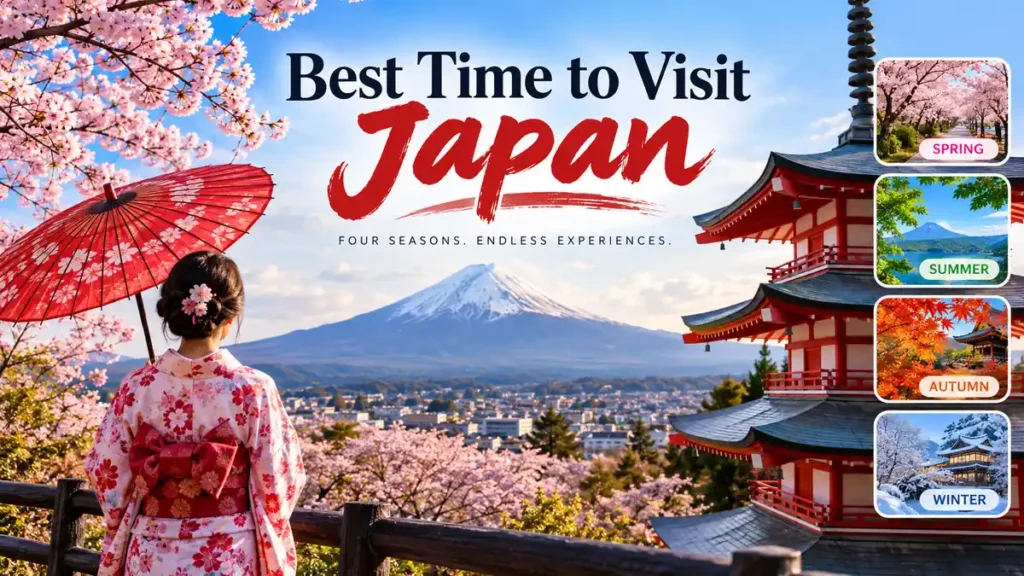
Japan can feel like a completely different country depending on when you arrive. Visit in early April and parks may be covered in pale-pink cherry blossoms; return in November and the same temple gardens can glow red, orange, and gold.
For most first-time travelers, the best time to visit japan is spring from March to May or autumn from October to November. These periods generally offer comfortable sightseeing weather and spectacular seasonal scenery. Choose late March to early April for cherry blossoms, November for autumn foliage, winter for skiing, and summer for festivals and mountain adventures.
There is no universally perfect month, however. Japan stretches from snowy Hokkaido in the north to subtropical Okinawa in the south, so weather and seasonal highlights vary considerably by region. Your ideal dates depend on what you want to see, how well you handle heat or cold, and how much you want to avoid peak crowds.
When Is the Best Time to Visit Japan?
For a classic trip covering Tokyo, Kyoto, Osaka and nearby destinations, October through November offers one of the strongest combinations of pleasant weather, autumn scenery and comfortable sightseeing conditions.
Spring is equally attractive, especially if seeing sakura is a priority. The trade-off is popularity: cherry blossom destinations can become extremely busy, while Golden Week at the end of April and beginning of May brings heavy domestic travel.
Here is the quick seasonal comparison:
| Season | Typical Months | Best For | Main Drawback |
|---|---|---|---|
| Spring | March–May | Cherry blossoms, gardens, sightseeing | High demand and crowds |
| Summer | June–August | Festivals, hiking, Mount Fuji | Heat, humidity and rain |
| Autumn | September–November | Fall foliage, hiking, mild weather | Popular foliage destinations get busy |
| Winter | December–February | Skiing, snow, onsen | Cold weather and snow disruption in some regions |
Japan’s official tourism organization emphasizes that there really isn’t a single best season: each has distinctive experiences. Spring brings sakura, summer festivals and outdoor activities, autumn colorful foliage, and winter snow sports and hot springs.
Best Overall Months: October and November
If cherry blossoms aren’t essential, October and November are particularly easy months around which to build a first Japan itinerary.
Humidity generally falls as summer ends, outdoor sightseeing becomes more comfortable, and autumn colors gradually move from colder northern and mountainous regions toward the major cities.
November is particularly appealing. JNTO describes much of Japan during November as having brisk air, clear skies and vibrant foliage. Kyoto becomes especially busy toward the end of the month as autumn colors approach their peak.
In Tokyo, fall foliage usually reaches its best from mid-November through early December, although exact timing changes with temperature each year. Mountain destinations near Tokyo generally change earlier.
Quick Takeaway: Pick late October through November if you want comfortable sightseeing conditions and autumn landscapes without having to plan an entire trip around the relatively short cherry blossom peak.
best time to visit japan for Cherry Blossoms
For many international visitors, spring is the dream season.
Cherry blossoms, or sakura, transform parks, riverbanks, castle grounds and temple gardens across the country. The tradition of hanami—enjoying the blossoms, often with friends or family beneath the trees—is one of Japan’s defining spring experiences.
When Do Cherry Blossoms Bloom in Japan?
There is no single nationwide cherry blossom week.
The bloom progresses according to latitude, elevation and weather conditions. Southern and central cities generally flower before northern destinations such as Hokkaido.
The 2026 season demonstrates how much dates can vary. Japan Meteorological Corporation reported full bloom on March 28 in Tokyo, March 30 in Kyoto, April 3 in Osaka and April 24 in Sapporo.
That doesn’t mean those exact dates will repeat in future years. Temperature patterns can shift flowering considerably, so travelers should treat historical averages as planning guidance and monitor the annual sakura forecast closer to departure.
For a typical itinerary through Tokyo, Kyoto and Osaka, late March through early April is the traditional window to investigate first.
Popular cherry blossom locations include:
- Tokyo: Ueno Park, Shinjuku Gyoen and Chidorigafuchi
- Kyoto: Maruyama Park, the Philosopher’s Path and Kiyomizu-dera
- Osaka: Osaka Castle Park and Kema Sakuranomiya Park
- Hokkaido: a useful option for travelers arriving later in spring
Spring temperatures are generally comfortable for walking and sightseeing. Rough Guides places typical March-to-May conditions around 10–20°C (50–68°F), though actual temperatures naturally vary by city, elevation and date.
The Downside of Sakura Season
Beautiful weather and blossoms attract enormous demand.
Famous viewing locations can be crowded, accommodation may be more expensive, and popular hotels can fill well ahead of arrival. There’s also an unavoidable element of uncertainty: booking months in advance doesn’t guarantee you’ll hit peak bloom.
A better strategy is to build a flexible itinerary with several potential blossom locations rather than making one famous tree or park the success-or-failure point of your trip.
Quick Takeaway: For a first spring trip, consider late March to early April, but check current blossom forecasts shortly before traveling.
Spring in Japan: March to May
Spring is about much more than sakura.
March marks the transition from winter. Snow remains in northern and mountainous areas while cities such as Tokyo gradually become milder. By April, spring is well established across much of Honshu.
May can be excellent too, especially after the major holiday rush. Temperatures are warmer, landscapes are green, and you don’t need to build your itinerary around a few days of peak blossom.
March: Early Spring and First Blossoms
March works particularly well if you want a mix of late-winter atmosphere and early spring.
Early March can still feel chilly, especially mornings and evenings. Later in the month, blossom season begins in many warmer areas.
Travelers who dislike intense crowds may prefer arriving slightly before the most famous flowering period. You’ll sacrifice some certainty around full bloom but can enjoy easier sightseeing.
April: Iconic Spring Scenery
April is one of Japan’s most desirable travel months.
Temperatures are generally mild, gardens are colorful, and outdoor attractions are comfortable to explore. In many years, early April overlaps with sakura around major Honshu destinations, though the exact timing varies.
The catch is demand. Book accommodation early if you’re targeting Kyoto or another major blossom destination.
May: Warm Weather but Watch Golden Week
May is sometimes overlooked, yet outside major holiday dates it can provide very pleasant travel conditions.
The major complication is Golden Week, a cluster of Japanese public holidays from late April into early May. It is one of Japan’s busiest domestic travel periods.
In 2026, for example, the Golden Week holiday cluster fell between April 29 and May 6, with many people able to create an extended break. Transportation and accommodation demand rises sharply during this period.
If your schedule is flexible, traveling after Golden Week can be considerably easier.
Autumn: The Other best time to visit japan
Autumn deserves just as much attention as spring.
Japan’s fall foliage season is called kōyō, while momiji commonly refers to red maple leaves. Temple gardens, mountain valleys, parks and lakesides change from green to brilliant yellow, orange and crimson.
Unlike sakura, which can peak and disappear quickly, autumn colors progress gradually across the country.
The season starts in high mountains and northern regions before moving south. Japan-guide notes that autumn colors can be seen somewhere in Japan for roughly three months, beginning around mid-September in Hokkaido’s highest mountains and reaching Tokyo and Kyoto during the second half of November.
September: Quieter, but Weather Is Unpredictable
September is technically autumn, but don’t expect cool autumn weather everywhere.
Much of central and southern Japan can remain hot and humid. September is also part of the period when typhoons require attention.
JNTO notes that typhoons are most frequent from late August through much of September, making flexibility particularly valuable during this period. Hokkaido cools earlier and can already begin showing autumn color.
September’s advantage is that crowds generally ease after the summer vacation period.
October: Excellent for Outdoor Travel
October is one of the easiest months for active sightseeing.
Summer humidity has usually eased substantially, while winter cold hasn’t arrived in the major central cities. Autumn colors develop in Hokkaido, the Japanese Alps and higher elevations before spreading farther south.
October works especially well for travelers combining cities with hiking, national parks or mountain destinations.
November: Peak Autumn Experience
For many travelers, November is the sweet spot.
Tokyo, Kyoto, Nikko, Kanazawa and other cultural destinations become especially attractive as foliage develops. Kyoto’s temples and gardens are particularly celebrated, though this also means popular sites can become crowded.
Tokyo’s autumn foliage commonly peaks from mid-November into early December. Kyoto’s season generally starts around mid-November, with many temples offering striking maple scenery.
If your priority is photography, temples, gardens and long days of walking, November is difficult to beat.
Summer in Japan: June to August
Summer is often described only in terms of heat, but that misses half the story.
Yes, much of Japan becomes hot and humid. But summer is also packed with matsuri, fireworks, mountain hiking and distinctive cultural experiences.
June: Rainy Season
June brings tsuyu, Japan’s rainy season, to much of the country.
That doesn’t necessarily mean nonstop rain. Conditions can alternate between cloudy periods, showers and clear spells, but humidity increases and wet weather can interfere with outdoor plans.
Hokkaido is a notable exception to the typical rainy-season pattern and can be a smart alternative for summer travelers.
June can still work well if your itinerary focuses on museums, food, shopping, temples and indoor cultural experiences. It can also offer advantages for travelers who value lower seasonal demand more than perfect weather.
Pack breathable clothing, waterproof footwear and a compact umbrella.
July: Festivals and Mount Fuji
By July, summer energy is unmistakable.
Kyoto’s famous Gion Matsuri runs through July, while fireworks displays and other festivals appear throughout the country.
This is also the main season for climbing Mount Fuji.
For 2026, the official Mount Fuji climbing site listed the Fujinomiya summit route above the sixth station as operating from July 10 through September 10, subject to weather and other conditions. Official dates can change, so hikers should always verify the current season before planning a climb.
August: Maximum Heat, Maximum Festival Energy
August is generally hotter and more humid, particularly in Tokyo, Kyoto and Osaka.
But culturally, it can be extraordinary.
Major events include Aomori Nebuta Matsuri, Awa Odori in Tokushima and numerous fireworks festivals. JNTO describes August as the peak of summer festival activity.
One period requires extra planning: Obon.
Typically centered around August 13–16, Obon is an important period for family gatherings and domestic travel. Planes, trains and highway buses can become heavily booked, making advance reservations important.
Typhoons are another consideration. Japan’s typhoon season peaks around August and September, and outdoor plans should remain flexible if severe weather approaches.
Quick Takeaway: Summer isn’t the easiest season for a standard Tokyo–Kyoto–Osaka sightseeing trip, but it can be the right choice for festivals, Mount Fuji, northern Japan and high-altitude adventures.
Winter in Japan: December to February
Travelers who automatically dismiss winter may miss one of Japan’s most rewarding seasons.
The north and Japanese Alps receive heavy snow, while cities such as Tokyo often experience comparatively dry winter conditions. Snow-covered temples, steaming outdoor onsen, winter illuminations and exceptional skiing create experiences unavailable at other times.
December: Early Winter and Illuminations
December is a transitional month.
Snow season develops across Hokkaido, Tohoku and mountain regions while central cities become cold without necessarily experiencing constant snow.
Early December can be an interesting shoulder period. Some locations still have late autumn color, while winter illuminations have already begun.
The final days of December are different because Shōgatsu, the Japanese New Year period, approaches. Domestic travel increases and some businesses alter their opening hours.
January: Fewer Sightseers and Deep Winter
January is cold, but it can reward travelers willing to dress properly.
Tokyo, Kyoto and Osaka remain perfectly viable sightseeing destinations. Major temples and shrines can be busy around New Year, after which some tourist areas become noticeably calmer than during spring and autumn.
For snow, head north or into the mountains.
February: Skiing and Snow Festivals
February is one of the best months for winter enthusiasts.
Hokkaido, Nagano and other mountain destinations attract skiers and snowboarders, while the Sapporo Snow Festival is one of the country’s best-known winter events. Niseko and Hakuba Valley are among the destinations associated with Japan’s ski season.
An outdoor hot spring after a day in the snow is a classic winter experience. JNTO specifically highlights the combination of winter sports and natural hot springs in Japan’s mountainous national parks.
For warmer conditions, look south. Okinawa remains much milder than Hokkaido or central Honshu during winter, illustrating just how dramatically Japan’s climate varies by latitude.
Best Time to Visit Japan by Region
Japan’s geography is the reason generic advice such as “visit in April” doesn’t always work.
A trip to Sapporo and a trip to Okinawa during the same week can involve radically different weather.
| Region | Particularly Good Periods | Seasonal Strength |
|---|---|---|
| Tokyo | March–May, October–November | Sakura, city sightseeing, fall foliage |
| Kyoto | March–May, October–November | Temples, blossoms, autumn leaves |
| Osaka | March–May, October–November | Urban sightseeing, food, day trips |
| Hokkaido | June–September, December–February | Mild summer, nature, skiing |
| Japanese Alps | May–October, winter for skiing | Hiking, foliage, snow sports |
| Okinawa | Spring and autumn | Beaches, subtropical scenery |
| Tohoku | Spring, summer, autumn, winter | Later blossoms, festivals, foliage, snow |
Tokyo
Tokyo is genuinely year-round, but spring and autumn are easiest for extensive outdoor sightseeing.
For fall colors specifically, the official Tokyo tourism guide says mid-November to early December is typically the prime period, with places such as Meiji Jingu Gaien, Rikugien Gardens and mountain areas around Okutama offering different foliage experiences.
Kyoto
Kyoto rewards seasonal timing more dramatically.
Sakura transforms temple districts in spring, while Japanese maples make November exceptional. The downside is that these are precisely the periods when famous attractions can feel busiest.
An effective strategy is to visit major temples early in the morning and use afternoons for less famous neighborhoods and gardens.
Hokkaido
Hokkaido follows a different seasonal rhythm.
Cherry blossoms arrive considerably later than in Tokyo or Kyoto. Summers are generally cooler, making Hokkaido attractive when central Japan becomes intensely hot and humid.
Then winter changes everything. Powder snow, ski resorts, frozen landscapes and the Sapporo Snow Festival turn Hokkaido into one of Asia’s premier cold-weather destinations.
Japanese Alps and Nagano
Mountain regions are highly season-dependent.
Summer brings hiking, while autumn colors arrive earlier at elevation than they do in Tokyo or Kyoto. Winter shifts the focus toward skiing, snowboarding and onsen.
If you’re visiting specifically to hike, check trail conditions rather than relying only on city weather forecasts.
Okinawa
Okinawa has a subtropical climate and should be treated separately from the standard Tokyo–Kyoto seasonal calendar.
Winters are mild, while summers are hot and humid. Typhoons can affect the islands, particularly during the warmer part of the year.
Travelers primarily interested in beaches should examine Okinawa-specific weather patterns rather than simply choosing Japan’s nationally popular spring or autumn periods.
best time to visit japan for Fewer Crowds
If avoiding crowds matters more than seasonal icons, don’t automatically target peak sakura or peak autumn foliage.
Consider January after the New Year period, parts of February outside major snow destinations, June, or early December, depending on your itinerary.
There is a trade-off. Lower-demand periods are lower demand for a reason: January is cold, June can be rainy, and summer shoulder periods can be humid.
But Japan’s infrastructure, museums, restaurants, temples and urban attractions don’t disappear when the cherry blossoms do.
The periods most worth treating carefully include:
Cherry blossom peak: famous parks and temple districts can become packed.
Golden Week: late April to early May is one of Japan’s major domestic travel periods.
Obon: mid-August brings heavy domestic transportation demand.
New Year: late December and early January can affect opening schedules and domestic travel.
Peak autumn weekends: Kyoto and other famous foliage destinations can become extremely busy.
For many travelers, the smartest compromise isn’t finding an empty month. It’s choosing a good month and adjusting the itinerary: travel midweek, start sightseeing early, reserve key transportation, and mix famous landmarks with quieter neighborhoods.
Cheapest Time vs. Best Weather
The cheapest time to travel and the best time for weather aren’t necessarily the same.
Seasonal demand affects flights and accommodation. Rough Guides notes that airfare demand peaks around Golden Week, Obon and Christmas/New Year, while January through March and November to early December can offer lower fares, subject to holiday and seasonal exceptions.
Instead of choosing dates solely by airfare, compare the entire trip.
Saving money on a June hotel might be worthwhile if you don’t mind rain. A cheaper August flight may be less appealing if your itinerary involves walking around Kyoto all afternoon in intense heat.
Shoulder periods can provide the best compromise between weather, demand and cost.
Best Time for Japan Based on What You Want to Do
The easiest way to settle the timing question is to start with your main reason for going.
| Travel Priority | Time to Consider |
|---|---|
| Cherry blossoms | Late March–early April in central Japan |
| Autumn foliage | October–November, depending on region |
| Mild sightseeing weather | April, May, October, November |
| Skiing and snowboarding | January–February |
| Hokkaido summer trip | June–August |
| Mount Fuji climbing | Official summer climbing season |
| Major summer festivals | July–August |
| Onsen and snow scenery | December–February |
| Fewer peak-season crowds | January, June, early December |
| Tokyo autumn leaves | Mid-November–early December |
| Kyoto autumn foliage | Mid-to-late November |
| Later cherry blossoms | Northern Tohoku and Hokkaido |
These windows are guides rather than guarantees. Cherry blossoms and autumn leaves respond to weather, while mountain conditions, festival dates and climbing seasons can change annually.
What Months Should You Avoid in Japan?
There is no month when you categorically need to avoid Japan.
The better question is which conditions you personally want to avoid.
If heat and humidity make sightseeing miserable for you, July and August may be poor choices for Tokyo, Kyoto and Osaka.
If rain is your biggest concern, think carefully about June in much of the main islands.
If itinerary certainty matters, late August and September require awareness of typhoons. JNTO notes that typhoons occur most frequently from late August through much of September, although that doesn’t mean a storm will affect every trip.
If crowds bother you, avoid Golden Week and think carefully before booking the absolute peak cherry blossom period in Kyoto.
But these aren’t universally “bad” months. July and August have outstanding festivals. June can bring beautiful green landscapes. September can be quieter. Winter’s cold brings skiing and snow-covered scenery.
How Far Ahead Should You Plan a Japan Trip?
For ordinary travel dates, you have considerably more flexibility than during peak seasonal events.
If you’re targeting sakura in Kyoto, peak foliage, Golden Week, a famous festival or a major ski resort, earlier planning gives you a better selection of accommodation.
The most important planning principle is flexibility around natural phenomena.
Cherry blossoms don’t follow airline reservations. Neither do autumn leaves.
Instead of planning a trip around one precise day, give yourself multiple opportunities. A Tokyo–Kyoto itinerary, for example, provides several parks, gardens and day-trip options where conditions may differ slightly.
For autumn, elevation can become your ally. If city leaves aren’t ready, a mountain day trip may already have color; if mountain foliage has passed, lower-elevation city gardens may be approaching their best.
How to Choose Your Exact Travel Dates
Use a simple decision process:
- Choose your must-have experience. Decide whether blossoms, autumn foliage, skiing, festivals, hiking or comfortable city sightseeing matters most.
- Choose the region. Hokkaido, Tokyo, Kyoto and Okinawa do not share identical seasons.
- Check the climate trade-offs. Consider temperature, humidity, rain, snow and typhoon risk.
- Check Japanese holiday periods. Golden Week, Obon and New Year can significantly affect domestic transportation and accommodation.
- Check current seasonal forecasts. Sakura and foliage dates shift from year to year.
- Keep some flexibility. Build alternative indoor attractions and day trips into weather-sensitive itineraries.
This works better than searching for one supposedly perfect week for the entire country.
So, What Is the best time to visit japan?
For most first-time travelers visiting Tokyo, Kyoto and Osaka, October and November are arguably the best all-around choices, especially if comfortable weather and outdoor sightseeing matter more than cherry blossoms. November adds spectacular autumn foliage to the equation, though famous leaf-viewing locations can become busy.
Choose late March through early April instead if seeing cherry blossoms is a priority. Just accept that peak bloom varies every year and that popular destinations attract substantial crowds.
Winter is the standout choice for skiing, powder snow, onsen and the Sapporo Snow Festival. Summer is better suited to travelers interested in matsuri, fireworks, Mount Fuji and cooler northern or mountain destinations.
The key is not finding a universally perfect season. Match Japan’s season to the experience you care about most, check current forecasts before departure, and avoid locking your entire trip to a single weather-dependent event. That’s how you find the best time to visit japan for your own itinerary.