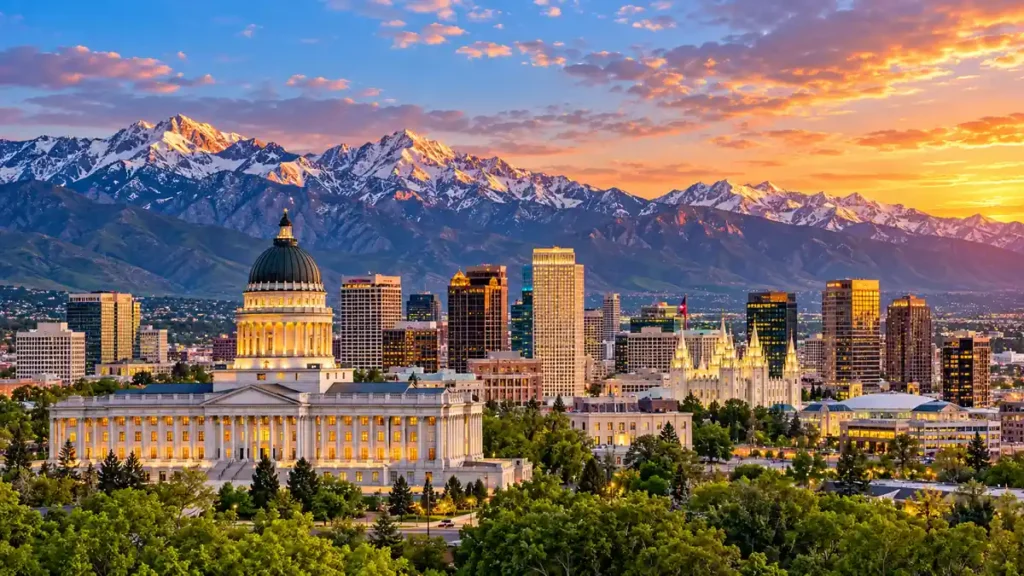
Salt Lake City is more than a gateway to Utah’s mountains. It is a state capital where historic architecture, cultural attractions, urban neighborhoods, and outdoor recreation come together in a setting framed by the Wasatch Range.
Visitors can explore historic Temple Square, learn about the Great Salt Lake, visit museums, and discover mountain trails within a relatively short drive of downtown.
Salt Lake City is the capital and most populous city of Utah, located in the western United States in the Salt Lake Valley. Founded by Mormon pioneers in 1847, it is known for its religious history, mountain scenery, winter sports, cultural institutions, and proximity to the Great Salt Lake. The city also served as a central hub for the 2002 Winter Olympics.
Where Is salt lake city Located?
Salt Lake City lies in north-central Utah, between the Wasatch Mountains to the east and the Oquirrh Mountains to the west. It occupies part of the Salt Lake Valley, a metropolitan area that extends into several neighboring communities.
The city sits at approximately 4,226 feet (1,288 meters) above sea level. Its elevation contributes to a climate with hot summers, cold winters, and noticeable seasonal changes.
| Geographic detail | Information |
|---|---|
| State | Utah |
| Country | United States |
| Region | Western United States |
| County | Salt Lake County |
| Time zone | Mountain Time |
| Elevation | Approximately 4,226 feet |
| Nearby mountain ranges | Wasatch and Oquirrh |
| Major nearby lake | Great Salt Lake |
| Major airport | Salt Lake City International Airport |
| State capital | Yes |
Salt Lake City is approximately 45 miles north of Provo and 35 miles south of Ogden, making it a central transportation and economic hub along Utah’s Wasatch Front.
Why Is Salt Lake City Called Salt Lake City?
The city’s name comes from the nearby Great Salt Lake, a large saline lake northwest of downtown.
The lake is a remnant of prehistoric Lake Bonneville, which once covered much of western Utah and parts of neighboring states. Over thousands of years, changing climatic conditions reduced the ancient lake, leaving the Great Salt Lake and other smaller bodies of water.
Because the lake has no outlet to the ocean, dissolved minerals accumulate as water evaporates. This produces its unusually high salinity, although salt concentrations vary considerably by location and water conditions.
History of Salt Lake City
Salt Lake City’s history includes Indigenous settlement, westward migration, religious development, railroad expansion, and modern urban growth.
Indigenous History Before 1847
Long before European American settlers arrived, the Salt Lake Valley and surrounding region were part of the homelands and travel networks of Indigenous peoples, including Shoshone and Ute communities.
The valley provided access to water, wildlife, plants, and seasonal travel routes. Understanding this earlier history is essential to understanding the region beyond the city’s later pioneer settlement.
The Arrival of Mormon Pioneers
In July 1847, a group of pioneers led by Brigham Young entered the Salt Lake Valley. They were members of the Church of Jesus Christ of Latter-day Saints seeking a place to establish a religious community.
The settlers developed irrigation systems, organized agricultural communities, and laid out streets in a grid pattern.
Salt Lake City became the administrative and religious center of the growing settlement.
From Territorial Settlement to State Capital
The region became part of the United States following the Mexican-American War and the Treaty of Guadalupe Hidalgo in 1848.
Utah Territory was established in 1850, with Salt Lake City becoming its territorial capital in 1856. Utah achieved statehood on January 4, 1896, and Salt Lake City remained the capital.
The arrival of transcontinental railroad connections helped expand trade, migration, and economic development throughout the region.
Salt Lake City in the Modern Era
During the twentieth century, Salt Lake City developed into a center for government, finance, education, healthcare, and transportation.
The 2002 Winter Olympics brought international attention to Utah’s ski resorts and sporting infrastructure.
The region is also preparing to host the 2034 Olympic and Paralympic Winter Games, further reinforcing its association with winter sports.
Population and Demographics of Salt Lake City
Salt Lake City is Utah’s largest incorporated city, although its surrounding metropolitan area is much larger than the city itself.
According to the U.S. Census Bureau, the city’s estimated population reached 218,428 on July 1, 2025, compared with 199,723 recorded in the 2020 Census. This represents approximately 9.4% growth from the 2020 estimates base.
Census.gov
| Population measure | Residents |
|---|---|
| 2010 Census | 186,440 |
| 2020 Census | 199,723 |
| 2025 city estimate | 218,428 |
| 2025 Salt Lake City–Murray metropolitan area | Approximately 1.31 million |
The metropolitan population includes surrounding communities and should not be confused with the population within Salt Lake City’s municipal boundaries.
St. Louis Fed
+1
What Is the Culture of Salt Lake City Like?
Salt Lake City’s identity reflects several influences: its Latter-day Saint heritage, Indigenous history, growing immigrant communities, university population, and expanding arts and technology sectors.
The Church of Jesus Christ of Latter-day Saints remains an important part of the city’s history and architecture. However, modern Salt Lake City includes people from many religious, cultural, and linguistic backgrounds.
Community festivals, independent restaurants, art galleries, music venues, and neighborhood events contribute to its evolving character.
Best Things to Do in salt lake city
Salt Lake City offers attractions for history enthusiasts, families, nature lovers, and visitors interested in architecture and the arts.
Many of its major downtown landmarks are within walking distance or accessible by public transportation.

Temple Square
Temple Square is the historic heart of downtown and one of Utah’s best-known landmarks. Its attractions include the Salt Lake Temple, Tabernacle, Conference Center, and nearby historical exhibits.
The temple has undergone major renovations, so visitors should check current access arrangements.
Visit Salt Lake

Utah State Capitol
Located on Capitol Hill, the Utah State Capitol features neoclassical architecture, landscaped grounds, and panoramic views of the Salt Lake Valley. Visitors can learn about Utah’s government and state history.

Natural History Museum of Utah
Located near the University of Utah, this museum explores dinosaurs, geology, ecosystems, Indigenous cultures, and the natural history of the American West. Its exhibits are especially valuable for understanding Utah’s ancient landscapes.

Red Butte Garden
Red Butte Garden is a botanical garden and arboretum featuring seasonal flowers, walking paths, educational programs, and outdoor concerts. It provides a peaceful setting near the foothills.

Liberty Park
Liberty Park offers open green spaces, walking paths, playgrounds, and recreational facilities. It is also home to Tracy Aviary, a popular destination for families and bird enthusiasts.
Other attractions include the Utah Museum of Fine Arts, Clark Planetarium, Discovery Gateway Children’s Museum, Eccles Theater, and Hogle Zoo. These destinations add variety to the city’s cultural and educational offerings.
The Great Salt Lake and Outdoor Recreation
One of the biggest reasons people visit Salt Lake City is its proximity to unusual natural landscapes.
The surrounding region includes mountain canyons, alpine lakes, hiking trails, wildlife habitats, and the Great Salt Lake itself.
Exploring the Great Salt Lake


9
The Great Salt Lake is the largest saline lake in the Western Hemisphere. Its surface area changes significantly depending on precipitation, river inflows, evaporation, and water diversions.
The lake supports an important ecosystem, particularly for migratory birds traveling along the Pacific Flyway.
Its high salinity supports brine shrimp and brine flies, which provide food for many bird species.
Visitors should understand that the Great Salt Lake differs from a typical freshwater recreational lake. Water levels fluctuate, some shorelines are muddy, and access conditions vary.
Antelope Island State Park
Antelope Island State Park is one of the most recognizable destinations on the Great Salt Lake.
The island is known for:
- Free-roaming American bison
- Scenic hiking and mountain biking trails
- Wildlife photography opportunities
- Expansive lake and mountain views
- Birdwatching and sunset photography
Visitors may also encounter pronghorn and other wildlife. Animals should be observed from a safe distance, particularly bison, which can move quickly and unpredictably.
Hiking Near Salt Lake City
The Wasatch foothills offer trails with different difficulty levels.
Popular destinations include Ensign Peak, Living Room Lookout, and trails in Big Cottonwood Canyon and Little Cottonwood Canyon.
Ensign Peak is particularly well known for its views over downtown and the valley.
The Living Room Trail, near the University of Utah, climbs to a viewpoint overlooking the city.
Higher-elevation trails can remain snowy well into spring. Conditions should always be checked before hiking.
Skiing and Snowboarding

The Wasatch Mountains are internationally recognized for skiing and snowboarding.
Four major ski areas in the nearby Cottonwood Canyons are Alta, Snowbird, Brighton, and Solitude.
| Ski resort | General characteristics |
|---|---|
| Alta | Known for traditional skiing and deep snow; snowboarding is not permitted |
| Snowbird | Steep terrain, advanced skiing, and mountain scenery |
| Brighton | Popular with families, snowboarders, and night skiers |
| Solitude | Varied terrain and a quieter mountain atmosphere |
Park City Mountain and Deer Valley are additional major destinations farther east in the Wasatch Range.
Winter travelers should plan for canyon traffic, changing road restrictions, and occasional closures during heavy snowstorms.
Weather and Climate in salt lake city
Salt Lake City has a semi-arid climate with four distinct seasons.
Summers are generally hot and dry, while winters are cold with periodic snowfall. Spring and autumn bring variable temperatures and changing mountain conditions.
| Season | Typical weather | Common activities |
|---|---|---|
| Spring (March–May) | Mild to cool, variable precipitation | Gardens, museums, lower-elevation hikes |
| Summer (June–August) | Hot, dry, sunny | Hiking, festivals, mountain excursions |
| Fall (September–November) | Mild days, cooler nights | Scenic drives, foliage, sightseeing |
| Winter (December–February) | Cold, snowy periods | Skiing, snowboarding, indoor attractions |
How Hot Does Salt Lake City Get?
July is typically the hottest month.
Average daytime highs are around 90–95°F (32–35°C), although temperatures can exceed 100°F (38°C) during heat waves.
The relatively dry air can make evenings more comfortable than daytime conditions, but dehydration and sun exposure remain concerns.
Does Salt Lake City Get Snow?
Yes. Snowfall is a regular part of winter, although amounts vary considerably from year to year.
Downtown Salt Lake City receives less snow than nearby mountain resorts because of differences in elevation and local weather patterns.
The Wasatch Mountains often receive substantial snowfall, supporting Utah’s winter sports industry.
Temperature Inversions and Air Quality
One important local weather phenomenon is the winter temperature inversion.
During an inversion, a layer of warmer air traps colder air near the valley floor. Pollutants can accumulate beneath this layer, reducing air quality.
Air quality can also be affected by summer ozone and wildfire smoke.
People planning outdoor activities should check current conditions, particularly during winter inversions and periods of wildfire smoke.
Neighborhoods and Life in Salt Lake City
Salt Lake City is made up of neighborhoods with different architectural styles, housing options, commercial districts, and community identities.
The downtown core is relatively compact, while surrounding residential areas offer a mix of historic homes, apartments, parks, and local businesses.
Downtown Salt Lake City
Downtown is the center of government, entertainment, conventions, and many major attractions.
It includes Temple Square, Main Street, City Creek Center, theaters, office buildings, hotels, and transit connections.
Downtown is particularly convenient for visitors who want to explore attractions without relying entirely on a car.
Sugar House
Sugar House is a well-established neighborhood known for parks, shopping, restaurants, and residential streets.
Sugar House Park is one of the area’s major recreational spaces.
The neighborhood combines older homes with newer residential and commercial developments.
The Avenues
The Avenues lies northeast of downtown and is known for historic houses, hillside streets, and views across the valley.
Its location near the foothills makes it attractive to people who enjoy walking and outdoor recreation.
9th and 9th
The 9th and 9th district is a smaller neighborhood commercial area with independent shops, cafes, and restaurants.
It has a pedestrian-friendly character and is popular for casual neighborhood exploration.
University District
The University District surrounds the University of Utah and includes student housing, cultural institutions, research facilities, and nearby residential communities.
Its proximity to the foothills also provides access to hiking and outdoor recreation.
Utah’s 2026 travel guide highlights these neighborhoods as distinctive areas beyond the downtown core.
Economy, Education, and Transportation
Salt Lake City serves as an important economic and institutional center for Utah and the wider Intermountain West.
Its economy includes healthcare, finance, education, government, professional services, tourism, transportation, and technology-related industries.
Major Industries and Employment
Salt Lake City benefits from its role as Utah’s state capital and a regional transportation hub.
Important employment sectors include:
- Healthcare and medical research
- Higher education
- Banking and financial services
- Government administration
- Technology and software
- Tourism and hospitality
- Logistics and transportation
The wider Wasatch Front also supports a substantial technology economy, with many companies operating in communities south of Salt Lake City.
Universities and Education
The University of Utah is a major public research university and one of the city’s most important educational institutions.
Its programs include medicine, engineering, business, sciences, humanities, and the arts.
The university also contributes to regional healthcare through its medical facilities and research activities.
Westminster University is another higher-education institution located in Salt Lake City.
Salt Lake City International Airport
Salt Lake City International Airport (SLC) provides domestic and international air connections.
The airport lies west of downtown and serves as a major aviation gateway to Utah’s national parks, ski destinations, and business centers.
Its location makes Salt Lake City a convenient starting point for exploring northern Utah.
Public Transportation
The Utah Transit Authority (UTA) operates several transportation services throughout the region.
These include TRAX light rail, FrontRunner commuter rail, and local bus routes.
TRAX connects downtown with the airport, university area, and portions of the wider metropolitan region.
FrontRunner provides commuter rail service along the Wasatch Front, connecting communities including Ogden, Salt Lake City, and Provo.
Public transportation is useful for central destinations, although a vehicle may be more practical for mountain excursions and some suburban locations.
Understanding the Street Grid
Salt Lake City’s downtown street layout can initially seem unusual.
Temple Square serves as the historic origin of the city’s street grid. Streets are commonly identified using numbered directions, such as 300 South or 500 East.
Numbers generally increase as travelers move farther from the central reference point.
Once visitors understand this system, navigating downtown becomes easier.
Best Time to Visit Salt Lake City
The best time to visit depends on the activities a traveler wants to enjoy.
Spring and fall are generally comfortable for sightseeing, while winter is ideal for snow sports and summer provides access to high-elevation hiking.
Spring: March to May
Spring brings gradually warming temperatures, blooming gardens, and variable mountain conditions.
It is a good season for exploring museums, historic landmarks, and urban parks.
Higher mountain trails may still be covered in snow.
Summer: June to August
Summer offers long daylight hours and extensive outdoor recreation opportunities.
Mountain hiking, botanical gardens, festivals, and scenic drives are popular.
However, downtown temperatures can be very hot, making early morning or evening activities more comfortable.
Fall: September to November
Fall is particularly appealing for mild temperatures and changing foliage.
Big Cottonwood Canyon, Little Cottonwood Canyon, and nearby mountain areas can display colorful autumn scenery.
Weather can change quickly at higher elevations, especially later in the season.
Winter: December to February
Winter is the main season for skiing and snowboarding.
Mountain resorts attract visitors from around the world, while downtown offers museums, performing arts, sporting events, and seasonal activities.
Winter visitors should allow additional travel time during snowstorms.
Food, Arts, and Entertainment
Salt Lake City’s cultural scene includes a growing range of restaurants, theaters, museums, and live entertainment venues.
Although its historic religious identity remains visible, the modern city has a diverse culinary and artistic environment.
Local Food and Dining
Visitors can find American, Mexican, Asian, Mediterranean, and other international cuisines throughout the city.
A few foods associated with Utah include fry sauce, funeral potatoes, and locally produced honey and baked goods.
Fry sauce, typically a mixture of ketchup and mayonnaise-based ingredients, is particularly associated with Utah’s burger and fast-food culture.
Downtown, Sugar House, and other neighborhood commercial districts offer a wide selection of casual and upscale dining experiences.
Performing Arts and Music
Salt Lake City is home to several important performing arts organizations.
The Utah Symphony, Ballet West, and Utah Opera contribute to the city’s classical music and performing arts scene.
The Tabernacle Choir at Temple Square is internationally recognized for its choral performances.
The Eccles Theater hosts touring Broadway productions, concerts, and other stage performances.
Professional Sports
Sports are an important part of Salt Lake City’s identity.
The Utah Jazz represent the city in the National Basketball Association.
The region also has professional soccer through Real Salt Lake and professional hockey through the Utah Mammoth.
Salt Lake City’s Olympic legacy continues to influence its sports facilities and recreational culture.
Practical Travel Tips for Salt Lake City
Understanding local conditions can make a visit more comfortable and efficient.
Adjust to the Elevation
Salt Lake City’s elevation is higher than many major American cities.
Visitors arriving from sea level may notice mild shortness of breath during strenuous activity, particularly when hiking.
Drink water regularly and allow time to adjust before attempting demanding mountain trails.
Prepare for Dry Conditions
Utah’s dry climate can cause dehydration even when temperatures feel comfortable.
Carrying water, using sunscreen, and wearing appropriate clothing are sensible precautions.
Plan Mountain Transportation Carefully
Travel times to mountain destinations depend on weather, traffic, and road conditions.
Winter storms can create significant congestion in the Cottonwood Canyons.
Public transit and ski buses may be available for certain routes, but schedules and seasonal service should be verified.
Respect Natural Areas
The Great Salt Lake and surrounding mountains support sensitive ecosystems.
Stay on designated trails, avoid disturbing wildlife, and follow local regulations.
At the lake, visitors should also be prepared for insects, changing shorelines, and limited facilities in some areas.
Check Attraction Access Before Visiting
Historic sites, museums, and outdoor destinations can have seasonal hours or temporary closures.
Temple Square is a particularly important example because restoration work has affected visitor access.
Checking official attraction information before traveling helps prevent unnecessary delays.
Is Salt Lake City a Good Place to Live?
Salt Lake City offers a combination of urban services, employment opportunities, educational institutions, and access to outdoor recreation.
However, living conditions vary depending on housing costs, neighborhood preferences, transportation needs, and personal priorities.
Advantages of Living in Salt Lake City
Residents benefit from proximity to the Wasatch Mountains, major healthcare institutions, universities, and a regional airport.
The city also provides cultural attractions, sports events, parks, and recreational opportunities throughout the year.
Challenges of Living in Salt Lake City
Housing affordability is an important concern.
According to the U.S. Census Bureau, the median value of owner-occupied housing units was $539,500 during the 2020–2024 reporting period, while median gross rent was $1,414. These figures describe historical survey periods rather than current listing prices.
Other challenges include winter air quality, summer heat, traffic congestion, and water-resource pressures.
Residents who depend on driving may also encounter delays during winter storms and busy recreational periods.
Water Supply and Environmental Sustainability
Salt Lake City is located in an arid region where water conservation is a long-term priority.
Snowpack in the Wasatch Mountains provides an important source of water for communities throughout the region.
The declining water levels of the Great Salt Lake have raised environmental concerns, including impacts on wildlife habitat, mineral extraction, and the potential exposure of lakebed dust.
These issues connect urban growth, agricultural water use, climate variability, and regional environmental management.
Why Is Salt Lake City Famous?
Salt Lake City is best known for its distinctive combination of religious history, mountain recreation, and natural geography.
Its most recognizable associations include the Salt Lake Temple, the Great Salt Lake, the Wasatch Mountains, and the 2002 Winter Olympics.
The city also serves as Utah’s political center and a gateway to destinations across the state.
Unlike many large metropolitan areas, Salt Lake City offers relatively direct access from downtown to mountain landscapes, making outdoor recreation a defining part of its identity.
Its upcoming role in the 2034 Winter Olympics is expected to keep international attention focused on the region.
Final Thoughts on salt lake city
Salt Lake City combines the history of Utah’s capital with the natural scenery of the American West. Its museums, historic landmarks, universities, neighborhoods, and nearby mountains create a destination with appeal throughout the year.
From exploring Temple Square and the Utah State Capitol to visiting the Great Salt Lake or hiking in the Wasatch Range, the city offers opportunities to understand both Utah’s cultural heritage and its remarkable geography.
For a first visit, begin with downtown’s historic landmarks, explore a local neighborhood, and reserve time for at least one nearby natural attraction. This provides a balanced introduction to what makes Salt Lake City distinctive.