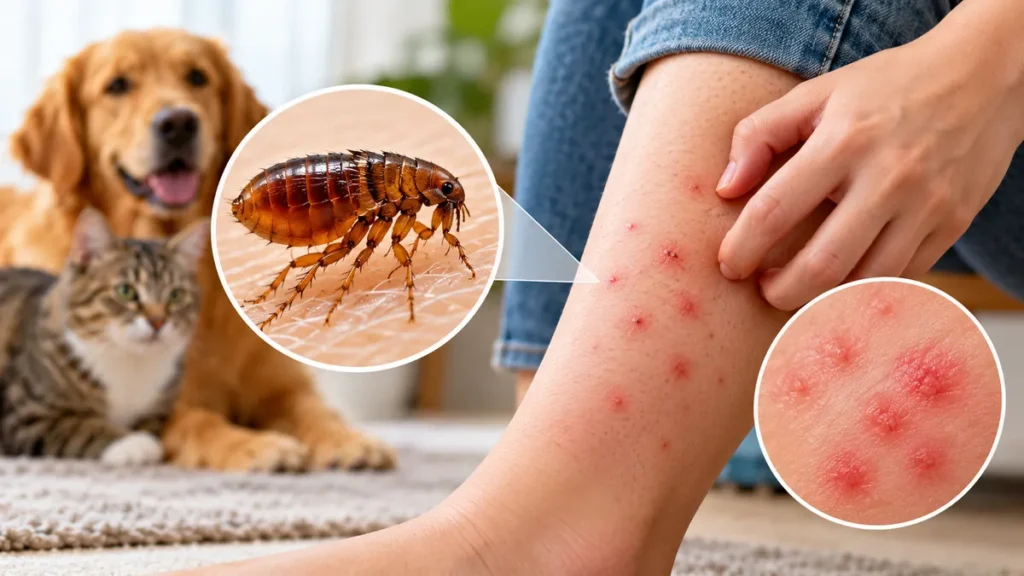
Small, intensely itchy bumps around your ankles can appear almost overnight. You might assume mosquitoes are responsible, but another common culprit is fleas—tiny, jumping insects that feed on blood.
Flea bites can be frustrating because the itching may continue for days, especially when new bites keep appearing. Understanding their appearance, causes, and treatment can help you relieve discomfort and identify whether fleas are living in your home.
Flea bites are small, itchy skin bumps caused by blood-feeding fleas. They commonly appear in clusters around the ankles, feet, and lower legs. Most heal within several days without medical treatment. Washing the affected skin, applying a cold compress, and using appropriate anti-itch medication can ease symptoms. Preventing additional bites requires controlling fleas on pets and in the home.
Cleveland Clinic
+1
What Are Flea Bites and What Causes Them?
Flea bites occur when a flea punctures the skin with specialized mouthparts to feed on blood. Fleas are small, wingless parasites belonging to the insect order Siphonaptera.
Although they are commonly associated with cats and dogs, fleas can also bite humans. They do not need to live permanently on human skin to obtain a blood meal.
Why Do Fleas Bite Humans?
Fleas need blood to survive and reproduce. Both male and female adult fleas feed on blood, while female fleas require blood meals to produce eggs.
When a flea feeds, substances in its saliva enter the skin. The body’s immune system may react to these substances, causing inflammation, itching, and raised bumps.
This reaction explains why two people exposed to the same fleas may experience very different symptoms.
Some people develop noticeable, itchy welts, while others have only a mild reaction.
Where Do Fleas Come From?
Common sources include:
- Cats and dogs carrying adult fleas
- Carpets, rugs, and upholstered furniture
- Pet beds, blankets, and sleeping areas
- Shaded outdoor spaces with animal activity
- Wildlife, rodents, and stray animals
- Cracks and protected spaces where flea eggs and larvae develop
The cat flea, Ctenocephalides felis, is one of the most common flea species associated with household infestations. Despite its name, it can infest both cats and dogs.
Dog fleas (Ctenocephalides canis) and other species may also bite humans.
Fleas are especially troublesome in warm, humid environments, although indoor infestations can persist throughout the year.
What Do Flea Bites Look Like on Human Skin?
Recognizing the appearance and distribution of flea bites is often the first step toward identifying the problem.
Most flea bites appear as small, raised bumps with surrounding inflammation. They may be pink or red on lighter skin and reddish-brown, purple, or darker than the surrounding skin on deeper skin tones.
Common Signs of Flea Bites
Typical characteristics include:
- Small, itchy bumps or papules
- Several bites appearing close together
- A cluster or short line of bite marks
- A small central puncture mark in some cases
- Mild swelling or a surrounding discolored halo
- Itching that may be more noticeable than the size of the bump suggests
Flea bites are generally smaller than typical mosquito welts, although appearances overlap.
In sensitive individuals, the reaction can become more pronounced, producing larger swollen areas or occasional blisters.
A bite’s appearance alone cannot confirm which insect caused it. The location of the bumps, recent exposure, and evidence of fleas are equally important.
Cleveland Clinic
+1
Where Do Flea Bites Usually Appear?
Fleas frequently bite the lower parts of the body, particularly:
- Ankles
- Feet
- Lower legs
- Calves
- Areas around sock lines
These locations are common because fleas often jump from carpets, flooring, or nearby animal resting areas onto exposed skin.
Bites can also appear on the thighs, waist, arms, or other areas when someone sits or lies on an infested surface.
Can flea bites appear anywhere on the body? Yes. Although the lower legs are typical, fleas can bite any accessible area of skin.
What Do Flea Bites Look Like on Children?
Children generally develop the same types of skin lesions as adults, but their reactions may be more noticeable.
A child who scratches repeatedly may develop broken skin, scabs, or secondary bacterial infections.
Some children also experience papular urticaria, a hypersensitivity reaction to insect bites that causes persistent clusters of itchy bumps.
Papular urticaria is not the same as ordinary hives. It may produce recurrent lesions as long as insect exposure continues.
Parents should pay particular attention to spreading inflammation, unusual swelling, and signs of infection.
Flea Bites vs. Bed Bug Bites and Other Insect Bites
Several insects produce similar skin reactions. Comparing bite locations and environmental clues can help narrow down the possibilities.
However, no single bite pattern reliably identifies an insect.
| Feature | Flea bites | Bed bug bites | Mosquito bites |
|---|---|---|---|
| Typical appearance | Small, itchy bumps | Itchy bumps or welts | Often larger, puffy welts |
| Common location | Ankles, feet, lower legs | Exposed skin during sleep | Any exposed skin |
| Pattern | Clusters or short lines | Clusters, lines, or scattered marks | Often scattered |
| Typical exposure | Pets, carpets, animal resting areas | Beds and sleeping areas | Outdoor or indoor mosquito activity |
| Environmental clues | Jumping fleas, flea dirt on pets | Bed bugs, shed skins, dark mattress spots | Mosquitoes nearby |
| Disease concerns | Certain fleas transmit infections | Not known to transmit human disease | Some species transmit infections |
Cleveland Clinic
+2
How Can You Tell Flea Bites From Bed Bug Bites?
Bed bugs usually feed when people are sleeping. Their bites commonly appear on exposed areas such as the arms, neck, face, and shoulders.
Fleas are more often associated with bites around the ankles and legs, especially when pets or infested flooring are involved.
Both insects can produce clusters or lines of bumps, so the familiar idea that a particular number of bites identifies bed bugs is unreliable.
Check your environment for stronger evidence.
Bed bug infestations may leave dark fecal spots, shed skins, or visible insects around mattresses and bed frames.
Flea infestations may be accompanied by tiny jumping insects, excessive scratching in pets, or dark flea dirt in animal fur.
Are Flea Bites Similar to Chigger Bites?
Yes. Chiggers are larval mites that can cause intensely itchy bumps, often around tight clothing areas such as waistbands, sock lines, and skin folds.
Outdoor exposure to grass or vegetation may suggest chiggers, while evidence of fleas on pets or carpets supports flea exposure.
Chiggers do not burrow permanently into human skin, and ordinary flea bites do not leave fleas embedded in the skin.
Can Flea Bites Be Mistaken for Scabies?
Scabies is caused by microscopic mites that burrow into the outer layer of skin.
Unlike ordinary flea bites, scabies often causes persistent itching that becomes particularly intense at night. Typical locations include finger webs, wrists, waistline, and genital areas.
Fine burrows may sometimes be visible.
Scabies requires specific medical treatment, so a persistent unexplained rash should not automatically be attributed to fleas.
Symptoms of Flea Bites and How Long They Last
Most people experience localized itching and skin irritation. The intensity depends on individual sensitivity, the number of bites, and whether the affected skin has been scratched.
Common Symptoms
Mild reactions may include itching, tenderness, small swollen bumps, and localized discoloration.
The itching can begin shortly after exposure or become noticeable later as the immune response develops.
Some people develop more persistent inflammation following repeated exposure.
How Long Do Flea Bites Last?
Uncomplicated flea bites usually improve within a few days.
In some individuals, especially those with stronger inflammatory reactions, the bumps or itching may persist for one to two weeks or longer.
Scratching can delay healing by damaging the skin.
Residual dark marks, known as post-inflammatory hyperpigmentation, may remain after the itching and swelling disappear. These marks can be particularly noticeable on darker skin tones and may take weeks or months to fade.
Why Do Flea Bites Itch So Much?
The itching comes primarily from the body’s immune response to proteins and other substances introduced during feeding.
Histamine and additional inflammatory mediators contribute to irritation, swelling, and the urge to scratch.
Repeated scratching can create an itch-scratch cycle: the skin becomes more inflamed, causing additional itching.
Breaking this cycle is one of the most useful goals of treatment.
Can Flea Bites Cause an Allergic Reaction?
Yes. Some individuals experience more significant hypersensitivity reactions, including widespread hives, substantial swelling, or blistering.
Severe allergic reactions are rare but require immediate attention.
Seek emergency medical care if a bite is followed by difficulty breathing, throat tightness, fainting, or sudden swelling of the tongue, lips, or face. These can be signs of anaphylaxis.
Johns Hopkins Medicine
+1
How to Treat Flea Bites and Relieve Itching
Most uncomplicated flea bites can be treated at home. The main goals are to reduce inflammation, control itching, and protect the skin from infection.
Step 1: Wash the Affected Skin
Clean the bites gently with mild soap and lukewarm water.
This removes surface dirt and helps reduce the risk of infection, especially if the skin has already been scratched.
Pat the area dry with a clean towel rather than rubbing it.
Avoid harsh antiseptics or aggressive scrubbing, which may worsen irritation.
Step 2: Apply a Cold Compress
A cool compress can temporarily reduce itching and swelling.
Wrap an ice pack in a clean cloth or use a washcloth soaked in cold water. Hold it against the affected area for approximately 10–20 minutes.
Never apply ice directly to the skin.
Cold treatment is particularly useful when bites feel swollen, warm, or intensely itchy.
Step 3: Use an Appropriate Anti-Itch Treatment
Several over-the-counter treatments may relieve symptoms.
| Treatment | Main purpose | Important consideration |
|---|---|---|
| Hydrocortisone 1% cream | Reduces localized inflammation and itching | Follow label instructions; avoid infected or broken skin unless advised |
| Calamine lotion | Soothes irritated skin | May temporarily dry the skin |
| Oral antihistamines | Help relieve itching | Some cause drowsiness |
| Cold compress | Reduces swelling and discomfort | Provides temporary relief |
| Plain moisturizer | Supports irritated skin | Choose a fragrance-free product |
Hydrocortisone is a mild topical corticosteroid. It may help when the reaction involves noticeable inflammation.
Oral antihistamines such as cetirizine or loratadine may be useful for itching. Their suitability depends on age, medical conditions, pregnancy status, and other medications.
For young children, consult a pharmacist or healthcare professional before using medicated creams or antihistamines.
Step 4: Avoid Scratching
Scratching is one of the most common reasons minor insect bites become more troublesome.
Broken skin allows bacteria to enter, potentially causing impetigo, cellulitis, or another secondary skin infection.
Keeping fingernails short can help reduce skin damage, particularly in children.
If a bite has been scratched open, clean it gently and protect it with an appropriate dressing.
Step 5: Monitor the Healing Process
You should generally notice gradual improvement over the following days.
If the bumps remain unchanged, become increasingly painful, or continue appearing, reassess the possible cause.
New bumps may indicate continued flea exposure rather than a failure of the original bites to heal.
Medical evaluation is appropriate if symptoms persist or worsen despite reasonable home care.
NHS
+2
Do Natural Remedies Work for Flea Bites?
Some simple measures can soothe irritated skin, but not every popular home remedy is safe or effective.
A cool, damp cloth is a reliable option because it does not introduce potentially irritating substances.
Fragrance-free moisturizers may also help when the surrounding skin feels dry.
Aloe vera gel may feel soothing for some people, although evidence specifically supporting it for flea bites is limited. Test a small area first because botanical products can trigger contact dermatitis.
Avoid applying undiluted essential oils, vinegar, bleach, rubbing alcohol, or toothpaste to bites. These substances may cause irritation or chemical injury.
Baking soda pastes are also not recommended as a routine treatment for insect bites.
Quick takeaway: Gentle cleansing, cold compresses, and appropriate anti-itch medication are usually more useful than experimenting with harsh household substances.
Are Flea Bites Dangerous? Infections and Warning Signs
Most flea bites are harmless apart from temporary itching and discomfort.
However, certain complications require attention, particularly secondary skin infections, severe allergic reactions, and uncommon flea-borne illnesses.
Can Flea Bites Become Infected?
Yes. A bite may become infected when bacteria enter damaged skin.
Warning signs include:
- Increasing pain or tenderness
- Spreading redness or discoloration
- Skin that feels unusually warm
- Pus or yellowish drainage
- Worsening swelling
- Fever or swollen lymph nodes
On darker skin, infection-related redness may be difficult to recognize. Increasing warmth, tenderness, swelling, and changes in skin texture can be more useful clues.
A healthcare professional may recommend antibiotics if a bacterial infection is diagnosed.
Antibiotics are not routinely needed for uncomplicated flea bites.
What Diseases Can Fleas Transmit?
Some flea species can transmit pathogens that cause human illness.
The risk varies substantially by geography, flea species, and exposure to infected animals.
Flea-borne typhus (murine typhus) is caused by Rickettsia typhi. Infection can occur when contaminated flea feces enter broken skin or contact mucous membranes.
Symptoms may include fever, headache, muscle pain, nausea, and a rash. Symptoms commonly begin approximately 7–14 days after infection.
Plague is caused by Yersinia pestis. Certain infected rodent fleas, including the Oriental rat flea (Xenopsylla cheopis), can transmit the bacteria. Plague is uncommon in most places but is a serious disease requiring prompt antibiotic treatment.
Cat scratch disease is associated with Bartonella henselae. Fleas help spread the bacteria among cats, while human infections most commonly follow scratches or other exposures involving infected cats. Direct transmission to people through flea bites has not been established.
Tapeworm infection can occur when someone accidentally swallows a flea carrying the parasite Dipylidium caninum. This is a different transmission route from an ordinary flea bite.
Other flea-associated pathogens, including Rickettsia felis, have been investigated in relation to flea-borne spotted fever.
These infections should not be confused with the routine local skin reaction caused by most flea bites.
CDC
+3
When Should You See a Doctor?
Arrange a medical assessment if you develop:
- Fever, headache, or body aches after possible flea exposure
- A worsening or unusually widespread rash
- Persistent itching that interferes with sleep
- Large blisters or substantial swelling
- Signs of bacterial infection
- Symptoms that do not improve with appropriate care
Mention recent exposure to pets, rodents, wildlife, or flea-infested environments, particularly if you have traveled to an area where flea-borne diseases occur.
People with weakened immune systems should seek medical advice promptly if systemic symptoms develop.
Difficulty breathing, fainting, or swelling of the throat or tongue requires emergency medical assistance.
How to Get Rid of Fleas in Your Home and Stop New Bites
Treating the skin can relieve discomfort, but it will not prevent new bites if fleas remain in the environment.
Successful flea control involves understanding how the insects reproduce and addressing every relevant source.
Understand the Flea Life Cycle
Fleas develop through four stages:
- Egg: Adult female fleas lay eggs that can fall from an animal into carpets, bedding, and furniture.
- Larva: Newly hatched larvae develop in protected areas, feeding partly on organic debris and flea dirt.
- Pupa: Larvae form cocoons that protect them while they develop into adults.
- Adult: Emerging fleas locate a host and begin feeding.
The pupal stage is particularly challenging because the cocoon provides protection from environmental conditions and some insecticides.
This explains why fleas may reappear after an initial cleaning or treatment.
A household infestation can take weeks or even months to eliminate, depending on its severity.
Cornell Vet School
+1
How to Check Your Home for Fleas
Start with areas where pets spend the most time.
Look for small, dark insects that jump rapidly when disturbed.
You may also find flea dirt, which consists of flea feces containing digested blood.
To check a pet, use a fine-toothed flea comb and inspect areas around the neck, back, and base of the tail.
Dark specks collected from the fur may turn reddish-brown when placed on a damp white paper towel, suggesting flea dirt.
A white sock test may also help identify activity. Walk slowly across a suspected carpeted area while wearing white socks and inspect them for small jumping insects.
This method is not definitive, but it may help locate an infestation.
Clean Carpets, Furniture, and Bedding
Regular cleaning is a central part of flea management.
Vacuum carpets, rugs, upholstered furniture, baseboards, and spaces beneath furniture.
Pay particular attention to pet sleeping areas and floor cracks.
During an active infestation, daily vacuuming can help remove eggs, larvae, and some adult fleas while disturbing developing fleas in their cocoons.
Empty the vacuum contents into a sealed bag and dispose of them outside.
Wash washable pet bedding, blankets, and affected household fabrics using an appropriate hot-water cycle, followed by thorough drying when the material permits.
Steam cleaning can also help reduce fleas in suitable carpets and upholstery.
The US Environmental Protection Agency recommends vacuuming, cleaning pet bedding, and addressing the places where fleas develop as part of an integrated control strategy.
US EPA
+1
Treat All Household Pets Appropriately
If pets are carrying fleas, cleaning the home without treating the animals is unlikely to solve the problem.
Consult a veterinarian about suitable flea prevention for each pet.
Available veterinary treatments may include topical medications, oral medications, and certain flea-control collars.
The correct choice depends on the animal’s species, age, weight, health, and exposure risks.
Never assume a flea product intended for dogs is safe for cats. Some dog products contain permethrin concentrations that can be highly toxic to cats.
Treat all relevant household pets according to veterinary advice, even when only one appears to be scratching.
When Is Professional Pest Control Necessary?
Professional help may be appropriate when:
- Fleas continue appearing despite consistent cleaning and pet treatment.
- Several rooms are affected.
- The infestation is extensive.
- Wildlife or rodents may be introducing fleas.
- Safe application of environmental treatments requires specialist equipment.
Professional pest management may combine sanitation, targeted insecticides, and insect growth regulators.
Insect growth regulators interfere with flea development and reproduction rather than simply killing visible adult fleas.
Treatment should follow product labels and local regulations, with particular attention to children, pets, and ventilation.
Avoid applying household insecticides directly to people or animals unless the product is specifically approved for that use.
Quick takeaway: Flea control works best when pet treatment, environmental cleaning, and necessary follow-up treatments happen together. Treating only one part of the problem often allows the infestation to continue.
How to Prevent Flea Bites on Humans and Pets
Prevention focuses on reducing contact with fleas and limiting the conditions that allow them to reproduce.
Protect Your Skin
When entering flea-prone environments, wearing long trousers, socks, and closed shoes can reduce exposed skin.
This is particularly useful because fleas frequently bite around the ankles and lower legs.
The Centers for Disease Control and Prevention (CDC) recommends EPA-registered insect repellents containing approved active ingredients such as DEET, picaridin, IR3535, or certain oil-of-lemon-eucalyptus-derived repellents.
Always follow age restrictions and label directions. Products containing oil of lemon eucalyptus or PMD should not be used on children younger than three years.
Permethrin-treated clothing may offer additional protection, but permethrin products intended for clothing must not be applied directly to skin.
Keep Pets Protected Throughout the Year
Routine veterinary flea prevention is one of the most effective ways to reduce human exposure.
Check pets regularly for excessive scratching, hair loss, skin irritation, or visible fleas.
Remember that a pet can carry fleas even when it is not scratching noticeably.
Regular grooming and flea combing may help identify a problem early.
Limit unnecessary contact between household pets and stray or wild animals.
Make Outdoor Areas Less Attractive to Fleas
Fleas often thrive in shaded, protected locations where animals rest.
Reduce suitable habitats by keeping grass trimmed, removing leaf piles, and avoiding excessive watering.
Discourage rodents and other wildlife from nesting near buildings.
Secure rubbish containers and avoid leaving pet food outdoors overnight.
These measures help reduce animal activity and the environments where flea populations may develop.
Can You Get Flea Bites Without Having Pets?
Yes. Fleas can enter a home through wildlife, rodents, previous occupants’ animals, or contact with infested environments.
An infestation may also become noticeable after a pet leaves the property, because developing fleas can remain in carpets and other protected areas.
People moving into a previously occupied home may encounter newly emerging fleas even when no animals currently live there.
If you repeatedly experience unexplained ankle bites, inspect the environment rather than assuming fleas are impossible without pets.
Can Fleas Live in Human Hair or on Clothes?
The common cat and dog fleas do not normally establish permanent populations in human hair.
They prefer furry animal hosts, where they can feed and reproduce more readily.
A flea may temporarily jump onto clothing or bite exposed skin, but this does not mean the insect lives on the person’s body.
Clothing and bedding can nevertheless carry fleas or come into contact with flea eggs.
Washing affected fabrics and addressing the source of infestation are more useful than treating human hair with pet flea products.
Can Fleas Spread From Person to Person?
Fleas are not usually transmitted directly between people in the way that head lice spread.
They can, however, move between shared environments and available hosts.
For example, a person may encounter fleas in a household with an infestation and later carry an occasional flea on clothing or belongings.
Repeated human bites usually indicate an environmental source rather than fleas permanently living on another person.
Flea Bites: Recovery, Common Mistakes, and Final Advice
The majority of flea bites heal without lasting complications. The main challenge is often preventing repeated exposure while allowing irritated skin to recover.
Several common mistakes can prolong the problem.
Scratching repeatedly may lead to broken skin, infection, and lingering dark marks. Applying strong household chemicals can worsen irritation. Treating bites without investigating the source allows new bites to develop.
Another frequent mistake is expecting every flea to disappear immediately after one cleaning session.
Because flea eggs, larvae, and pupae can remain hidden in the environment, controlling an infestation requires consistent follow-up.
If your skin continues to develop new bumps despite effective flea control, consider other explanations, including bed bugs, contact dermatitis, scabies, or other skin conditions.
A healthcare professional can assess the rash, review possible exposures, and determine whether treatment or further investigation is needed.
For most people, the best approach is straightforward: gently clean the bites, relieve itching with suitable treatments, avoid scratching, and eliminate the source of fleas.
The key to preventing recurring flea bites is addressing both the skin reaction and the environment. Once the source is controlled, existing bites usually settle naturally, allowing the skin to heal without further irritation.