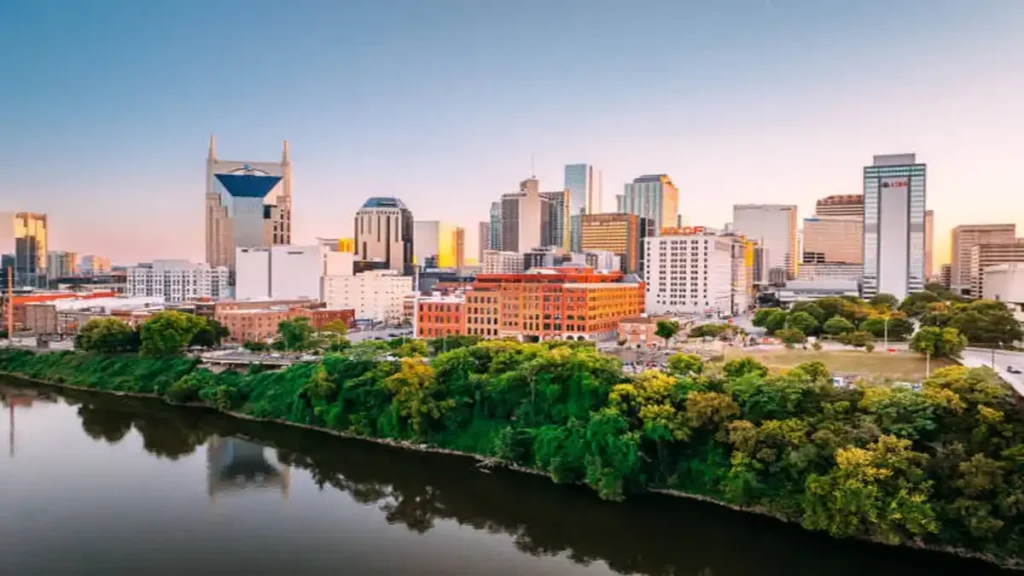
Here are the facts about Nashville that actually matter — not just trivia, but the history and details that shape a real visit. Nashville was founded in 1779 as Fort Nashborough, earned the nickname “Music City” in the 1950s, and is home to the only full-scale Parthenon replica in the world. It’s also the capital of Tennessee and one of the fastest-growing cities in the U.S.
Quick answer: The most important facts about Nashville are that it was founded in 1779 along the Cumberland River, is Tennessee’s capital, got its “Music City” nickname from a 1950s radio announcer, and blends country music history with food culture, universities, and 19th-century landmarks like The Hermitage.
Facts About Nashville’s Founding and Early History
James Robertson and a group of settlers founded Nashville on the banks of the Cumberland River, choosing the spot for trade and defensibility. The settlement was established by James Robertson, John Donelson, and their crew in 1779 as a fortified outpost protecting settlers after the American Revolution. It was originally named Fort Nashborough, in honor of Francis Nash, a Revolutionary War general killed at the Battle of Germantown.
One of the settlement’s most notable early residents was Rachel Donelson. She was the daughter of co-founder John Donelson, arrived at Fort Nashborough at age 12, and later married Andrew Jackson, who went on to become the seventh U.S. president. Jackson’s estate, The Hermitage, still stands near the city. It’s now a national historic landmark open daily, offering a look at Jackson’s presidential-era home life.
Nashville’s growth wasn’t without setbacks. In 1919, the Great Fire of Nashville destroyed 650 buildings and displaced 2,500 people — a piece of history most visitor guides skip entirely, but one that shaped how much of the modern downtown was rebuilt.
Quick takeaway: Nashville started as a river fort in 1779, was named for a Revolutionary War general, and survived a devastating fire in 1919 that reshaped its downtown.
Facts About Nashville’s “Music City” Nickname
This is the fact almost everyone asks about, and the answer is oddly specific. The first FM broadcasting license in the U.S. went to Nashville’s WSM radio station in 1941. A decade later, WSM announcer David Cobb is credited with calling Nashville “Music City” on air for the first time — and the name stuck.
The label wasn’t just marketing. The Grand Ole Opry was established in 1925, turning Nashville into a hub for country musicians nationwide, and recording studios soon followed. Elvis Presley alone recorded more than 200 songs at Nashville’s RCA Studio B, and the studio still displays a string of Christmas lights hung during one of his sessions.
If you’re planning a visit, this history is exactly why Broadway’s honky-tonks and Music Row’s studios draw crowds — it’s not manufactured nostalgia, it’s the actual industry infrastructure that built the genre.
Facts About Nashville’s Most Famous Landmarks
Nashville’s most photographed landmark has nothing to do with music. Known as the “Athens of the South” in the 1890s, the city built a full-size replica of the Parthenon for the 1897 World Exposition, located in Centennial Park. Inside sits a sculpture of Athena Parthenos — at 42 feet, the tallest indoor sculpture in the western hemisphere. It’s the only full-scale Parthenon replica in the world, which most competitor lists mention but rarely explain why it exists (the 1890s “Athens of the South” branding, tied to the city’s university density).
Just outside the city, Belle Meade Plantation bred some of the most successful racehorses of the 19th century, with lineage connections to horses later immortalized in film. History buffs can pair a Hermitage visit with a stop here for a full day of 19th-century Nashville.
Quick takeaway: The Parthenon replica, The Hermitage, and Belle Meade Plantation form a solid history-focused day trip outside the honky-tonk core.
Facts About Nashville’s Food and University Culture
Nashville’s nickname isn’t only about music. It’s also called the “Athens of the South” because of its concentration of universities and colleges, including Vanderbilt, Belmont, and Lipscomb. That academic density shapes the city’s restaurant and arts scene as much as the music industry does.
On the food side, hot chicken is non-negotiable. The dish has its own dedicated annual celebration — the Hot Chicken Festival, held every July 4th — that draws crowds specifically for it. If you’re building an itinerary, plan at least one meal around it; most first-time visitors underestimate how central it is to local identity, on par with Broadway itself.
Facts About Nashville by the Numbers — Planning Your Visit
| Fact | Detail |
|---|---|
| Founded | 1779 (Fort Nashborough) |
| Population | 689,447 (2020 census) |
| State capital | Yes — capital of Tennessee |
| Main river | Cumberland River |
| Nickname origin | 1950s, WSM announcer David Cobb |
| Grand Ole Opry founded | 1925 |
| Best time to visit | Spring (Mar–May) or fall (Sep–Nov) for mild weather and lower crowds than summer |
Nashville’s tourism has grown fast enough that summer weekends now book out hotels and Broadway venues weeks ahead — a detail most trivia-style articles leave out but that matters if you’re actually planning a trip. Shoulder seasons give you the same live-music density with shorter lines and better hotel rates.
Quick takeaway: Nashville is Tennessee’s capital, home to nearly 690,000 residents, and best visited in spring or fall if you want lower crowds without losing the music scene.
Final Thoughts
These facts about Nashville show a city that’s deeper than its “Music City” branding — a river settlement turned Civil War-era city turned recording capital, with a Greek temple and a horse-breeding plantation in the mix. Knowing these facts before you go makes the landmarks click into place instead of feeling like random stops. If you’re mapping out an itinerary, anchor it around The Hermitage, the Parthenon, and at least one honky-tonk night on Broadway — that combination covers the history and the music in one trip.
Looking for more local recommendations? Explore our main Nashville travel resource.